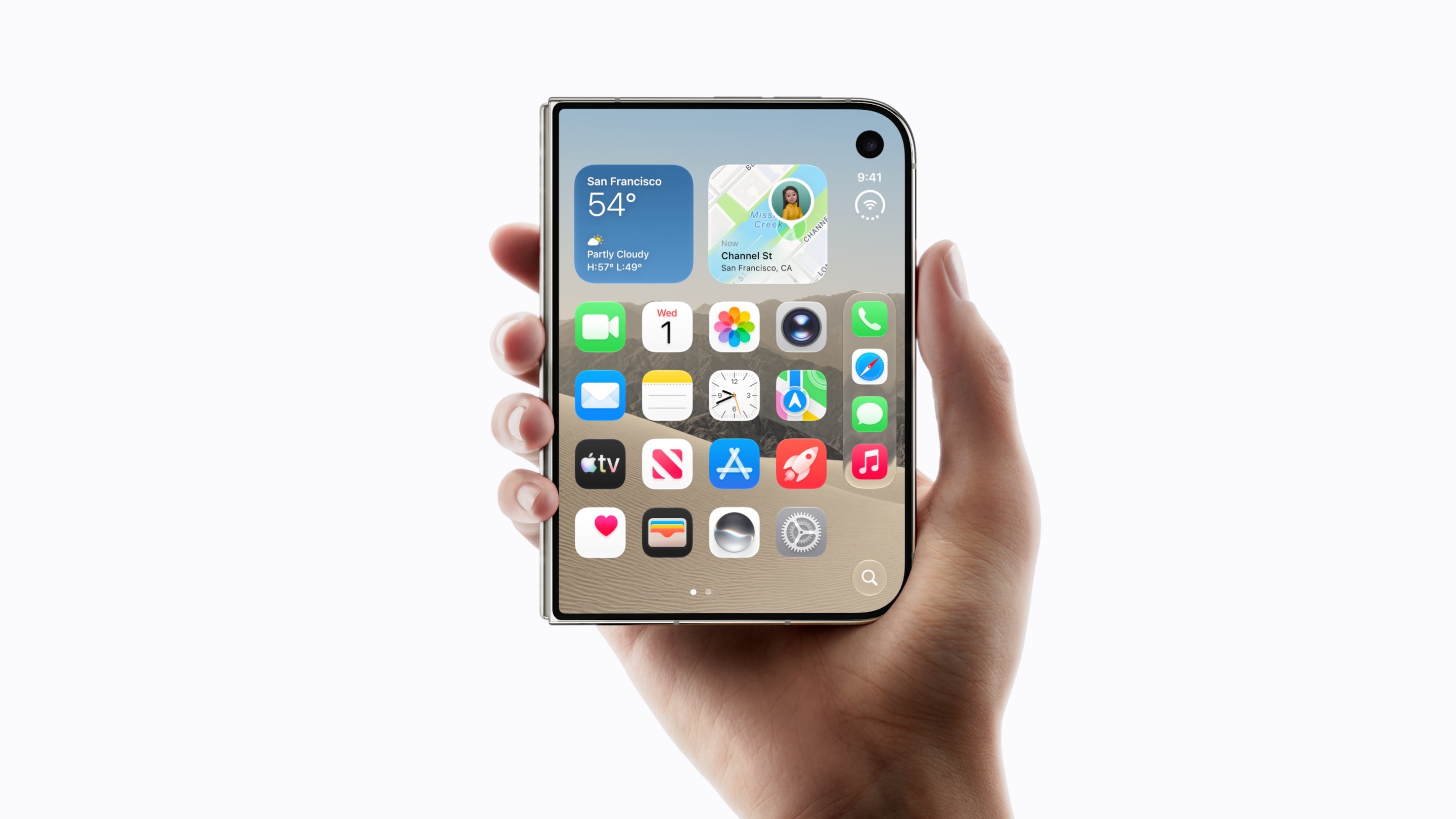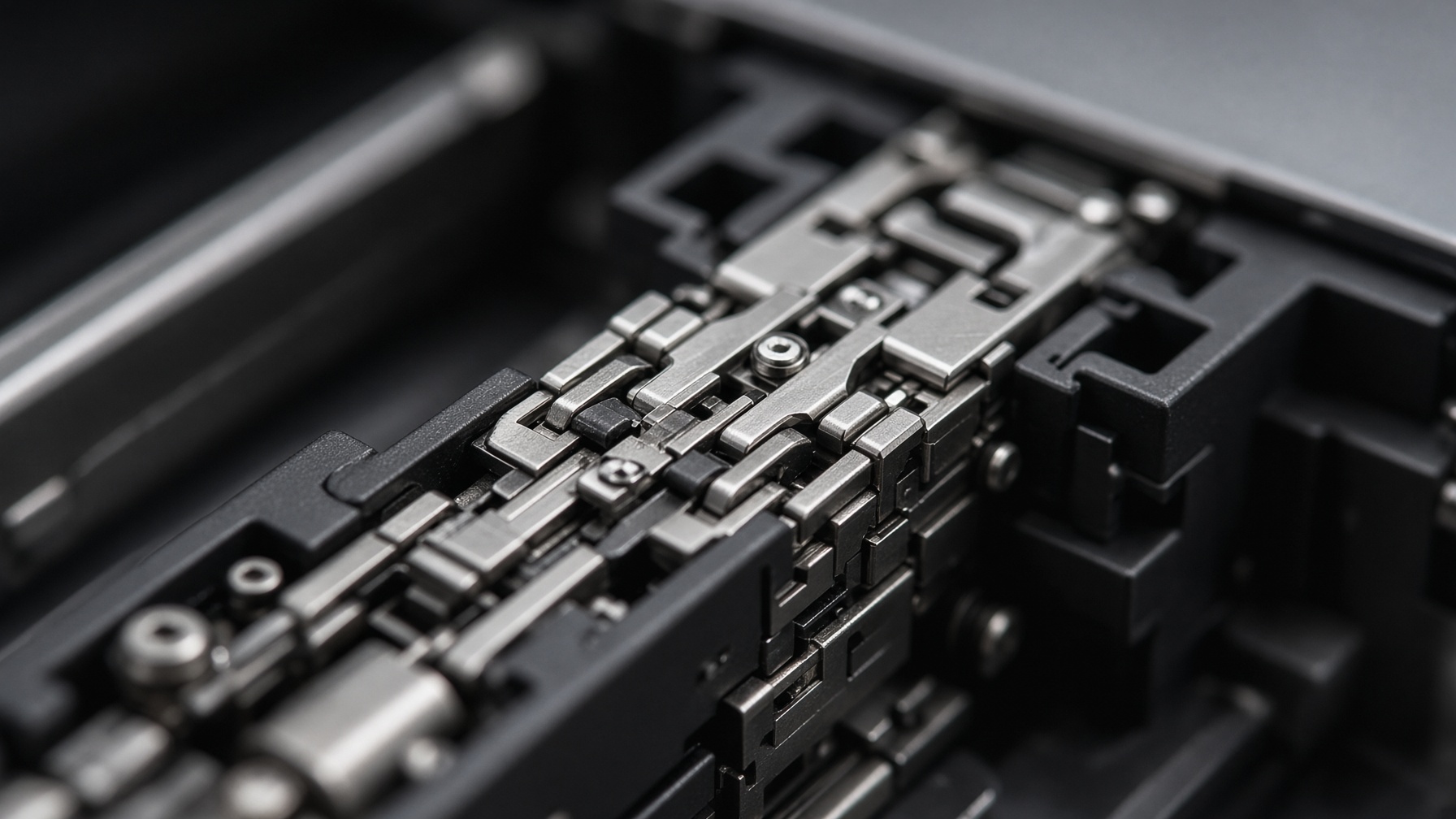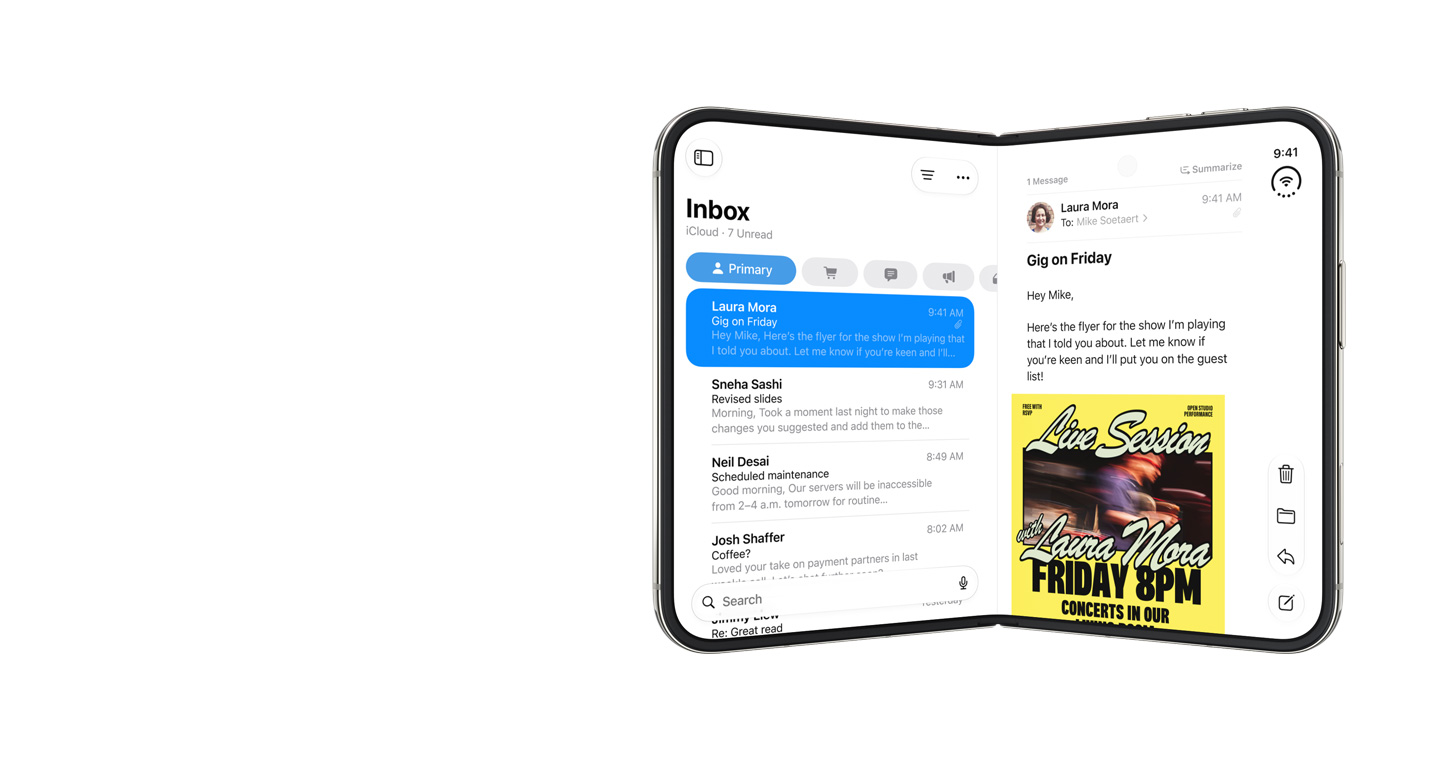
Apple did not just put iOS on a hinge. It rebuilt the springboard around two postures: a phone you can use closed, and a tablet you can use open, with a visible animation that travels across the inner display when you move between them.
The cover display is 5.4 inches, large enough that Apple claims it offers ninety percent of the screen area of iPhone 18 Pro. Notifications, cameras, and most apps are meant to feel complete there. Open the device and you get two app windows, or two views of the same site for comparison shopping. You do not get a free-form stage.
There is no Face ID on the inner display. Apple put Touch ID in the sleep button instead, which lets the inner screen be a clean sheet of glass. It is a practical choice and a small admission that folding a TrueDepth camera module is still harder than folding aluminum.
Developers will spend the autumn deciding whether Duo is an iPhone with a party trick or a new size class. Apple’s documentation, so far, treats it as the former. The window limit is the giveaway. Version one is allowed to be conservative. Version two will be judged against whatever Samsung ships in the meantime.