Hardware
Judge Lets Suit Accusing Samsung, SK Hynix and Micron of Squeezing DRAM Supply Move Forward
A federal judge in San Jose refused to dismiss a proposed class action that blames coordinated supply cuts and a pivot to AI memory for soaring prices of the DRAM inside PCs, phones and servers. The allegations have not been proven.
San Jose, Calif. · Noah Park, Hardware · Nov 15 2026
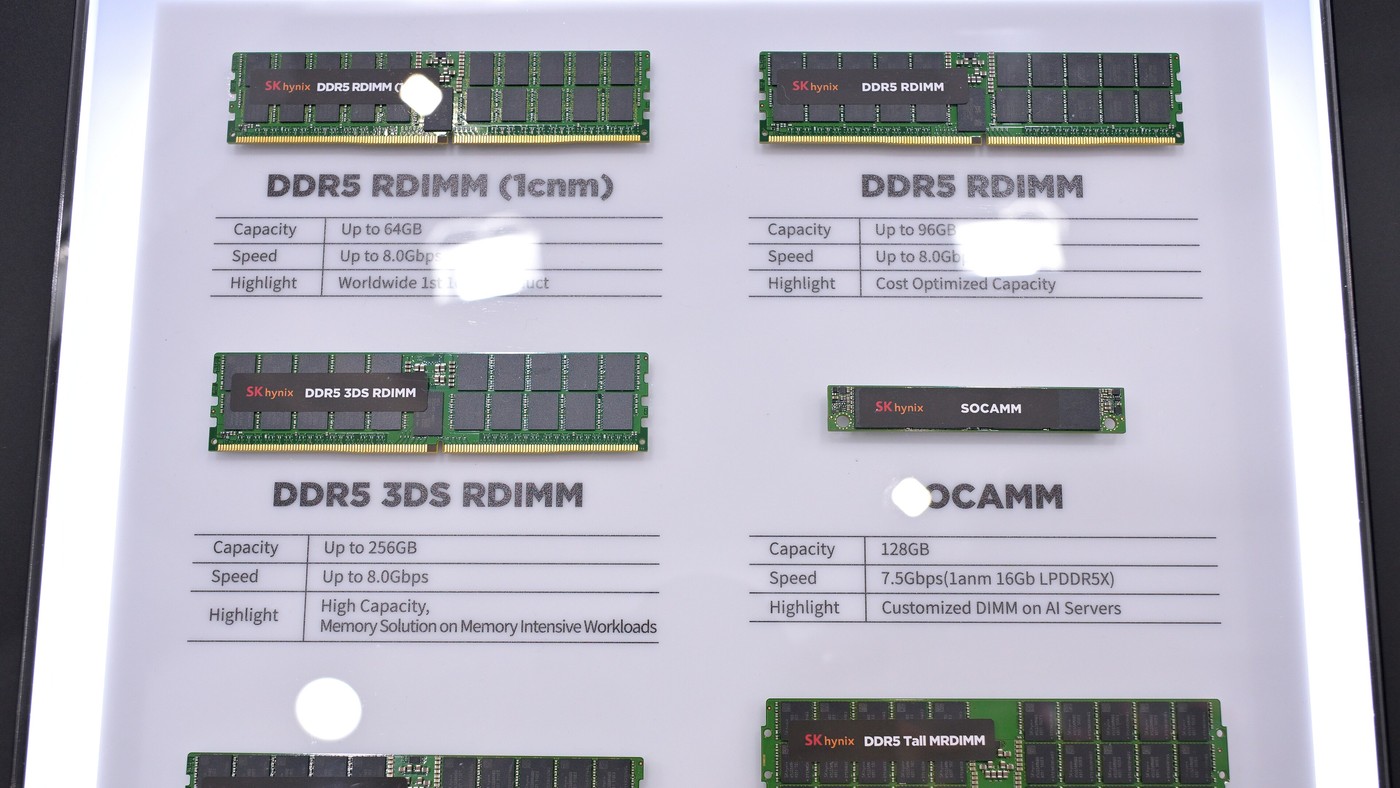
SAN JOSE, Calif. - A federal judge has refused to throw out a proposed class action accusing Samsung, SK Hynix and Micron, the three companies that make most of the world’s DRAM, of conspiring to restrict the supply of the ordinary memory chips used in PCs, phones and servers while they moved factory capacity to high-bandwidth memory for AI.
U.S. District Judge Noel Wise of the Northern District of California denied the companies’ joint motion to dismiss in an order dated Nov. 14. The chipmakers had argued that the case was a rerun of an earlier suit, known as DRAM II, which the U.S. Court of Appeals for the Ninth Circuit dismissed in 2022. “The Court finds that it is not,” Wise wrote.
The ruling comes at the earliest stage of the case, when a court treats the complaint’s allegations as true and asks only whether they describe a plausible violation of the law. None of the claims has been proven. The companies must file their answers no later than Dec. 7, and the judge reset the first case management conference for Jan. 12, 2027.
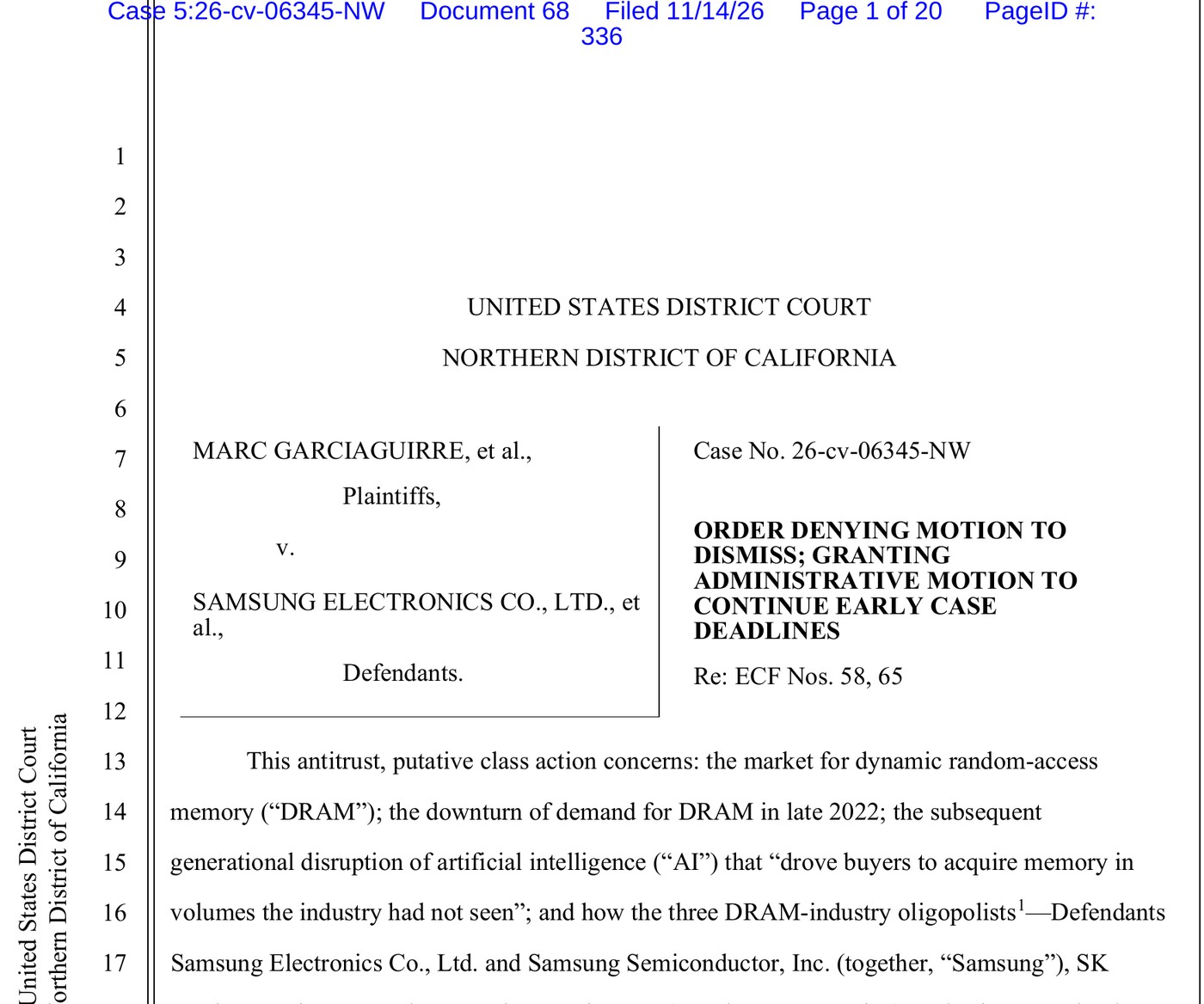
Image: U.S. District Court for the Northern District of California
The suit, Garciaguirre v. Samsung Electronics, was filed on June 25, 2026, by 17 consumers and small businesses from five states. According to the complaint, as summarized in the order, the three companies controlled more than 91 percent of global DRAM revenue as of the third quarter of 2025: SK Hynix about 33.2 percent, Samsung 32.6 percent and Micron 25.7 percent.
The plaintiffs describe four rounds of parallel conduct: production cuts between Oct. 26, 2022, and April 7, 2023; a shift toward high-bandwidth memory, or HBM, starting in March 2023; an exit from older DDR4 and DDR3 memory in 2024 and 2025; and a refusal to expand conventional DRAM output after the third quarter of 2025. HBM, which feeds AI accelerators, “requires approximately three to four times the silicon wafer area per gigabyte compared to conventional DDR5 DRAM,” the complaint says.
By the third quarter of 2025, the complaint says, conventional DRAM prices had risen 171.8 percent in a year, and the plaintiffs allege a 697 percent increase over 18 months. The squeeze on DDR4 was so severe, they say, that “older, slower DDR4 came to cost more per gigabyte than newer, faster DDR5.”
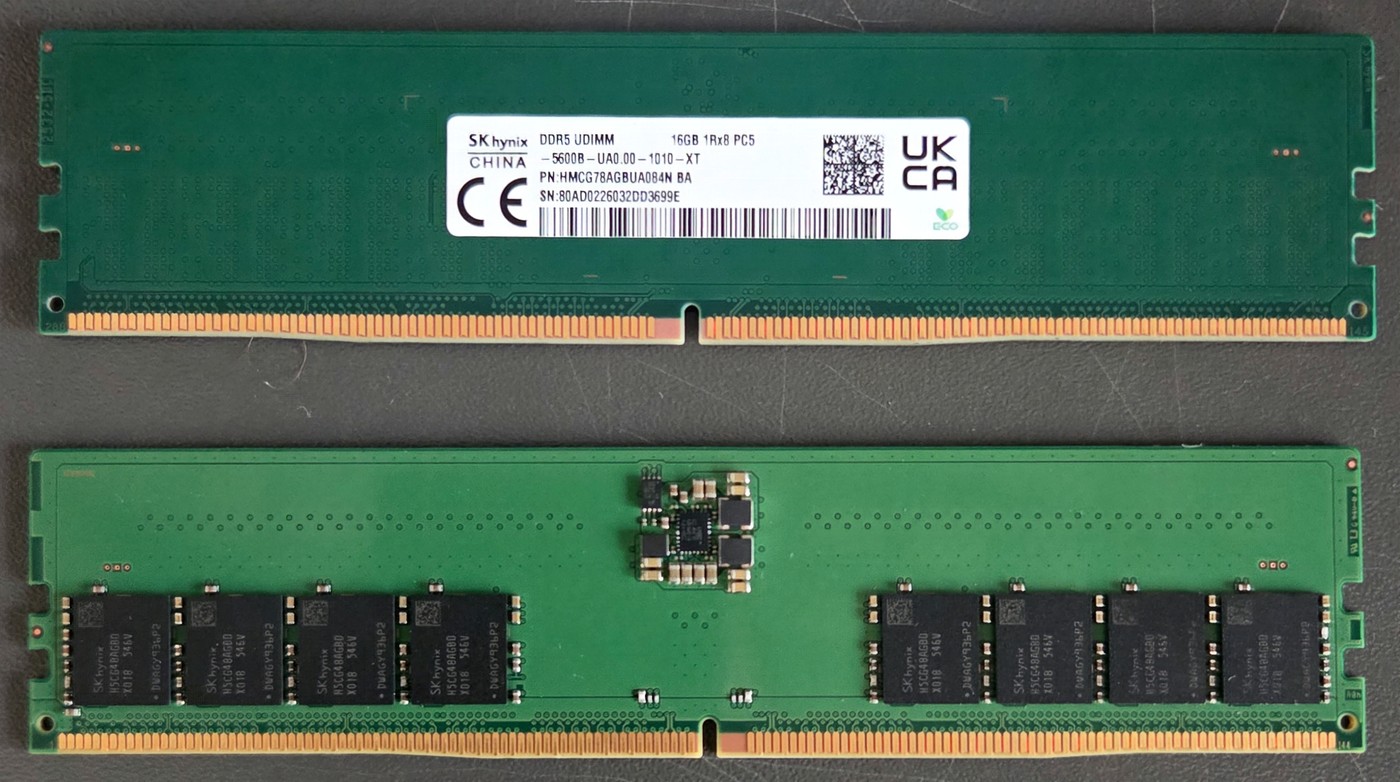
Photo: ITEagle Europe - Sebastiaan Broekhoven (CC BY-SA 4.0), via Wikimedia Commons
The companies argued that each of them made “rational” choices in its own interest. Wise wrote that a move from DRAM to HBM on its own “might not be sufficient” to suggest an agreement, but that “the related conduct tips this factor over the edge to weigh in Plaintiffs’ favor.” She pointed to the long-term HBM supply deals all three signed, reports that Samsung and SK Hynix refused long-term contracts with major DRAM customers, and Micron’s announcement on Dec. 3, 2025, that it would close Crucial, its consumer memory brand of 30 years. Those moves, she wrote, are “difficult if not impossible to unwind.”
The judge also gave weight to customer vetting that the plaintiffs say all three companies introduced in January 2026, questioning buyers about end users, order quantities and the “reality” of reported demand. She found that those allegations “strongly support a plausible inference of conspiracy,” and rejected the companies’ “obvious and non-conspiratorial explanation” that booming AI demand had used up their capacity. The vetting began well after the AI boom started in 2023 and after the shift to HBM, she noted, and that explanation does not account for why the companies adopted substantively the same questions at the same time.
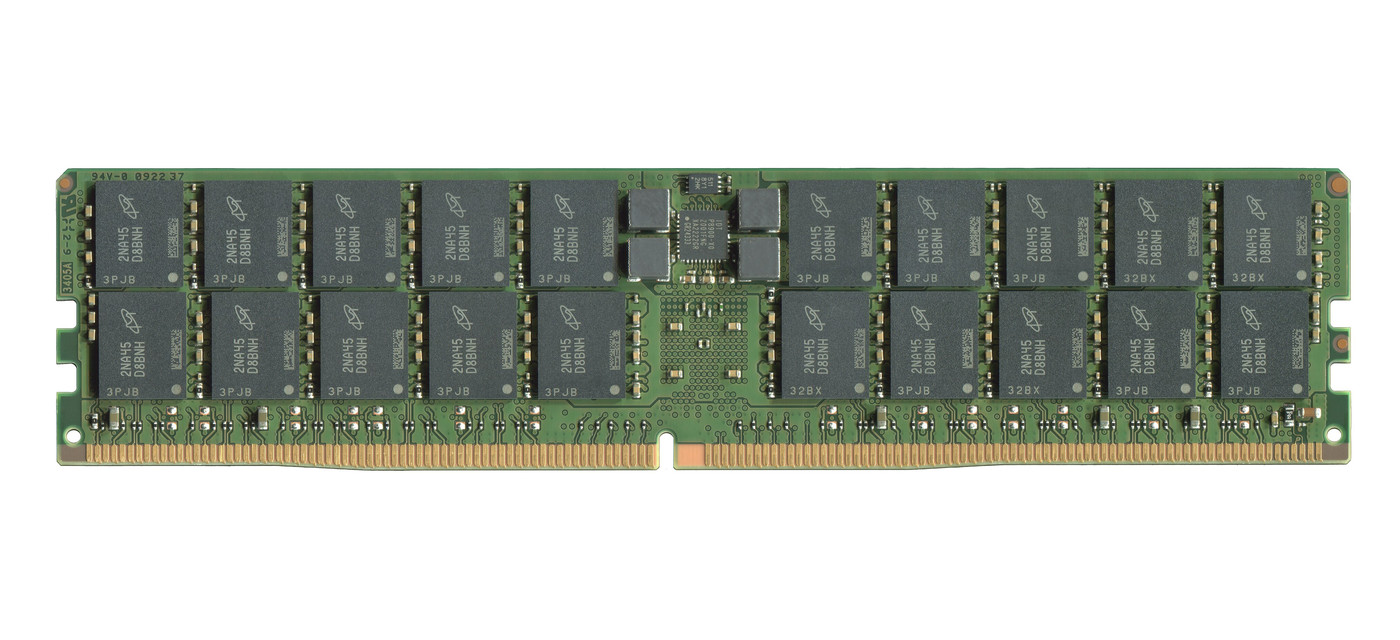
Photo: PantheraLeo1359531 (CC BY 4.0), via Wikimedia Commons
Not every argument landed. Wise gave no weight to the companies’ statements to investors, including a 2022 Micron reference to “supply discipline,” finding them too close to statements the appeals court had already rejected in DRAM II. She called the three-company structure of the market “neutral in the analysis.”
The order also recounts the industry’s history. According to the complaint, the three companies and two other manufacturers ran a criminal cartel to fix DRAM prices from 1998 to 2002. Samsung paid a $300 million fine and Hynix paid $185 million after a Justice Department investigation, while Micron received immunity for cooperating.
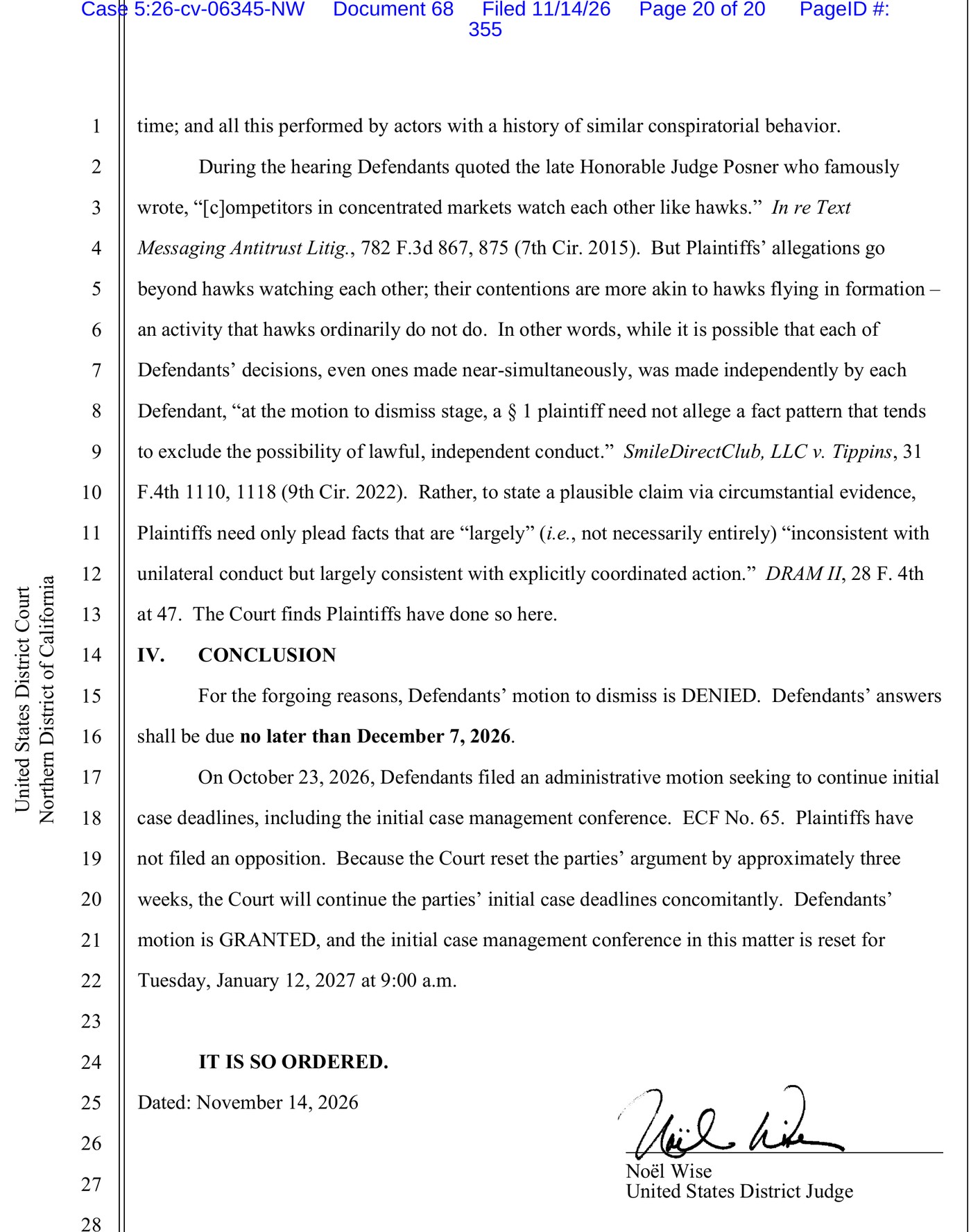
Image: U.S. District Court for the Northern District of California
At the hearing, the companies quoted the late Judge Richard Posner’s line that competitors in concentrated markets “watch each other like hawks.” Wise was not persuaded. “But Plaintiffs’ allegations go beyond hawks watching each other; their contentions are more akin to hawks flying in formation - an activity that hawks ordinarily do not do,” she wrote.
For people buying PCs and gadgets, the ruling keeps alive in court a question that has hung over this year’s price rises: whether the memory shortage came down to AI demand alone. Memory costs have pushed up prices across the hardware world, including the 16GB Raspberry Pi 5, which rose to $385 this month. As the case moves toward discovery, the companies’ internal records on how they split production between AI memory and ordinary DRAM could come under scrutiny.