Gadgets
Xiaomi Sets Its Global HyperOS 4 Schedule, With 82 Phones and Tablets Updating Between Now and December
The stable update starts this month with the Xiaomi 17 series and dozens of Redmi and POCO models, and reaches phones as old as the Xiaomi 13 in December.
Beijing · Kenji Watanabe, Gadgets · Nov 4 2026
BEIJING - Xiaomi has published the global release schedule for HyperOS 4, its new phone and tablet software, following a global beta that began in September. The stable update begins reaching Xiaomi, Redmi and POCO devices in early November and continues in waves through December, according to the company’s HyperOS 4 page. By Techtember’s count of Xiaomi’s list, 82 phones and tablets are included, the same figure Android Authority reported on Tuesday.
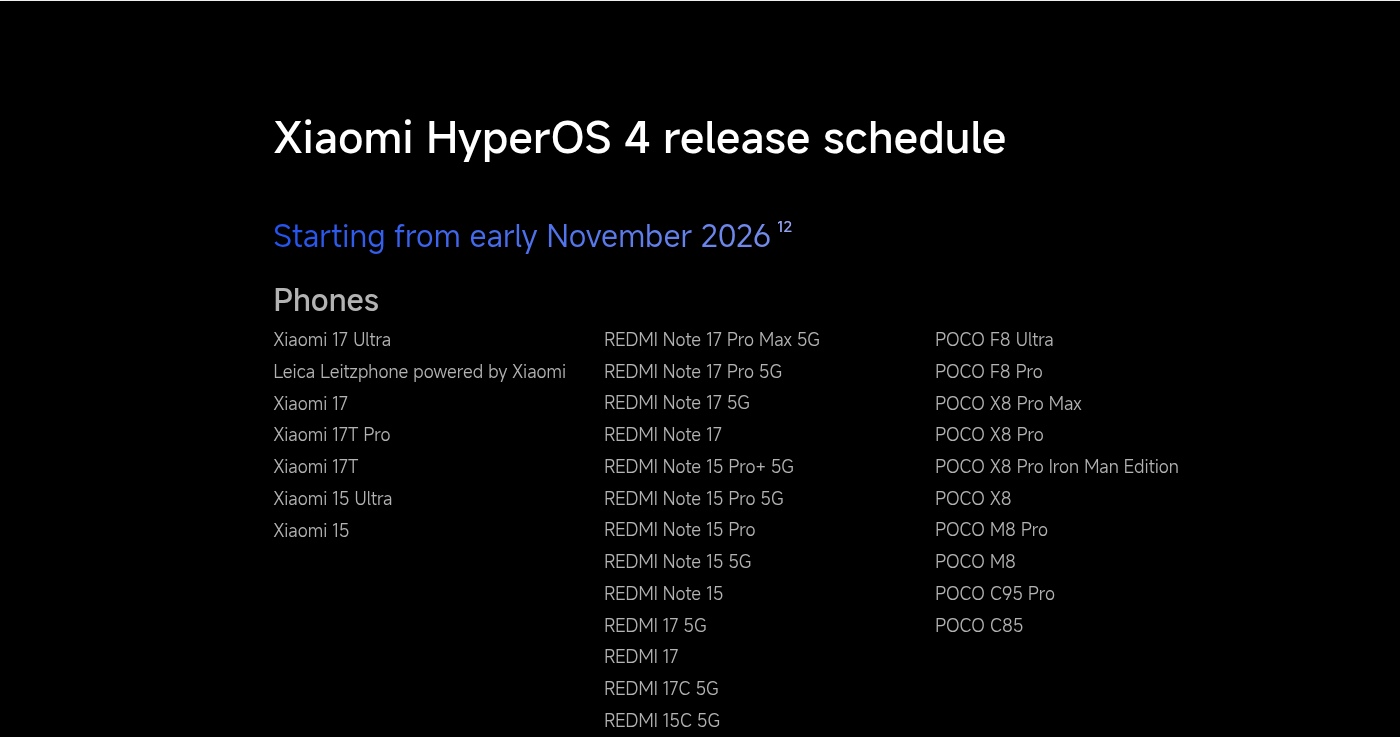
The first wave, starting in early November, covers the current flagships: the Xiaomi 17 Ultra, the Leica Leitzphone powered by Xiaomi, the Xiaomi 17, 17T Pro and 17T, and last year’s Xiaomi 15 Ultra and Xiaomi 15. It also includes the Redmi Note 17 and Redmi Note 15 families, the Redmi 17, the POCO F8 Ultra and F8 Pro, most of the POCO X8 line, and the Xiaomi Pad 8 and Pad 8 Pro tablets.
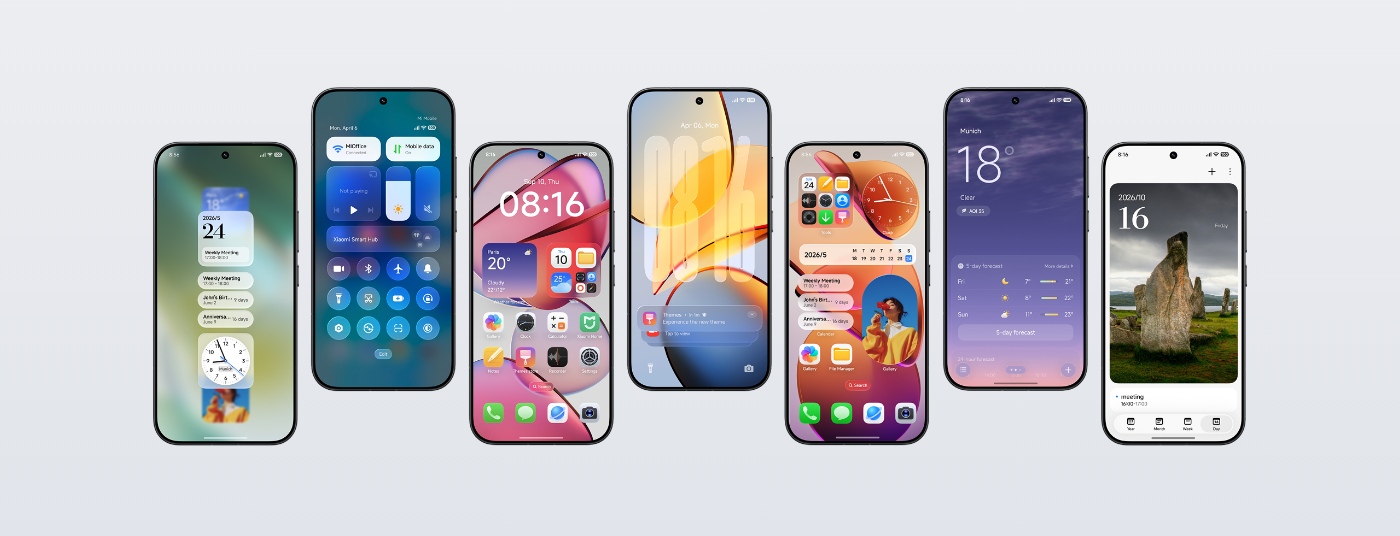 Image: Xiaomi
A second wave starting in mid-November adds the Xiaomi 15T and 15T Pro, the POCO F9 Ultra and F9 Pro, the POCO F7 series and several tablets, including the Xiaomi Pad 7, Pad 7 Pro and Pad Mini. GSMArena noted the oddity that the new POCO F9 Pro and F9 Ultra wait longer than their predecessors. The December wave reaches back to the Xiaomi 13 series and also covers the Xiaomi 14 phones, the MIX Flip foldable and the Redmi Note 14 range.
Xiaomi cautions that the dates are estimates. The schedule is “subject to change based on region, carrier, model, and R&D progress,” the company says, and the order of the list does not reflect the exact release sequence. Until now, GSMArena noted, only the Xiaomi 18 series has run HyperOS 4.
 Screenshot: Xiaomi
The update’s most visible change is what Xiaomi calls “soft light glass,” a translucent look for panels and controls that reacts with light effects when tapped or dragged. Notifications now stack, home screen folders can be resized, and widgets can be stacked on supported models. Android Authority compared the look to Apple’s Liquid Glass design and noted that, depending on the device, HyperOS 4 is built on Android 17 or on Android 16.
Xiaomi also claims speed gains from its own lab tests on the Xiaomi 17 Ultra. It says relaunching 30 apps after nine hours of use took 36.8 seconds on HyperOS 4, compared with 40.3 seconds on HyperOS 3, and that the camera cold-starts in 808.8 milliseconds, down from 1,043.6. New AI features include voice notes that turn recordings into structured notes, to-do lists and mind maps, and a face-to-face conversation translator, though Xiaomi says availability varies by model, region and language. GSMArena added that the update makes it easier to share photos, files and contacts with iPhone users.