Hardware
ULA's Vulcan Rocket Fails on First Amazon Leo Launch, Destroying 40 Broadband Satellites
The rocket lifted off from Florida on Sunday but did not reach orbit after what United Launch Alliance called an anomaly about 10 minutes into the flight. It is the first total mission failure in the company's 20-year history and a blow to Amazon's Starlink rival.
Cape Canaveral, Fla. · Noah Park, Hardware · Nov 16 2026
CAPE CANAVERAL, Fla. - A United Launch Alliance Vulcan rocket carrying 40 of Amazon’s Leo broadband satellites failed to reach orbit on Sunday, the first total mission failure for the Boeing and Lockheed Martin joint venture since it was formed in 2006, and a setback for Amazon’s effort to compete with SpaceX’s Starlink.
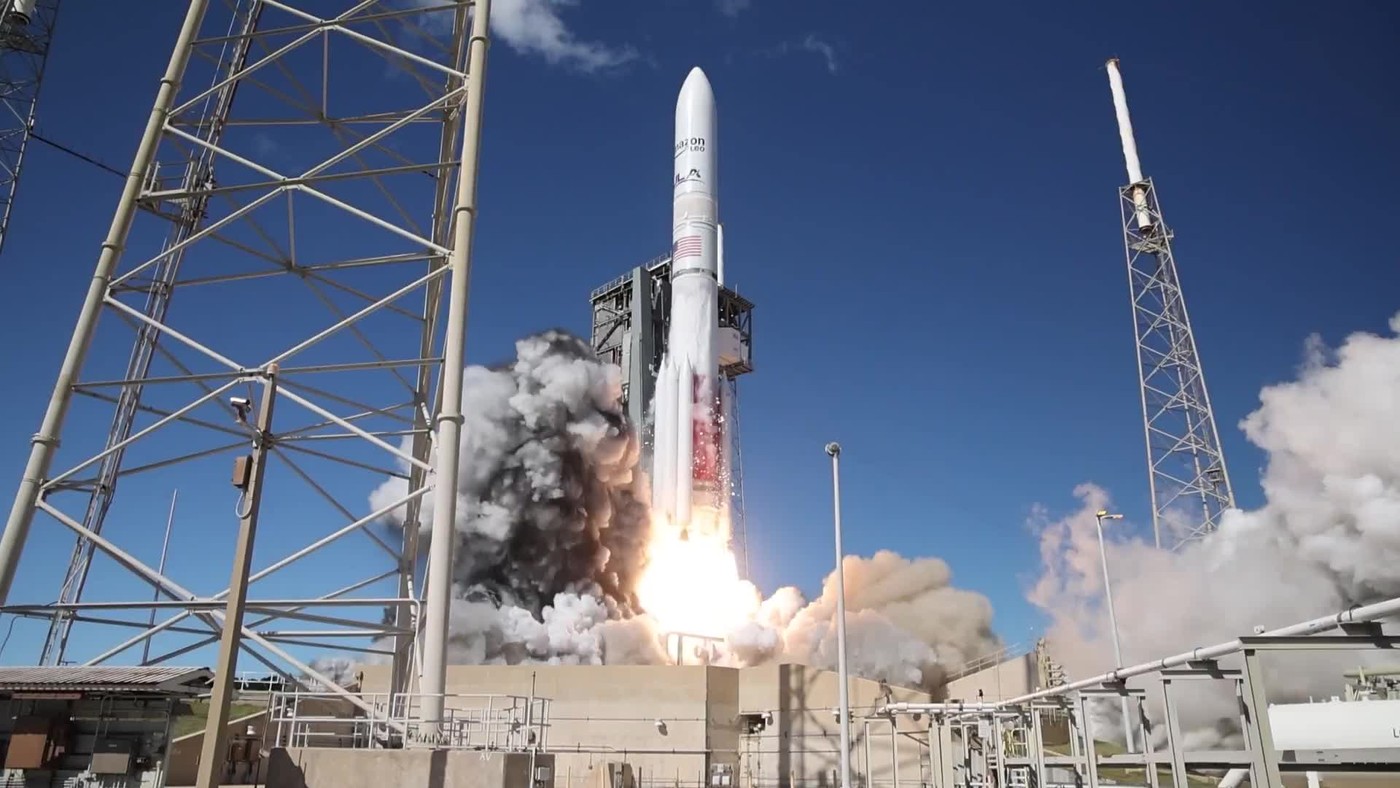
The rocket lifted off from Space Launch Complex 41 at Cape Canaveral Space Force Station at 12:40 p.m. EST (17:40 UTC). It was the first of 38 Vulcan launches Amazon has bought from ULA for its satellite internet network. Two minutes into the flight, ULA posted on X that its solid rocket boosters had burned out and been jettisoned as planned, leaving Vulcan to climb on its two BE-4 main engines.
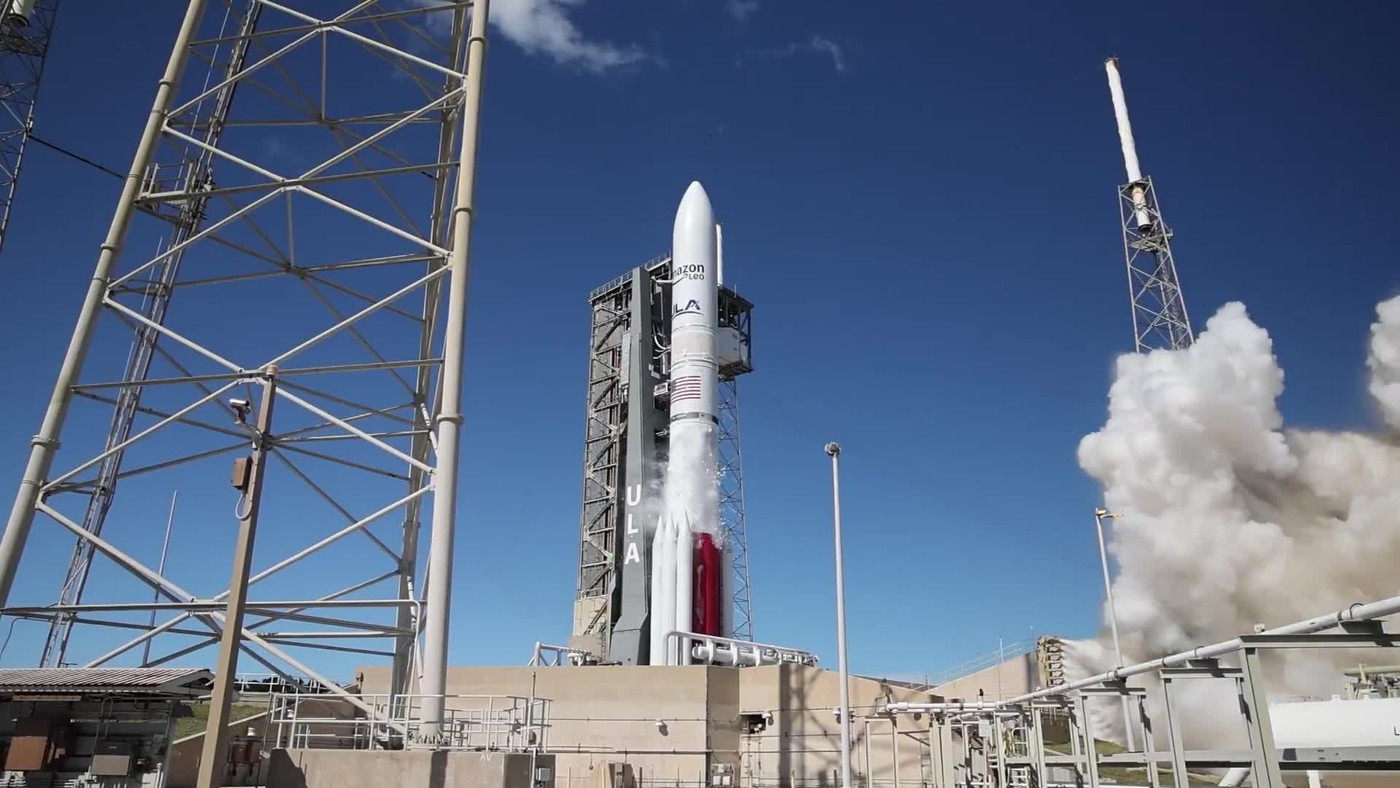
Image: ULA
About 50 minutes after liftoff, ULA confirmed the loss. “Based on data received by our Launch Director, we confirm that the Vulcan vehicle launched from Space Launch Complex 41 suffered an anomaly 10 minutes into the flight and failed to deliver the Amazon mission to orbit,” the company said in a statement on X. It added that it did not yet have any specific data to explain what had happened.
“ULA exists to provide assured access to space for our nation and for the customers who depend on us,” the statement said. “That purpose is why we take on some of the hardest missions in spaceflight, and why we hold ourselves to the standard of mission success. Today, we did not meet that standard.” ULA said it would work with its customer to find the cause and return to flight as quickly as possible.
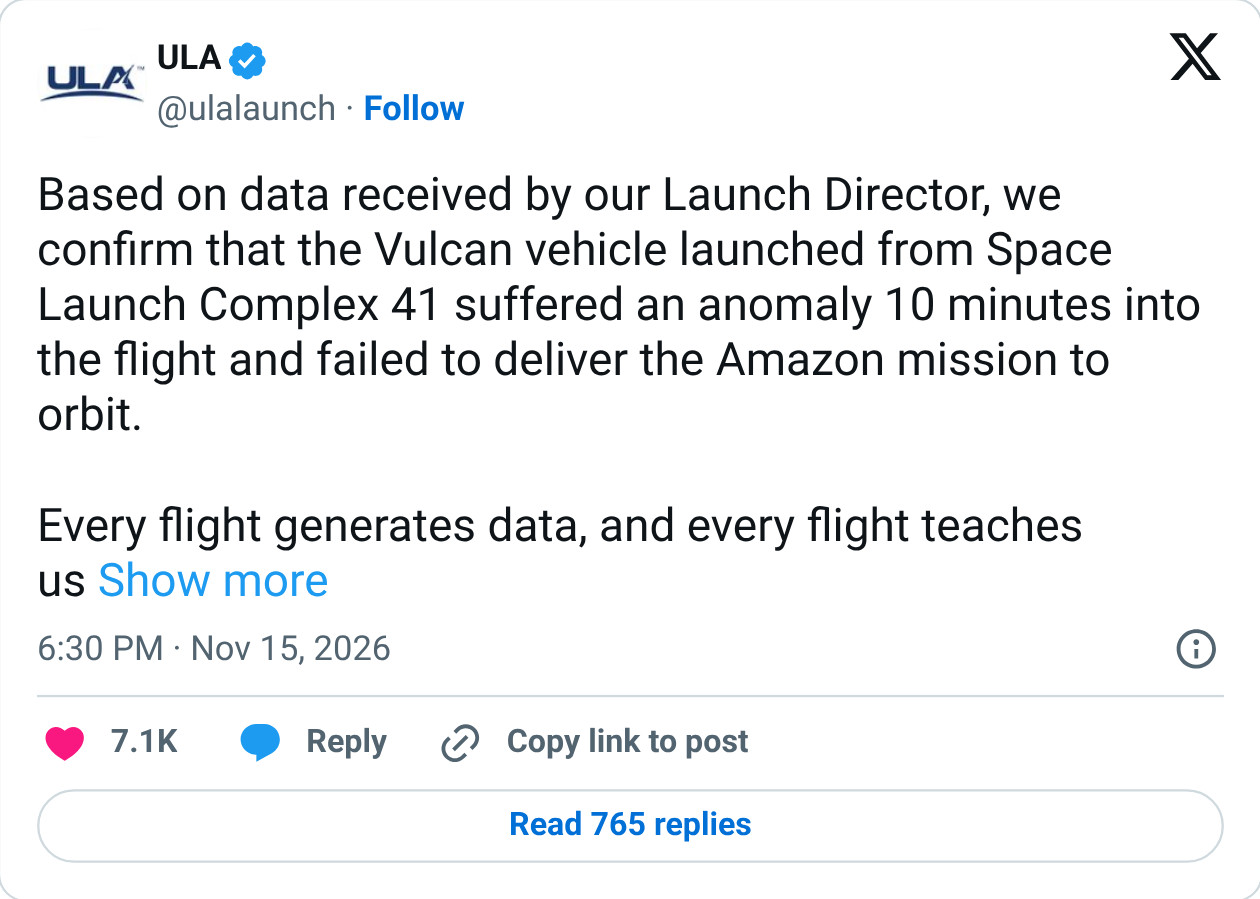
Screenshot: @ulalaunch on X
Multiple sources told Ars Technica that the problem occurred in Vulcan’s first stage, not in its Centaur V upper stage or the solid boosters. The two BE-4 engines, which are built by Jeff Bezos’s Blue Origin, kept firing for at least 30 seconds longer than planned, the publication reported, and an animation driven by live telemetry on ULA’s broadcast showed the rocket starting to spin around the time the first stage shut down. The Centaur’s engines ignited and appeared to try to steer the rocket back on course before ULA ended its webcast.
Video: United Launch Alliance on YouTube
Amazon stood by its launch provider. “There is risk with any launch, and that’s especially true for inaugural missions like LV-01,” the company’s Leo team wrote on X. “ULA has been a trusted partner for Amazon, and we believe they’ll learn from this mission and deliver on their long-term plans for Vulcan.”
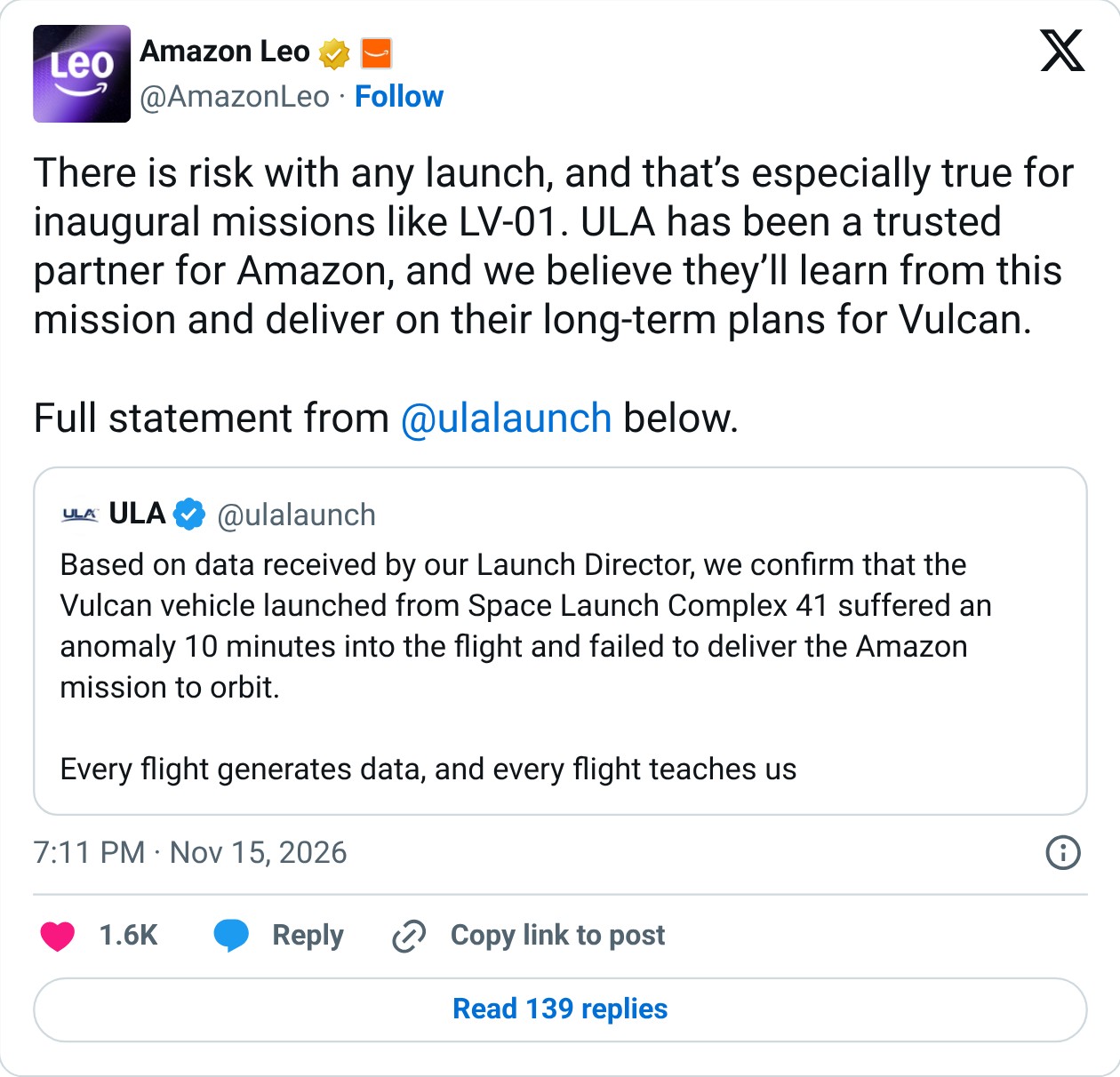
Screenshot: @AmazonLeo on X
The loss of the satellites matters less than the likely grounding of Vulcan while engineers investigate. Amazon Leo has 396 satellites in orbit, a fraction of the 3,292 planned for its first-generation network, according to Ars Technica, and Amazon has 37 more Vulcan launches booked. The company also has launches reserved on Europe’s Ariane 6 and on SpaceX’s Falcon 9, and Blue Origin’s New Glenn, which uses a version of the same BE-4 engine, has been out of action since a ground test explosion in May.
The failure also reaches beyond Amazon. Vulcan is under contract to fly roughly half of the U.S. military’s national security launches in the coming years, and NASA recently chose a version of ULA’s Centaur upper stage for future flights of its Space Launch System Moon rocket. NASA Administrator Jared Isaacman replied to ULA’s statement with an offer of help. “Artemis, Moon Base, and the nation need ULA,” he wrote. “We are in your corner and here to help.”
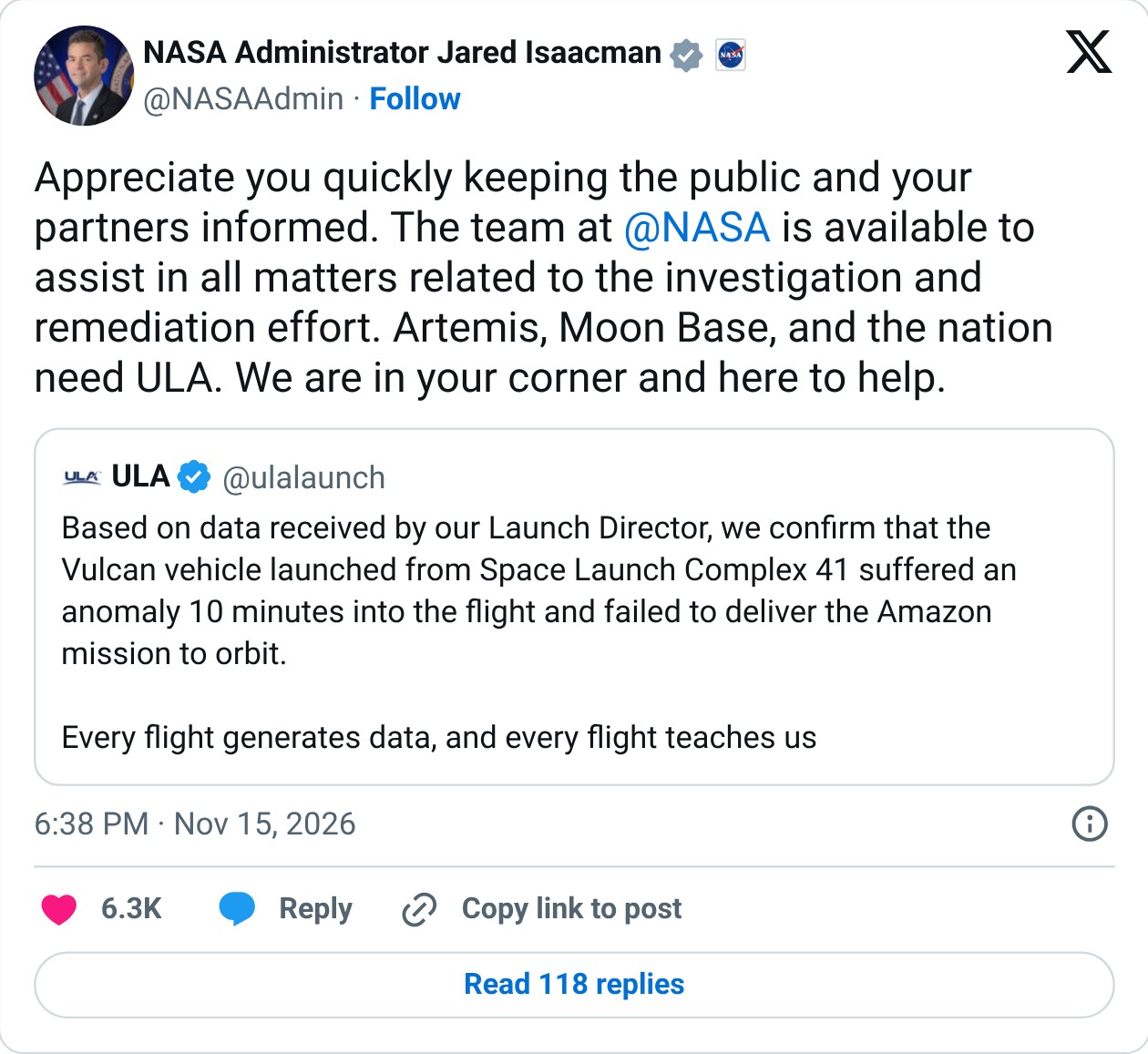
Screenshot: @NASAAdmin on X
Vulcan had survived problems with its solid rocket boosters on two of its four earlier flights and still reached orbit both times, each incident leading to months of review. ULA said it would share further updates when new information becomes available.