Gadgets
Seagate's $699 FireCuda Forge Pairs a Hard Drive With an SSD You Supply and Decides Where Your Files Go
The USB4 desktop drive comes with an 8TB or 20TB hard drive and uses Seagate's new Alkemi caching to keep active games and projects on flash, but the SSD costs extra.
Singapore · Noah Park, Gadgets · Nov 10 2026
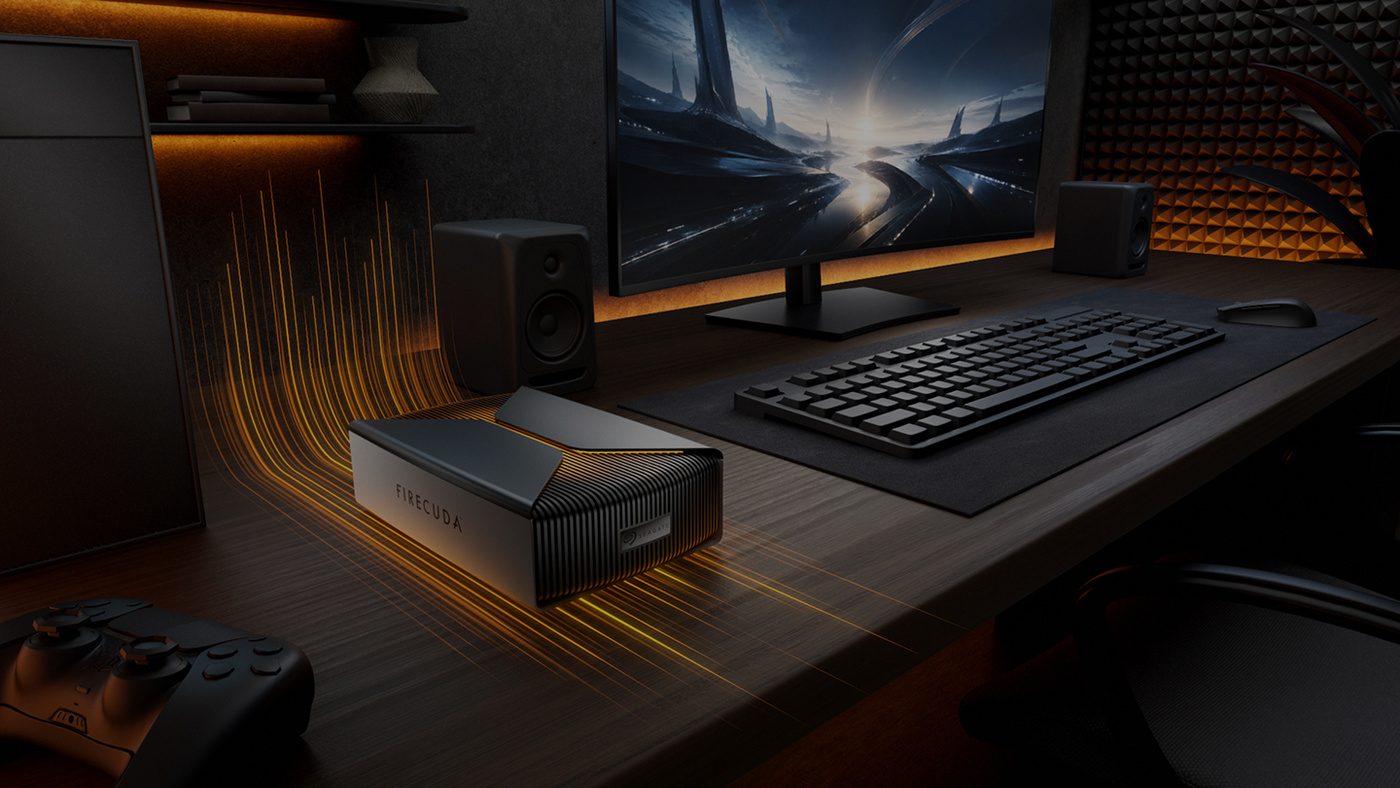
SINGAPORE - Seagate put a new kind of external drive on sale on Tuesday, one that only works after its owner opens it up and installs a solid-state drive of their own. The FireCuda Forge pairs a built-in hard drive of 8TB or 20TB with an M.2 NVMe SSD the buyer supplies, and Seagate’s announcement says its new Alkemi technology decides which data sits on the faster flash. It costs $699 with the 8TB hard drive and $899 with the 20TB drive, from Seagate’s online store and authorized partners.
The idea is borrowed from the data center, where storage systems have long kept frequently used data on flash and the rest on cheaper disks. Alkemi watches how data is used, keeps recent and frequently accessed files on the SSD and leaves the bulk of a library on the hard drive. The computer sees one volume rather than two separate drives, so nobody has to shuffle games between them by hand. Seagate calls the Forge the first of its hard drives built on the Alkemi platform.
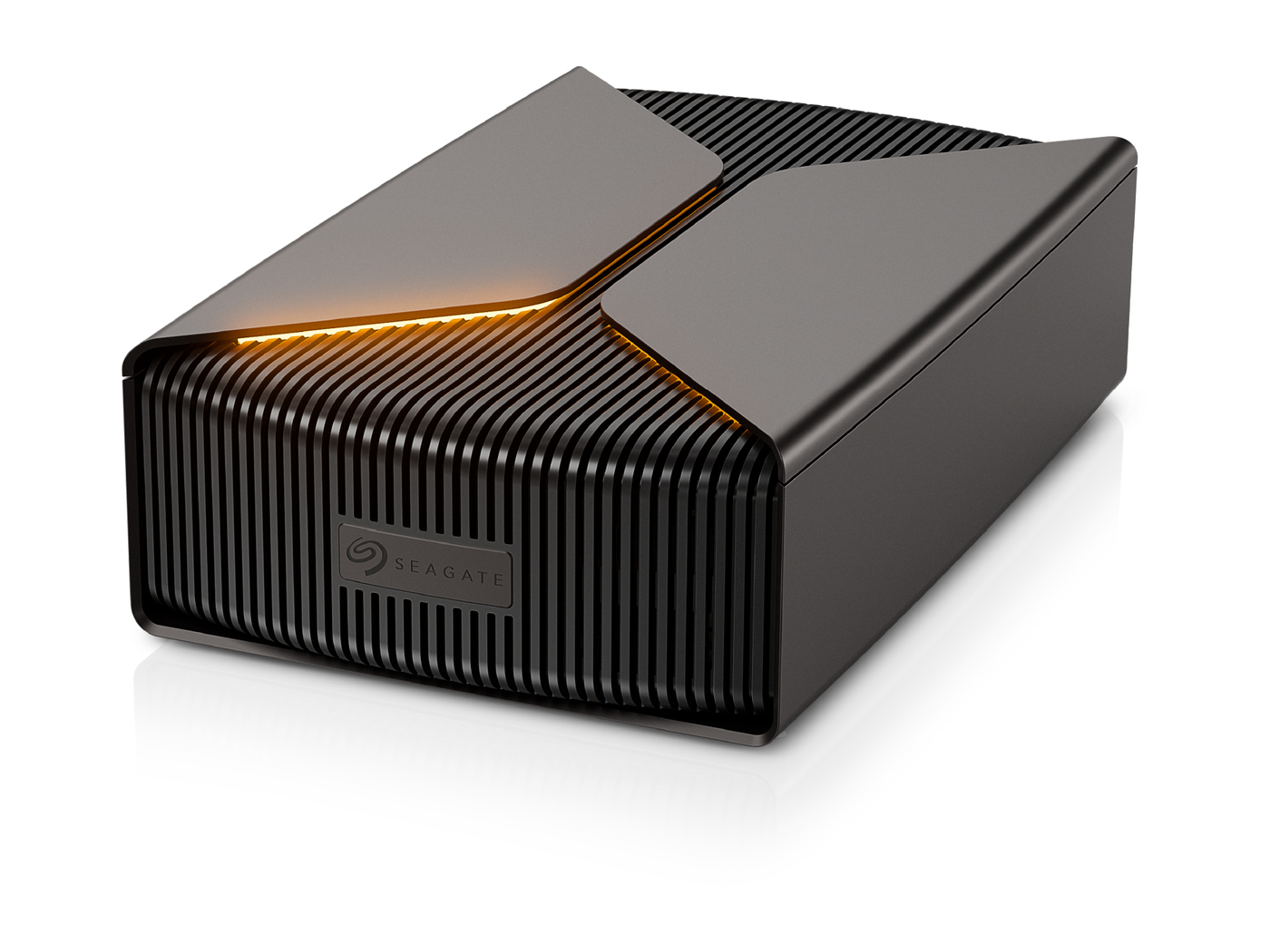 Image: Seagate
“For years, external storage has forced users to choose: speed or scale. Forge is built on the idea that they shouldn’t have to,” Lance Ohara, vice president of Edge IoT marketing at Seagate, said in the announcement.
The SSD is not included, and the drive will not operate without one. Seagate’s product page asks for an M.2 2280 NVMe drive, PCIe Gen3 or newer, no larger than 1TB and rated for at least 2,400MB/s reads and 2,000MB/s writes, with a DRAM cache recommended. Because the flash works as a cache, its capacity is not added to the volume. The hard drive sets the size, Ohara wrote in a Seagate blog post, and the caching runs entirely inside the enclosure on a field-programmable gate array and embedded Linux rather than on the host computer.
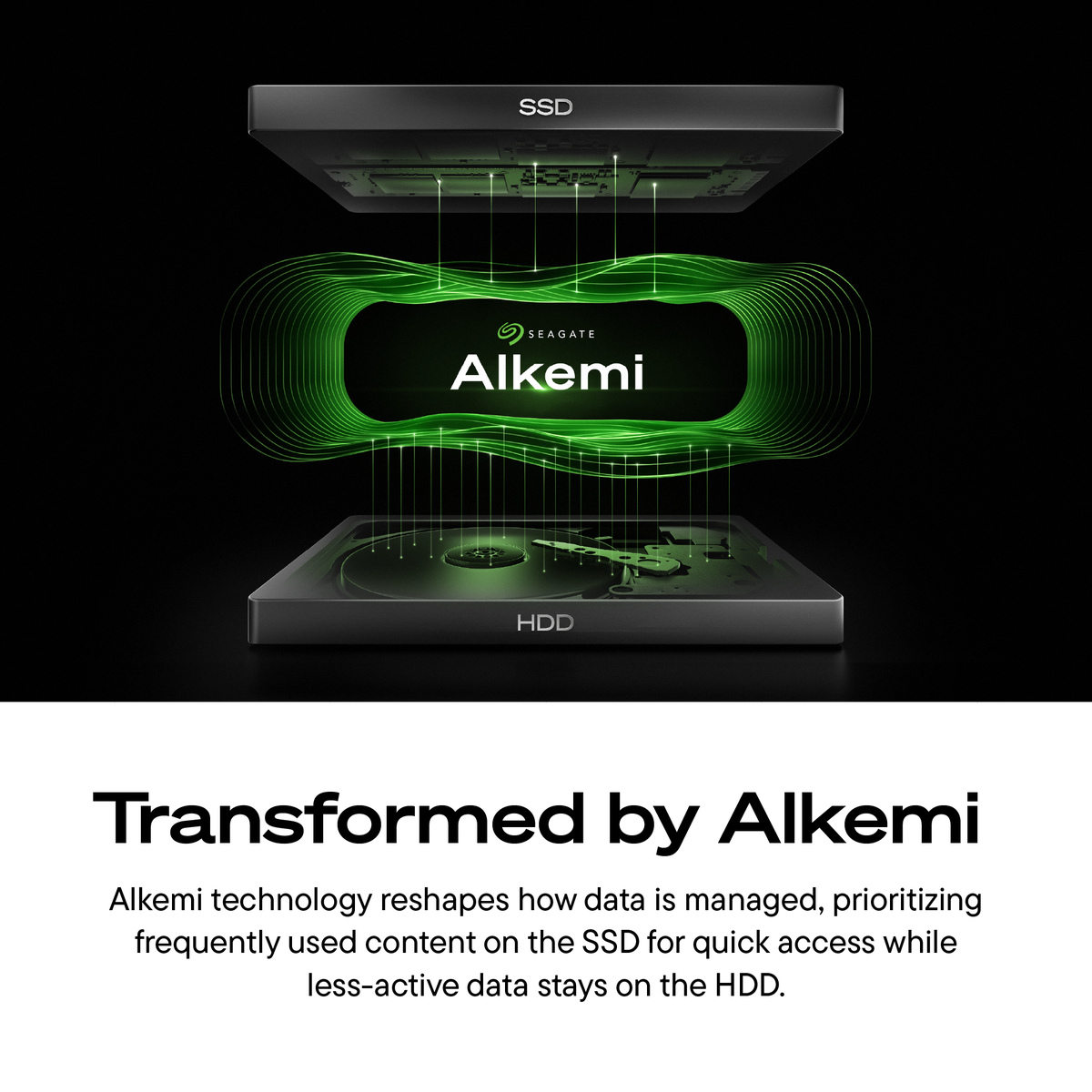 Image: Seagate
Seagate built the caching around recordings of how games actually read and write to storage. Across gameplay sessions totaling 4.3 million input and output requests, the company says, the cache served 90 percent of requests from the SSD.
Seagate rates the Forge at up to 2,500MB/s reads and 2,000MB/s writes over USB4, and it supports Windows 11 and macOS 26 or later. The hard drive inside can be swapped for a larger one later. The enclosure has programmable RGB lighting, and the 8TB model measures 2.57 by 5.78 by 9.46 inches and weighs 4.06 pounds. Buyers also get a two-month Adobe Creative Cloud Pro membership.
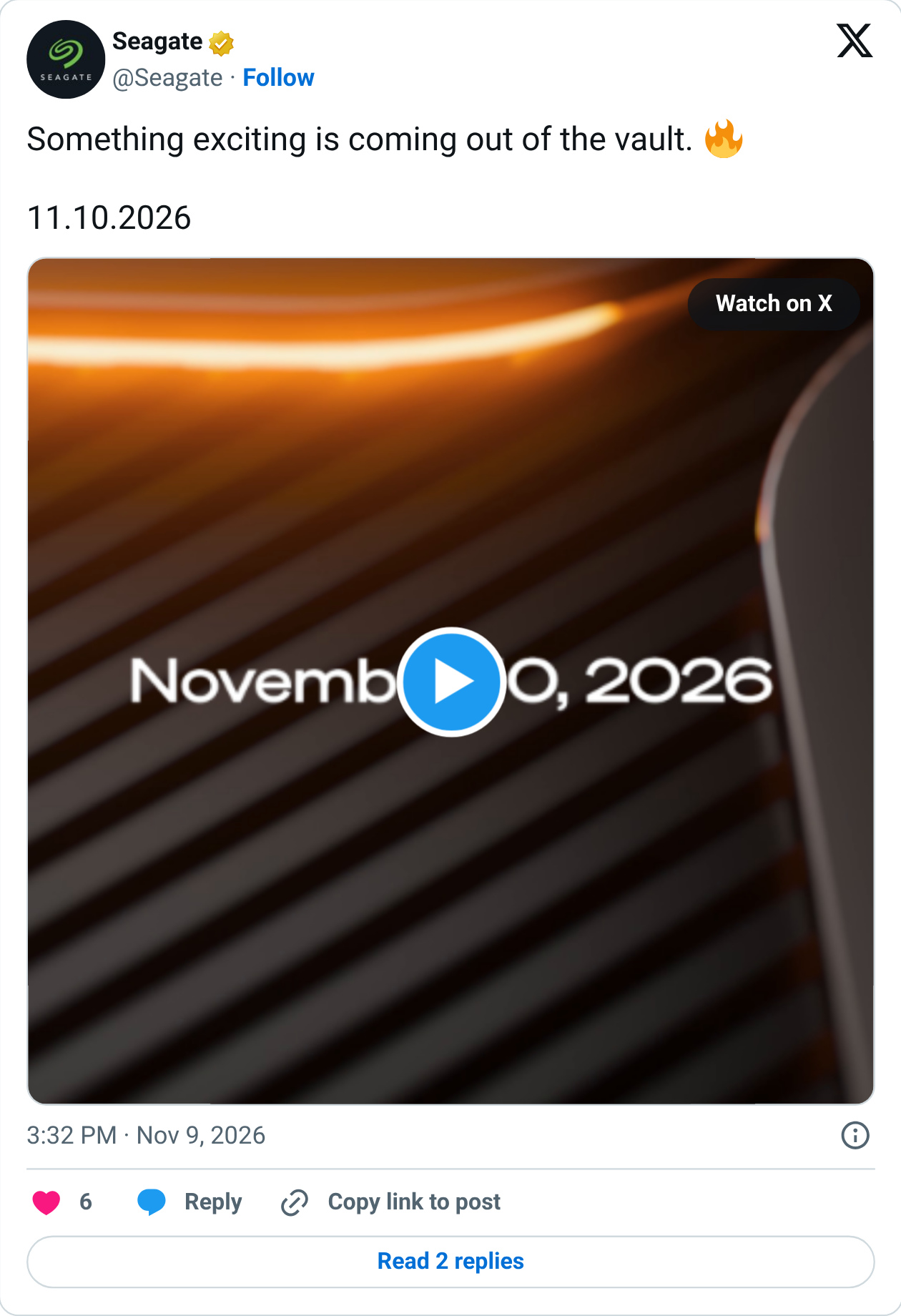
*Video: Seagate on YouTube*Seagate posted a short teaser for the launch date on X a day earlier.
 Screenshot: @Seagate on X
In an early hands-on by Tom’s Hardware, the drive appeared in Windows 11 as a single 8TB volume with no software setup once an SSD was installed. Getting to the M.2 slot means removing four screws from the base with the included hex driver, though the site noted that the screw holding the SSD needs a small Phillips screwdriver that is not in the box. Unlike Seagate’s FireCuda X Vault, the Forge also needs its external power adapter.
The price is the open question. The Verge pointed out that the SSD buyers must add will raise the total cost considerably during the current memory shortage.
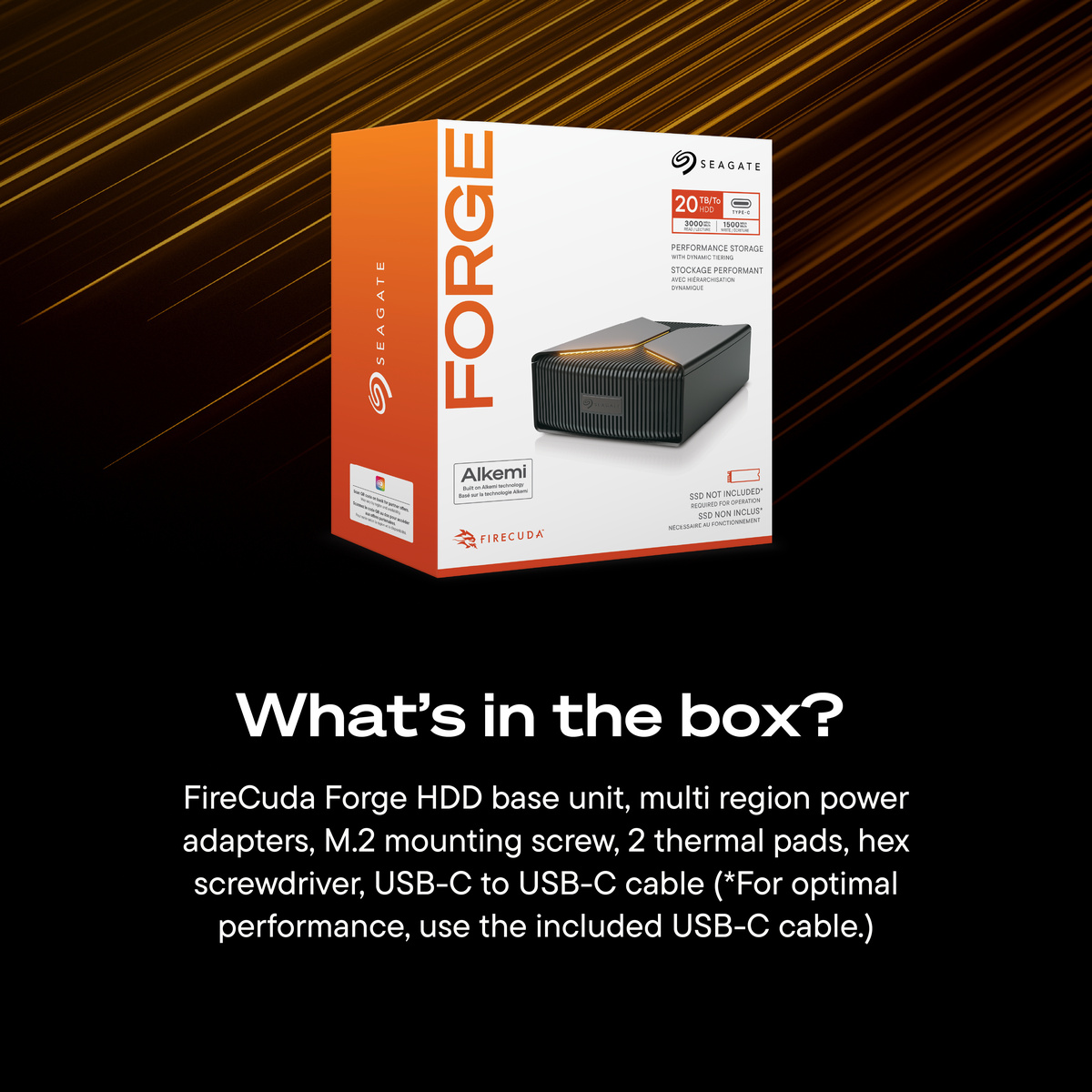 Image: Seagate
Seagate says availability may vary by market.