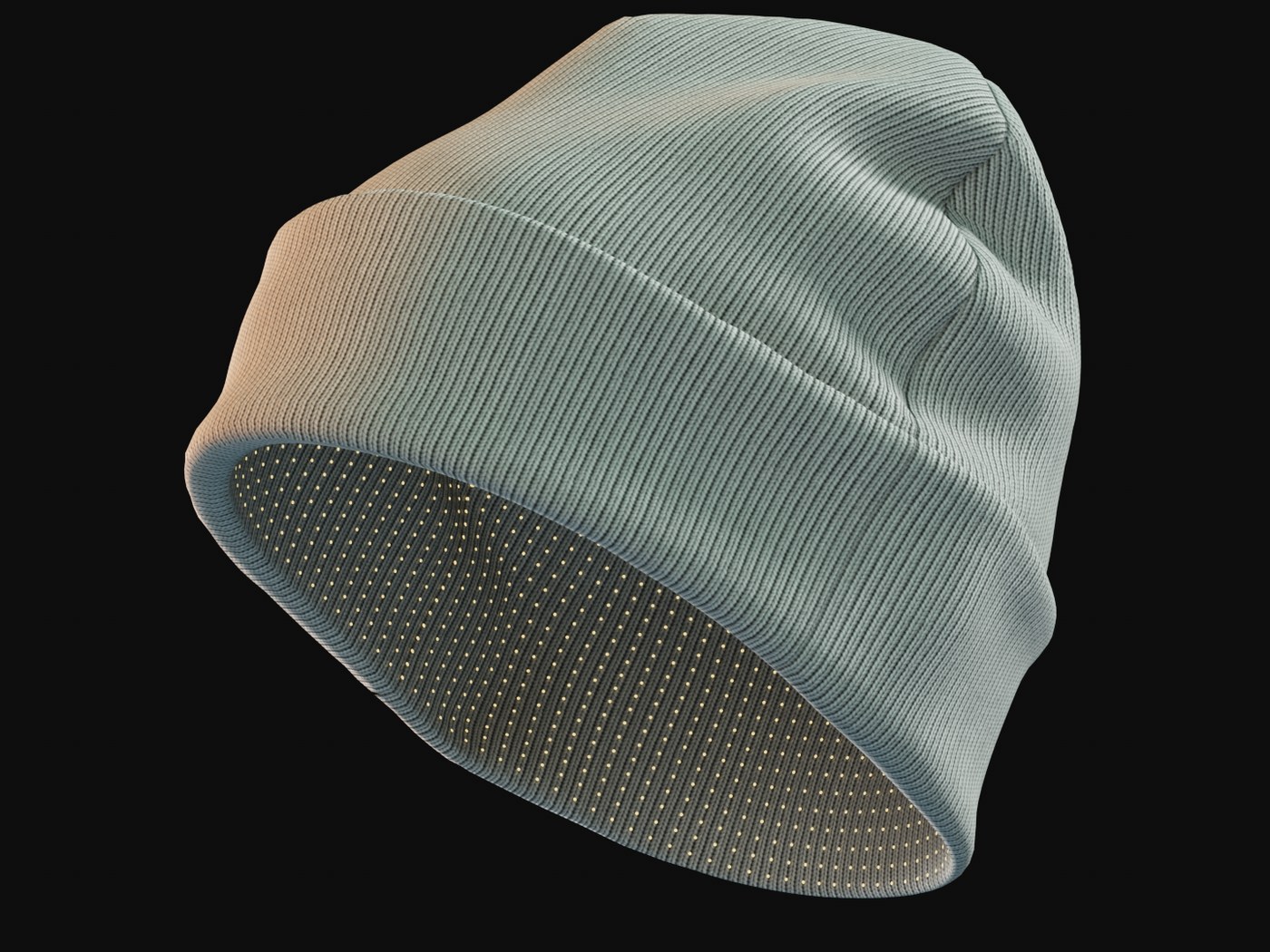
Gadgets
Sabi Raises $50 Million for a Thought-to-Text Baseball Cap Ahead of CES 2027
Khosla Ventures led the seed for a non-invasive EEG cap that aims to turn imagined speech into text and AI prompts. Forbes reports a $600 million valuation. A demo is planned for CES 2027.
San Francisco · Elena Vos, Gadgets · Oct 11 2026
SAN FRANCISCO - Sabi said on Thursday it raised a $50 million seed round led by Khosla Ventures to build a baseball cap that reads neural signals through hair and turns imagined speech into text or commands for AI assistants, with an early demo planned for CES 2027 in Las Vegas.
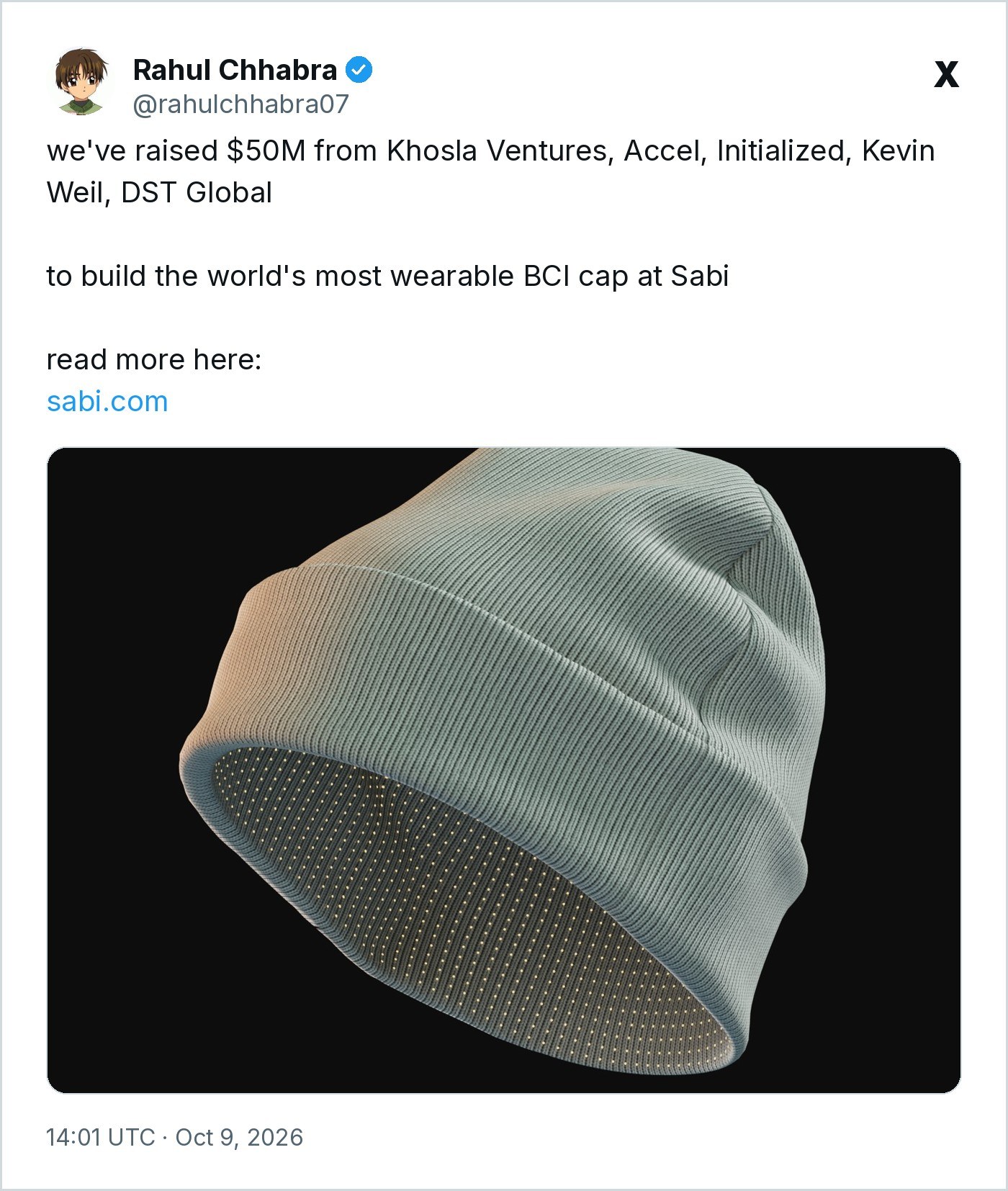 Screenshot: @rahulchhabra07 on X, Oct. 9, 2026
Accel, Initialized Capital, Kevin Weil (OpenAI’s former chief product officer), DST Global, Collaborative Fund and Ascend also joined, according to Sabi’s announcement distributed via FinanceWire. Forbes reported that the round values the company at about $600 million, citing a person familiar with the deal. Sabi’s own release did not disclose a valuation.
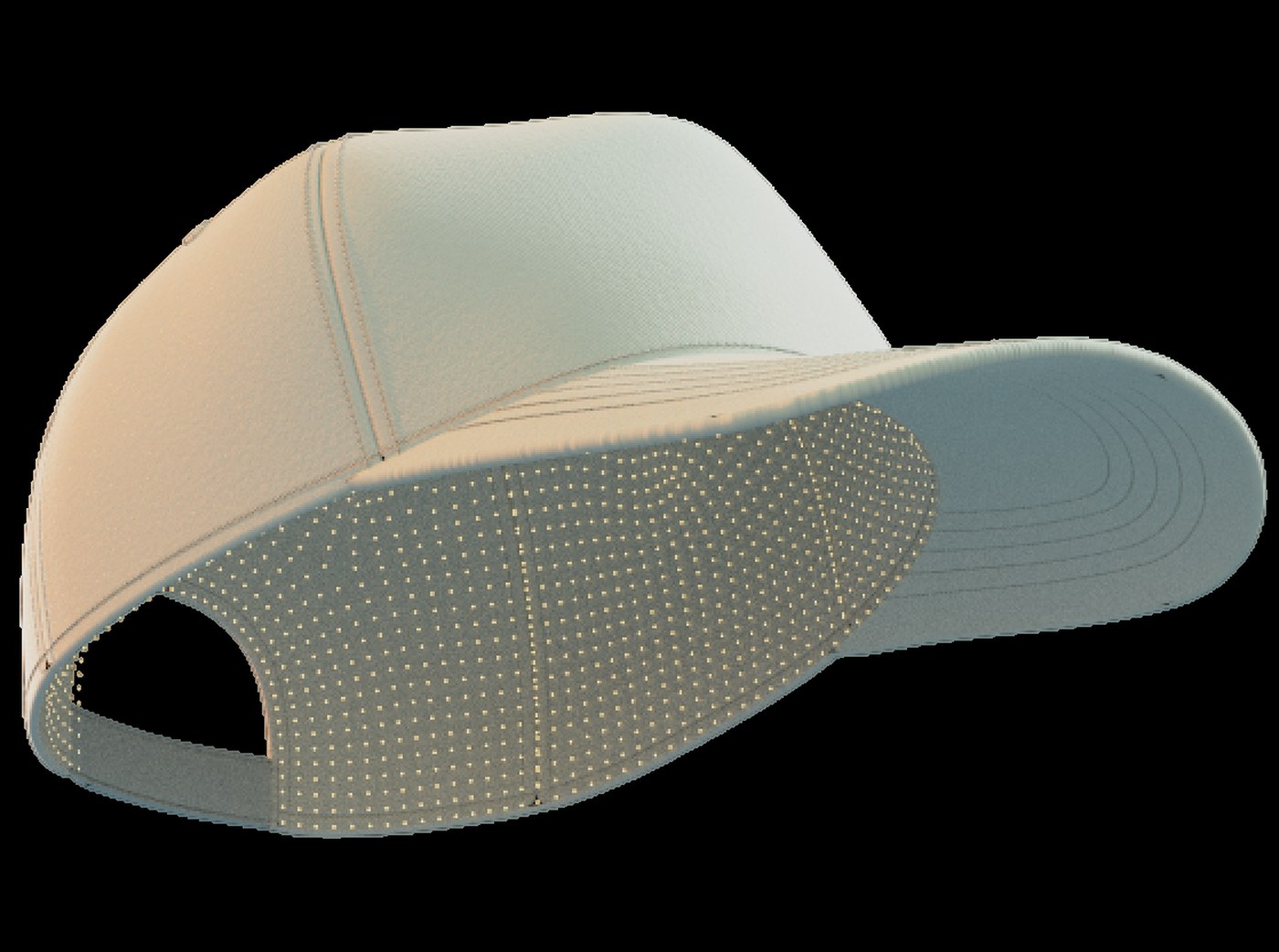 Image: Sabi
The first product is meant to look like an ordinary baseball cap. Sensors measuring one to five millimeters sit inside the brim and are designed to capture EEG signals through hair across a gap of up to five millimeters, without gel, surgery or direct scalp contact, the company said. A custom EEG chip powers the array. Sabi claims internal benchmarks show the chip is more than 50 times as power-efficient as Texas Instruments’ ADS1299, a common EEG analog front end, which would help keep heat and noise down inside everyday headwear.
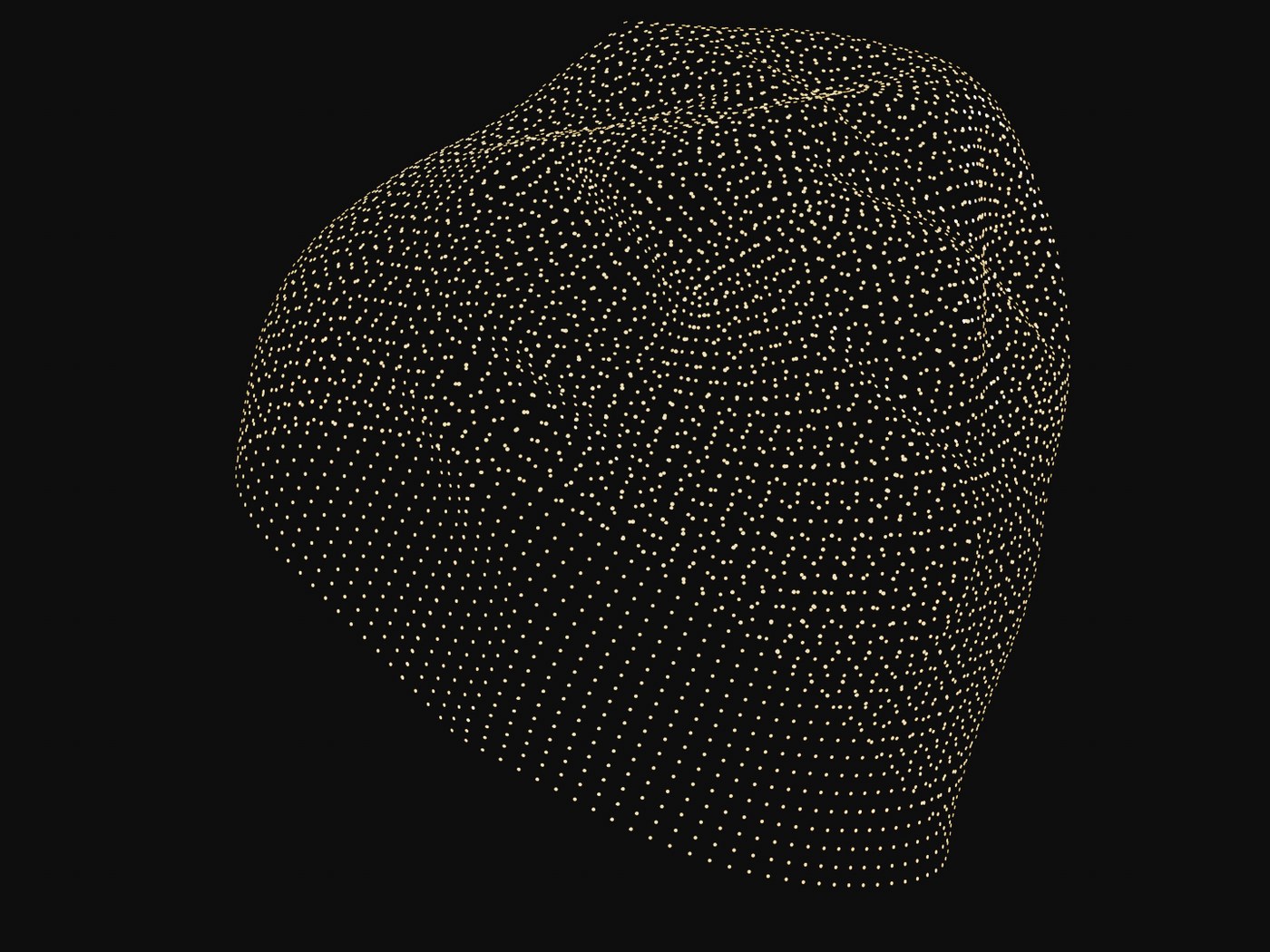 Image: Sabi
Signals feed Sabi’s Brain Foundation Model, trained on more than 100,000 hours of labeled, non-invasive recordings collected while participants imagined words and performed mental tasks. The company calls that the largest disclosed dataset of its kind. Three modes are in development: imagined speech turned into on-screen text, thought-to-prompt commands for an AI assistant, and intent prediction that suggests keystrokes or actions for the user to confirm. The cap is meant to pair wirelessly with a phone or computer the way earbuds do. Neural data is encrypted beginning at the sensor, Sabi said, with inference designed to run while that data stays encrypted.
 Image: Sabi
Forbes reported that CEO Rahul Chhabra claims an earlier wired, helmet-like prototype transcribed thoughts with up to 77 percent accuracy in a lab setting for people who had used it for more than two weeks. That figure is a company claim, not an independent study. Forbes also quoted University of Chicago neurology professor Nicholas Hatsopoulos, who called the concept nascent and said reliable results from signals filtered through the skull and scalp seem like a long stretch. Investor Vinod Khosla said in the Sabi release that early versions will not be perfect, and that you cannot perform a billion brain surgeries to replace a billion keyboards.
 Image: Sabi
Sabi plans to demonstrate early versions of the interactions at CES 2027 and is preparing units for an early-access waitlist. Pricing and a consumer ship date are not public. The company was co-founded by Chhabra and CTO Atmadeep Banerjee, a co-first author of MindEye, the NeurIPS 2023 paper on decoding viewed images from non-invasive brain recordings. Funding will go toward expanding the neural dataset, finishing the custom chip, manufacturing early devices and hiring in neuroscience, hardware and machine learning.