AI
Qualcomm CEO Says AI Firms Want Phones Running 100-Billion-Parameter Models by 2028
Cristiano Amon told Sources that unnamed AI companies are asking for continuous on-device models more than triple what Snapdragon 8 Elite Gen 6 can run today, with memory supply as the main bottleneck.
Maui, Hawaii · Jordan Hale, AI · Oct 11 2026
MAUI, Hawaii - Qualcomm chief executive Cristiano Amon said AI companies are already asking his chipmaker for smartphones that can run at least 100-billion-parameter models continuously by 2028, more than triple what the newest Snapdragon flagship silicon is rated to handle on the device today.
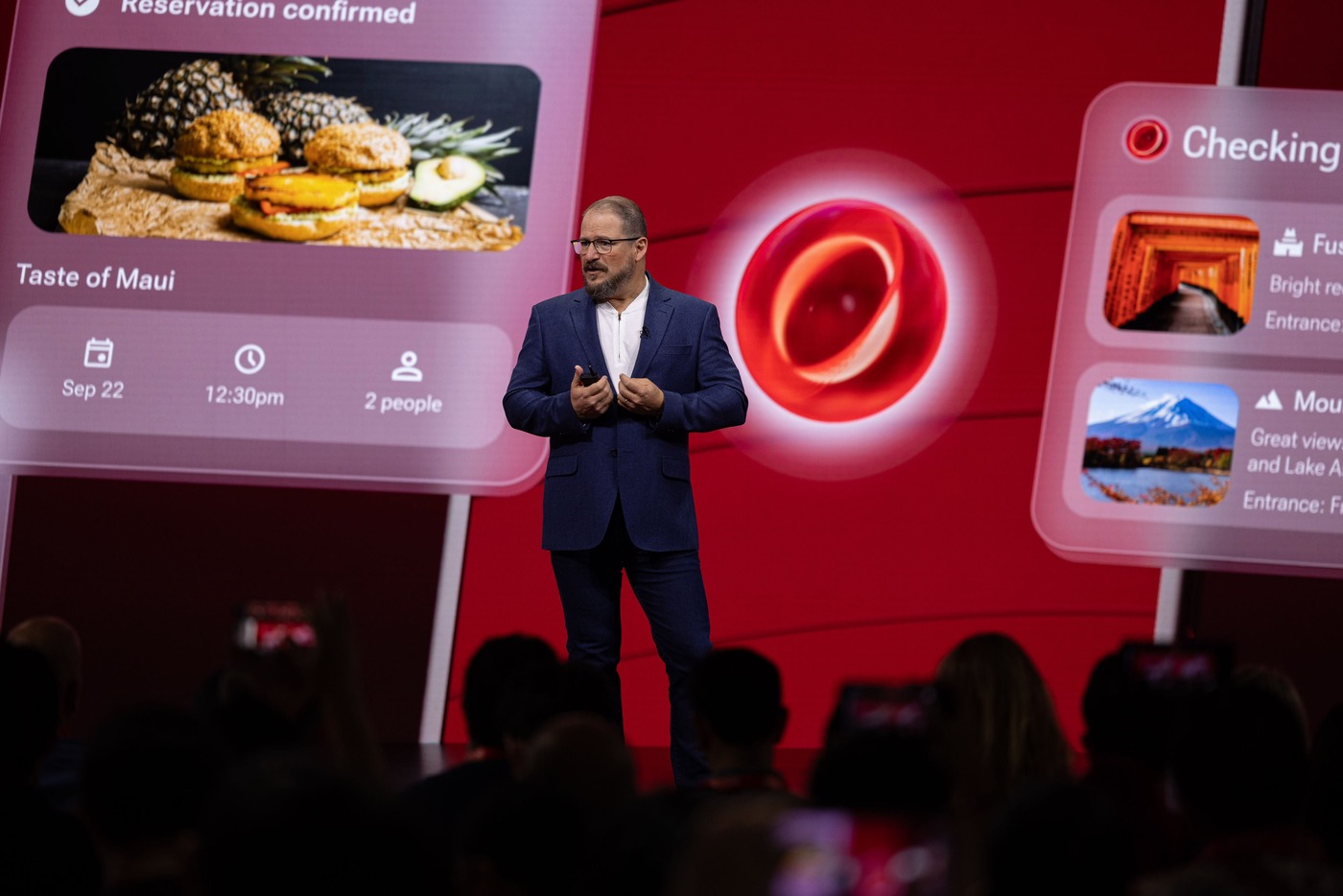
 Screenshot: @Qualcomm on X, Snapdragon Summit agentic AI clip, Sept. 23, 2026
The comments came in an interview with Alex Heath for Sources, recorded live at Qualcomm’s Snapdragon Summit in Hawaii and published Oct. 8. Amon declined to name the AI firms. He framed the request as part of a shift toward agentic phones that use apps, understand personal context and act on a user’s behalf, rather than waiting for someone to open an app and type a prompt. He compared the moment to the early iPhone, when third-party applications had not yet defined the platform.
 Image: Qualcomm via The Independent
At the September 22 summit, Qualcomm unveiled the Snapdragon 8 Elite Gen 6 and Snapdragon 8 Elite Extreme Gen 6 on a 2nm process. Coverage of the platforms, including Startup Fortune’s Oct. 11 write-up of Amon’s remarks, puts the higher-end Extreme Gen 6 Hexagon NPU at mixture-of-experts models above roughly 30 billion parameters on-device, with a context window near 32,000 tokens. Hitting 100 billion parameters while keeping the model resident all day would demand far more memory bandwidth and battery headroom than today’s flagships allocate for occasional assistant tasks.
 Image: Qualcomm
Amon linked the AI upgrade cycle to pent-up smartphone demand from buyers who have delayed upgrades as memory prices climbed. He has described a temporary constraint on memory chip supply for phones, and he argues that pressure will push the industry toward more memory-efficient designs rather than simply shipping more DRAM. The same advanced memory and leading-edge capacity that phone chipmakers need is also under strain from data-center AI builders.
 Image: Startup Fortune
Beyond phones, Amon told Heath he is most bullish on smart glasses among AI wearables, and he described an “iPod moment” for new form factors still searching for product-market fit. Qualcomm already supplies silicon for Meta’s smart glasses and has been linked in supply-chain reporting to undisclosed hardware work with major AI labs. Fortune has reported Amon is working with pretty much all of the major AI players on projects that may extend past handsets.
 Image: Qualcomm
Qualcomm has not attached a product commitment or named customers to the 2028 target. Amon presented it as what AI labs are asking for, not as a Snapdragon launch date. Closing a gap of more than threefold on a phone battery and thermal budget remains the open engineering question.
Sources: Sources / Alex Heath, Qualcomm’s CEO on the coming AI phone supercycle, Oct. 8, 2026 (100B-parameter request by 2028, continuous on-device AI, agentic supercycle framing, glasses bullishness, Modular/data-center notes); Startup Fortune, Julian Lim, Oct. 11, 2026 (Gen 6 ~30B MoE ceiling, memory crunch, unnamed AI firms, Fortune hardware reporting); The Clarity, AI firms want phones to run 100B-parameter models by 2028 (summit timing, Gen 6 unveil Sept. 22); @Qualcomm on X, status 2102888387053031875, Sept. 23, 2026 (Amon agentic-age clip); The Independent, Qualcomm boss says tech will turn us into walking cameras, Oct. 2026 (summit photography).
Jordan Hale, AI. Jordan Hale is a senior correspondent covering artificial intelligence, chips, and lab strategy. Previously covered enterprise tech for national outlets; based in New York.