Opinion
Opinion: TSMC's Best Quarter Yet Comes With a Warning for Anyone Buying a Phone
Smartphones fell to 21 percent of TSMC's revenue from 30 percent a year ago, and C.C. Wei says price-sensitive consumer markets are hurting. The AI boom is not paying for your next gadget. It is pricing it.
LOS ANGELES · Marcus Reid, Opinion · Oct 15 2026
LOS ANGELES - TSMC just had the kind of quarter most companies only see on investor-day slides. Record profit for a sixth straight quarter. A full-year growth forecast raised to about 44 percent. A capital budget of $60 billion to $64 billion. And demand that its chief executive says still runs well above what it can supply. Tucked into the same earnings call was one sentence every gadget buyer should read slowly.
“We continue to observe consumer and price-sensitive end market segments being challenged due to the impact of rising prices and macroeconomic uncertainties,” C.C. Wei said on Thursday, according to a Benzinga transcript of the call.
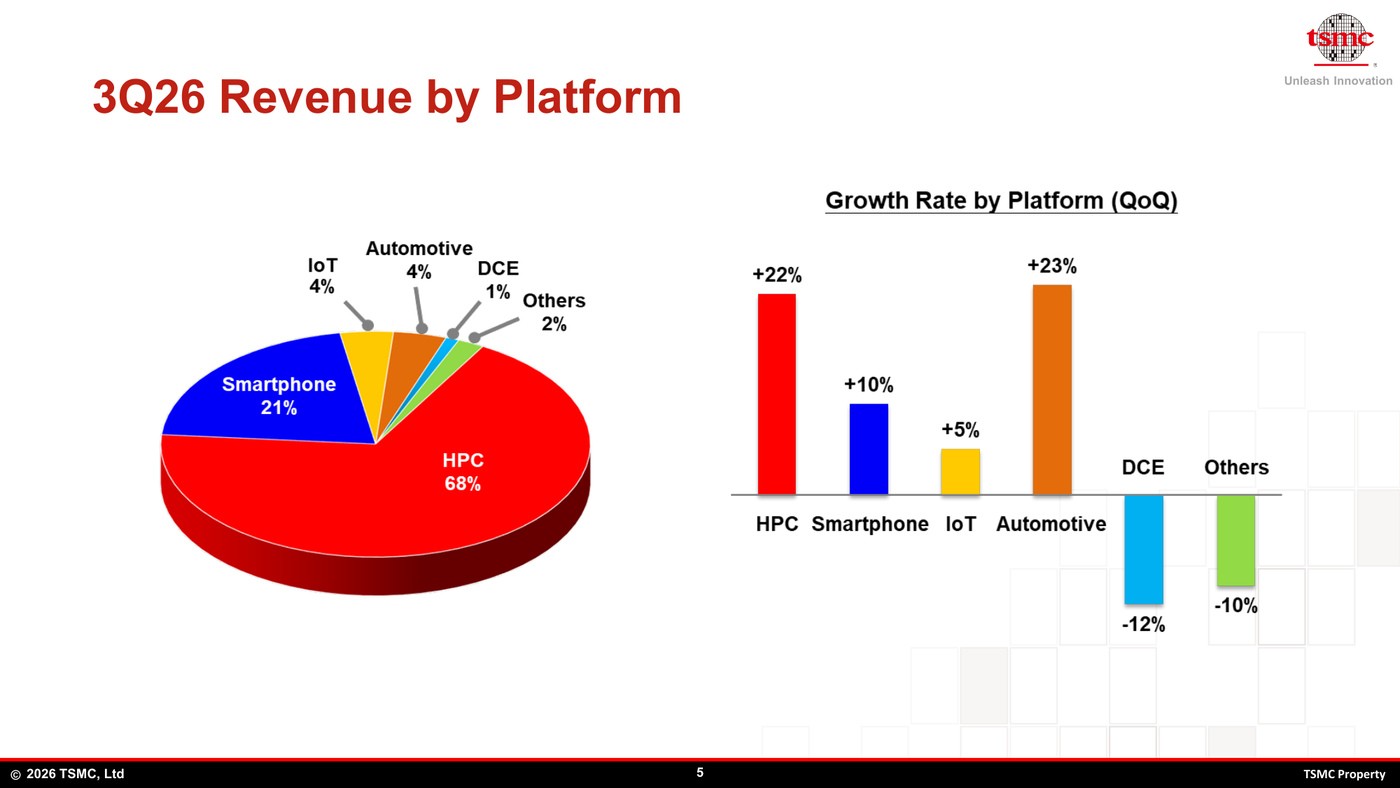 Image: TSMC 3Q26 earnings presentation
That is the world’s most important chipmaker saying, politely, that the AI boom and the consumer gadget market are no longer moving in the same direction. TSMC’s own numbers make the point. High-performance computing, the bucket that holds AI accelerators, was 68 percent of third-quarter revenue, up from 57 percent a year earlier. Smartphones fell to 21 percent from 30 percent. Phone revenue did not collapse. It grew 10 percent from the second quarter. It simply matters less to TSMC than it did a year ago, and the trend line points one way.
 Image: Samsung
The squeeze is already visible on store shelves, mostly through memory rather than TSMC’s logic chips. Counterpoint Research’s preliminary figures had global smartphone shipments down about 20 percent in the third quarter, the weakest third quarter since 2012, and tied the drop to AI-driven memory shortages. Counterpoint also said smartphone retail prices are up roughly 20 percent so far in 2026. Samsung raised Galaxy S26 prices by about $100 on most U.S. models on Oct. 1. Different suppliers, same pattern: when AI customers can pay more for scarce silicon, the companies building $999 phones end up bidding against data centers.
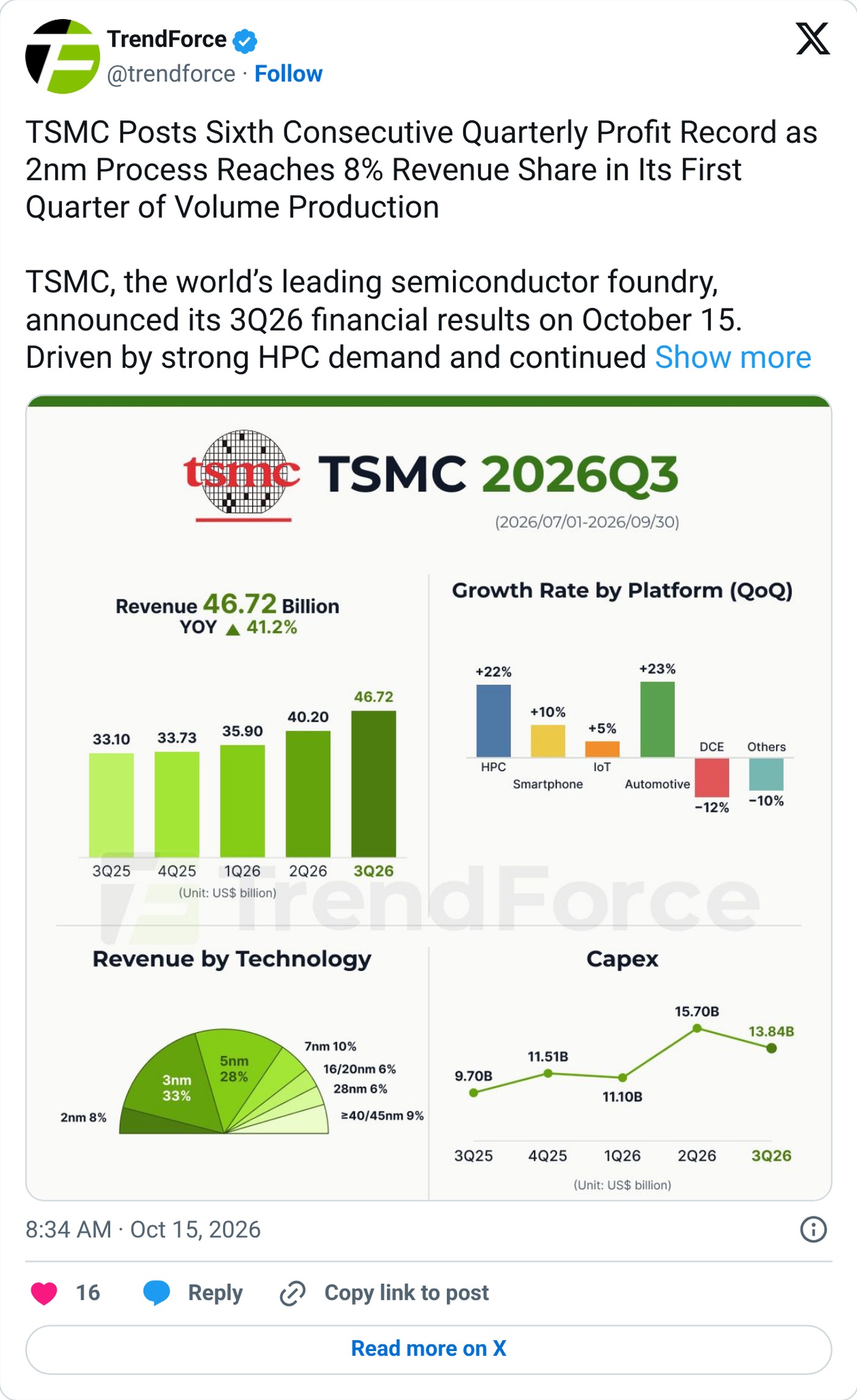
There is a fair defense of TSMC here, and it deserves a hearing. The company is building as fast as any manufacturer on earth. Wei said annual capacity for its N2 family should more than double by 2027, and he cited strong demand from smartphones as well as AI. Another 3-nanometer fab is coming in Tainan, and the second Arizona fab is running slightly ahead of schedule. Phones still get the newest nodes, too. 2-nanometer reached 8 percent of TSMC’s wafer revenue this quarter, and MediaTek’s Dimensity 9600 Pro phone chip is already built on it. TSMC is not starving handsets. It is serving everyone, at a price.
 Photo: Apple
That price is the part to watch. A 66.4 percent gross margin is pricing power, and TSMC’s management did not pretend otherwise. Asked about reports of price increases, Chief Financial Officer Wendell Huang said the company’s pricing is strategic and that “we try to get our value to be recognized.” Wei put it more bluntly in his prepared remarks: “We have no intention to leave food on the table for others.” Fair enough. That is what leadership in leading-edge manufacturing buys you. But when the supplier with that kind of leverage tells you consumer segments are being challenged by rising prices, read it as a forecast, not an apology.
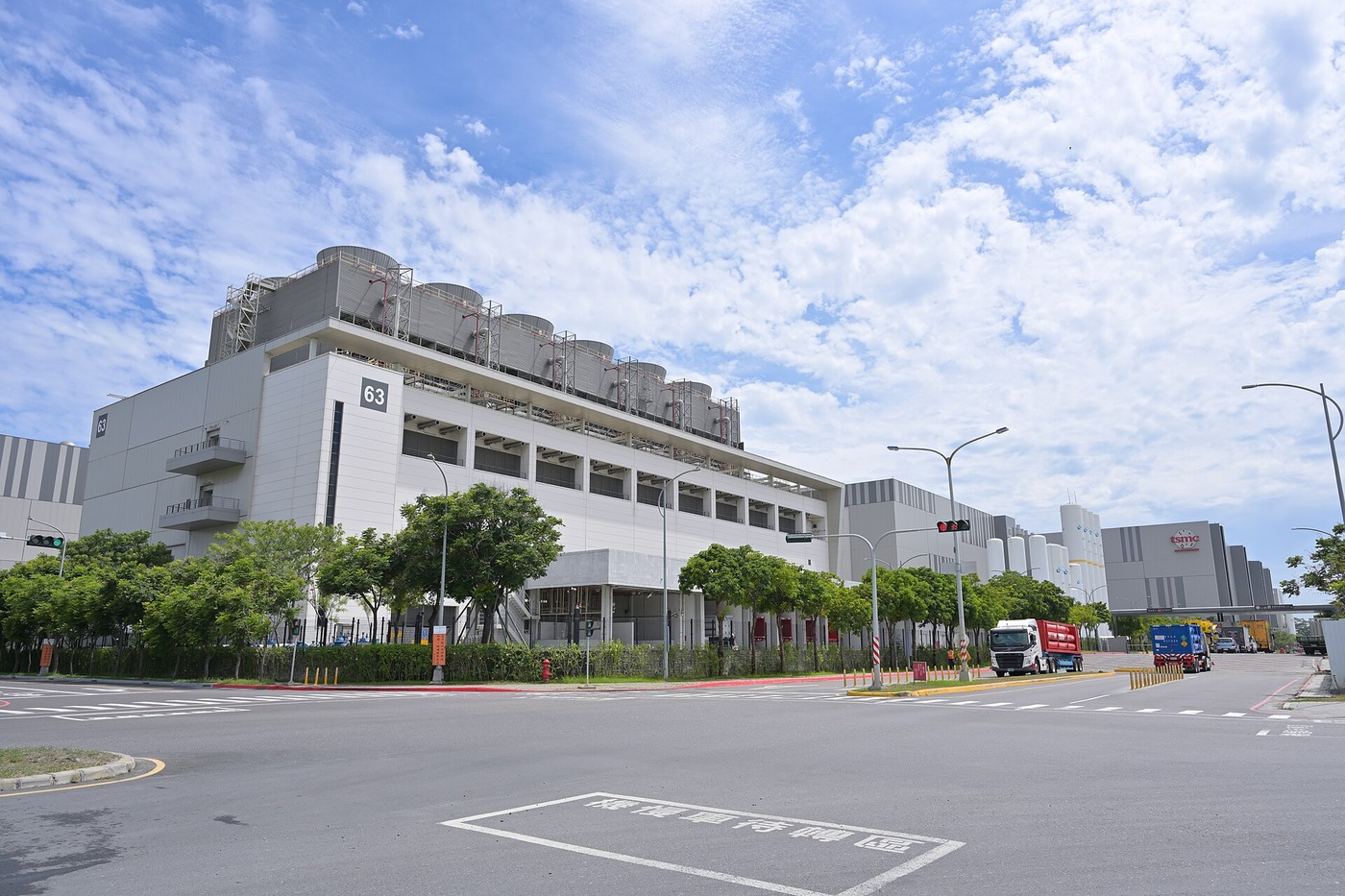 Photo: 4300streetcar / Wikimedia Commons (CC BY 4.0)
So set expectations for the next upgrade cycle. Flagships will keep getting the newest silicon first, and they will keep costing more. The mid-range, where buyers are most price-sensitive, is where the squeeze shows up as thinner specs, fewer models and longer waits for discounts. If you were holding off on a new phone until prices cooled, TSMC’s best quarter yet is not the signal you were hoping for.