
Opinion
Opinion: Sweden's Chatbot Block Is About Contracts, Not Chatbots. Every Office Should Take the Hint.
From today, ChatGPT and Claude no longer load on Swedish Government Offices computers, while Microsoft Copilot stays. The rule makes sense. Keeping the criteria private does not.
Stockholm · Marcus Reid, Opinion · Oct 26 2026
STOCKHOLM - As of Monday, civil servants in Sweden’s Government Offices, the body that serves the prime minister and the ministries, can no longer open two of the world’s best-known chatbots on their work computers. The browser versions of ChatGPT and Claude are blocked from Oct. 26, the office confirmed in an email to SVT. Staff are being sent to Microsoft Copilot, which the office reviewed and then locked down further. It is tempting to read this as Europe picking a winner in the chatbot war. It is something more boring and more useful than that.
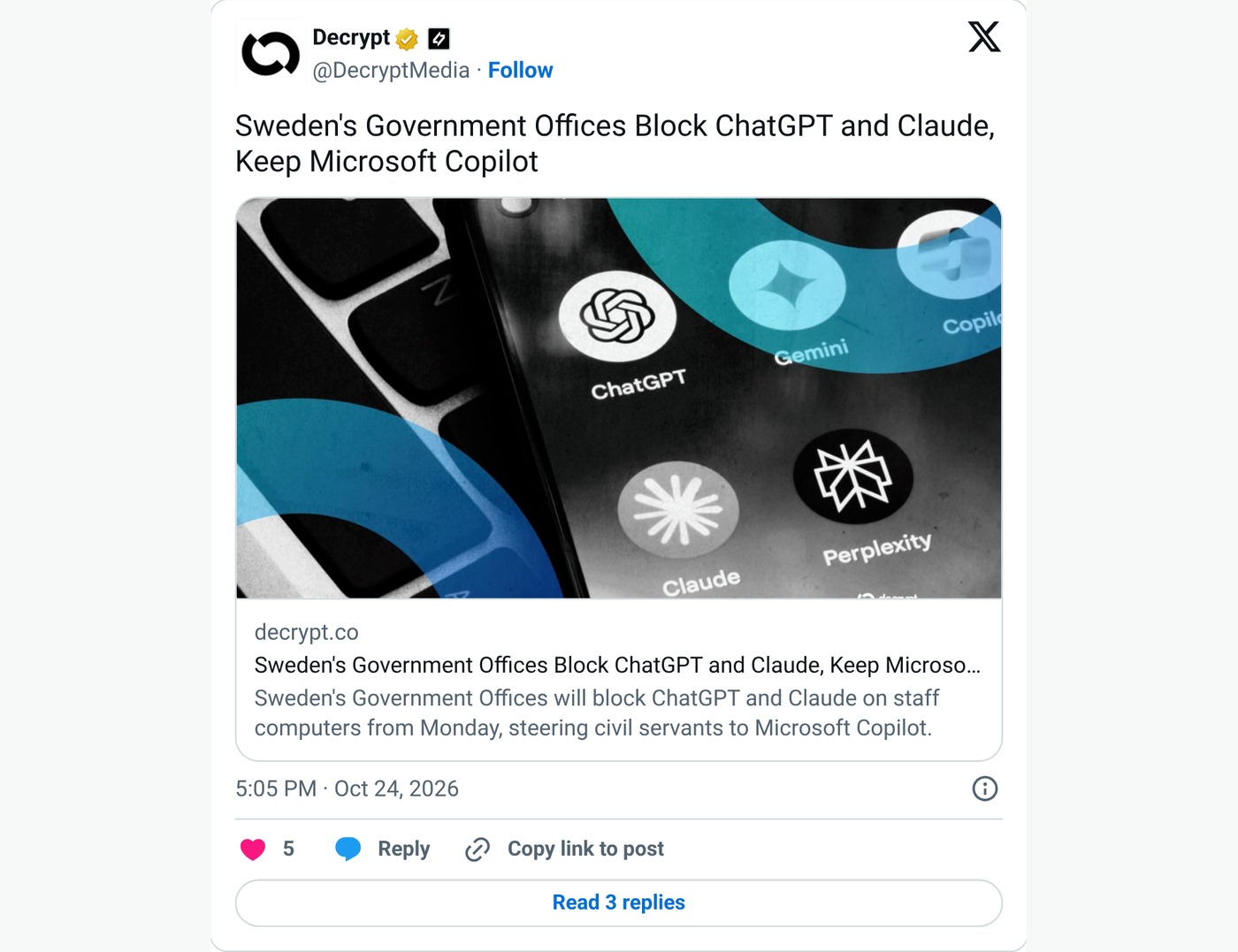
Look at what the block does not do. The same email to SVT said employees can still reach the ChatGPT and Claude language models through Intric, an internal platform. So the models themselves are not the problem. The problem is the consumer front door. Mikael Wettercrantz, the office’s director of digitalization, told staff on the intranet that using AI services without an agreement can have “consequences for our information security,” Svenska Dagbladet reported, citing Sveriges Radio’s Ekot. “We have seen several examples of problematic use of open AI services,” he wrote, according to Decrypt.
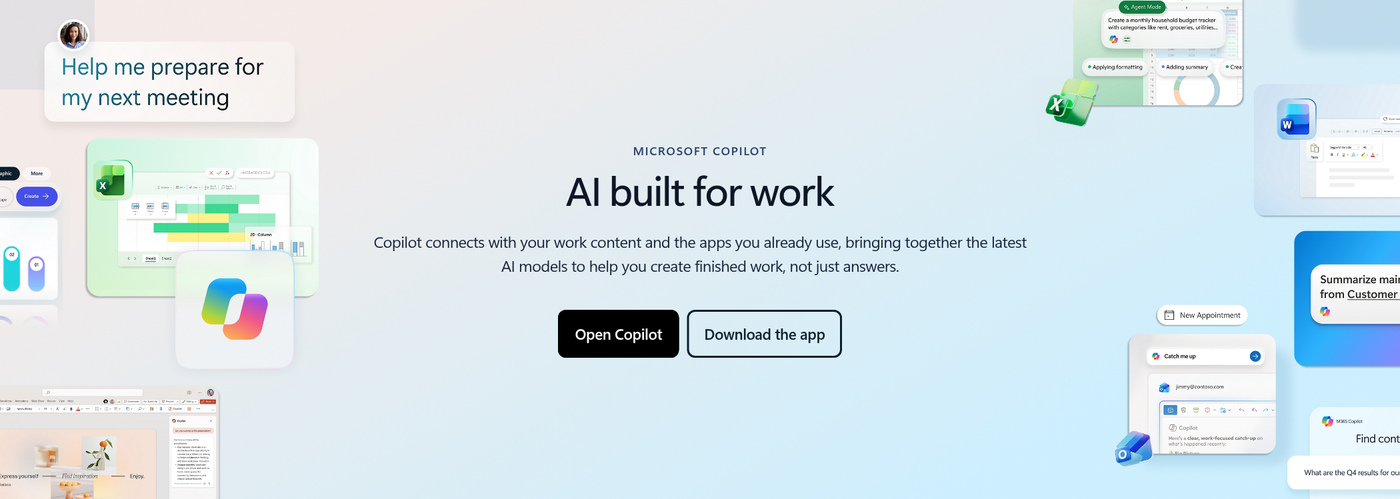 Image: Microsoft
That is the right instinct. When a civil servant pastes a draft memo into a chatbot under a personal account, the provider’s standard terms decide how long the text is kept, where it is processed and whether it can help train the next model. A contract can set all three. Sweden’s Tax Agency and the National Board of Institutional Care have already reached the same conclusion, and the Enforcement Authority is preparing its own decision. An internal audit at the Transport Administration found about 10 AI services in what it called widespread and risky use, Decrypt reported. Any large employer that has not run that audit should assume the answer is similar.
 Image: Jan Ainali / Wikimedia Commons (CC BY-SA 4.0)
The weak spot is what Sweden has not said. The office has not published what Copilot had to clear, what it changed after the review or whether Anthropic’s models, which Microsoft offers inside Copilot and which are switched off by default in the European Union, are turned on in its version. If they are, a Claude model is still answering questions on government computers, just under a Microsoft contract. That may be perfectly sensible. But without the criteria, a security decision starts to look like a procurement decision, and the vendor that already runs the office’s email and documents gets a head start that rivals cannot see a way to match.
The fix is simple and costs almost nothing. Publish the checklist: where data must stay, how long it may be kept, whether it can be used for training and who can audit the logs. Then let any provider that signs those terms in. OpenAI and Anthropic both sell business plans built for exactly this. The European Parliament switched off AI features on its work devices in February because it could not guarantee the security of the data. Sweden has gone one better by keeping a sanctioned path open. Writing the rules down would let every agency, and every company watching, follow it.