Opinion
Opinion: OpenAI Wants to Call Data Centers 'AI Compute Campuses.' Neighbors Want Numbers, Not New Names.
OpenAI plans a post-midterm push that includes renaming the buildings behind AI. Its own Ohio pledge shows what actually earns trust: published water figures, power lines the builder pays for and no secret deals.
San Francisco · Marcus Reid, Opinion · Nov 2 2026
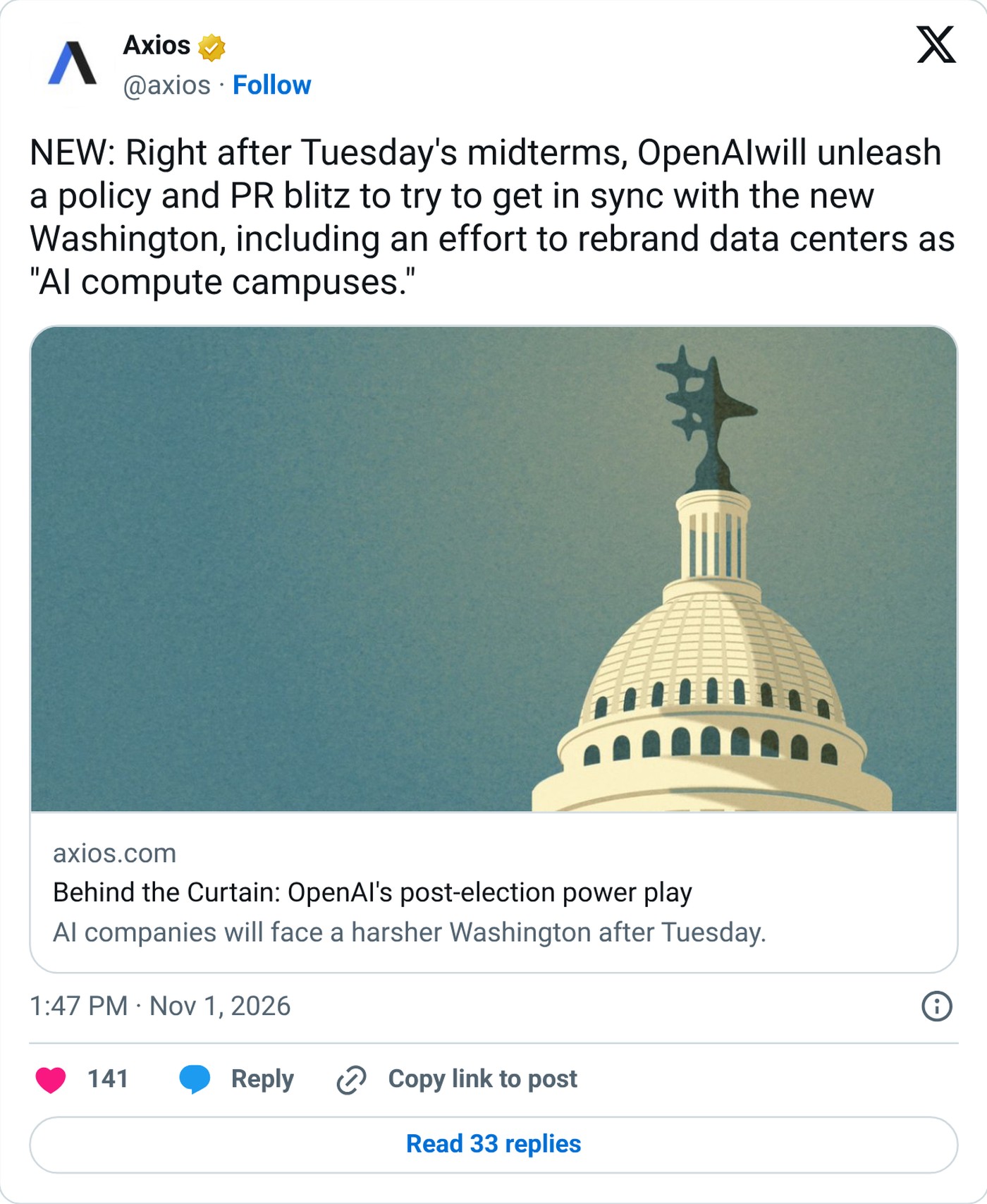
SAN FRANCISCO - American business has a long habit of fixing an unpopular product by giving it a new name. OpenAI is about to try it on the data center. Right after Tuesday’s midterm elections, the company plans a policy and PR push that includes an effort to rebrand data centers as “AI compute campuses,” Axios reported on Sunday.
According to Axios, OpenAI will argue that the infrastructure it builds, unlike legacy data centers, deserves the new name because it can economically transform the communities that host it. Axios called the rebrand “intentionally provocative.” OpenAI pointed to its huge project in Pike County, Ohio, which it says will bring thousands of jobs.
 Screenshot: @axios on X
I understand the impulse. Data centers have become one of the least loved buildings in America. In early October, Amazon Web Services chief executive Matt Garman wrote that more than 100 data center moratoriums were being considered across the country, according to WIRED. Microsoft and Amazon have both said they will stop using nondisclosure agreements with local governments, after a string of cases in which county officials could not tell residents even which company was behind a project.
But a campus is a place with students and a lawn. These are huge halls full of chips, cooled by machinery and fed by new power lines and, in OpenAI’s Ohio project, new natural gas plants. A new name does not change the electricity rate or the water bill, and those are the questions neighbors actually ask.
The frustrating part is that OpenAI already knows what works, because it wrote it down. When it announced its role in the PORTS-Pike project in August, it made specific promises. The developer, SB Energy, will pay the full cost of grid upgrades and new transmission lines, so Ohio ratepayers do not. The site will use closed-loop cooling. OpenAI will put $40 million into a community grant fund shaped by residents’ priorities. It will publicly report the project’s expected water use once the design is final, and every year it will publish a report on local hiring, community investment, water use and energy use.
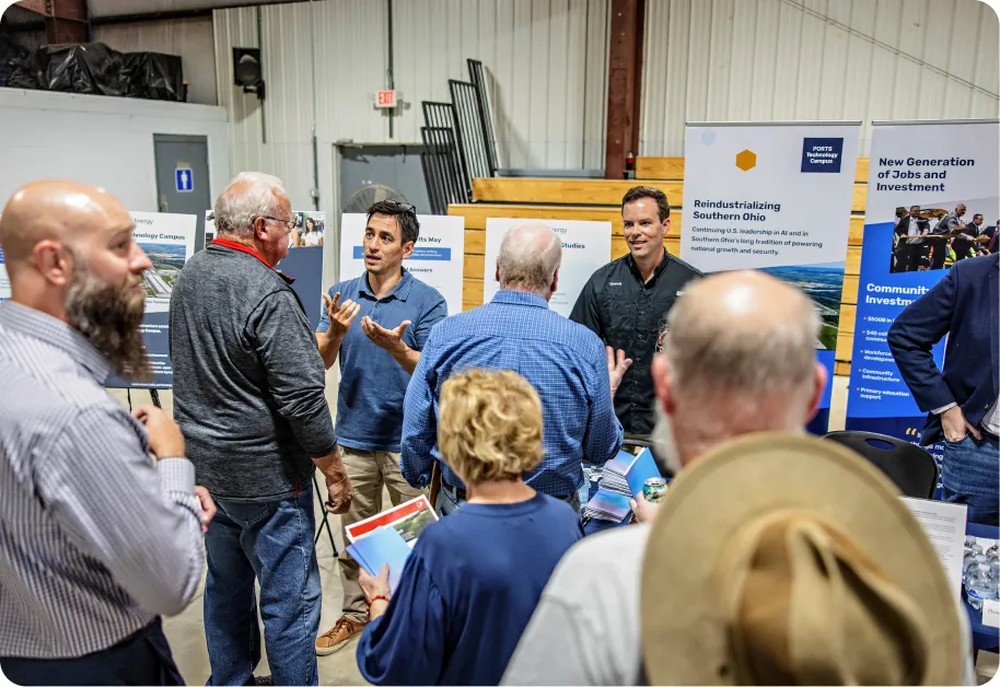 Image: SB Energy
Those are the sentences that matter to someone living near the site. A resident can check them, and can bring them up at the next county meeting. Chris Lehane, OpenAI’s chief global affairs officer, told Axios that this kind of scrutiny is fair. “Communities should hold companies responsible and accountable so they really and truly get a transformative benefit from these projects,” he said.
Some of OpenAI’s other post-election ideas are better than the rebrand. Axios reported that the company will propose state legislation giving people a meaningful say in how projects are built and what benefits they receive, along with mandatory “speed limits” for the most powerful AI systems. If that legislation has real teeth, it will do more for OpenAI’s reputation than any new noun.
So keep calling them data centers. Then make the Pike County pledges the floor for the whole industry: no secret agreements, power upgrades paid for by the builder, water use published before construction and checked after it, and a yearly report card that residents can read. Do that, and few people will care what the buildings are called. Skip it, and “AI compute campus” will become one more phrase people roll their eyes at.