
Opinion
Opinion: Meta Dropped the Camera From Ray-Ban Audio. The Microphones Still Hear You.
The camera-free $349 frames ship Oct. 13 with six mics, open-ear audio and Meta AI. Cutting the lens fixes one privacy scare. It does not settle consent for everyone else in the room.
LOS ANGELES · Marcus Reid, Opinion · Oct 12 2026
LOS ANGELES - Tomorrow Meta starts shipping Ray-Ban Meta Audio, its first camera-free AI glasses, from $349. The pitch is simple and smart: open-ear music, clearer calls, Meta AI in the temples, and no lens pointed at anyone. At 43 grams with up to 12 hours of battery and another 48 from the case, the Clubmaster and Burbank frames look like ordinary Ray-Bans until you notice the speaker cutouts. That is the product Meta wants you to see on Oct. 13.
It is also incomplete as a privacy story.
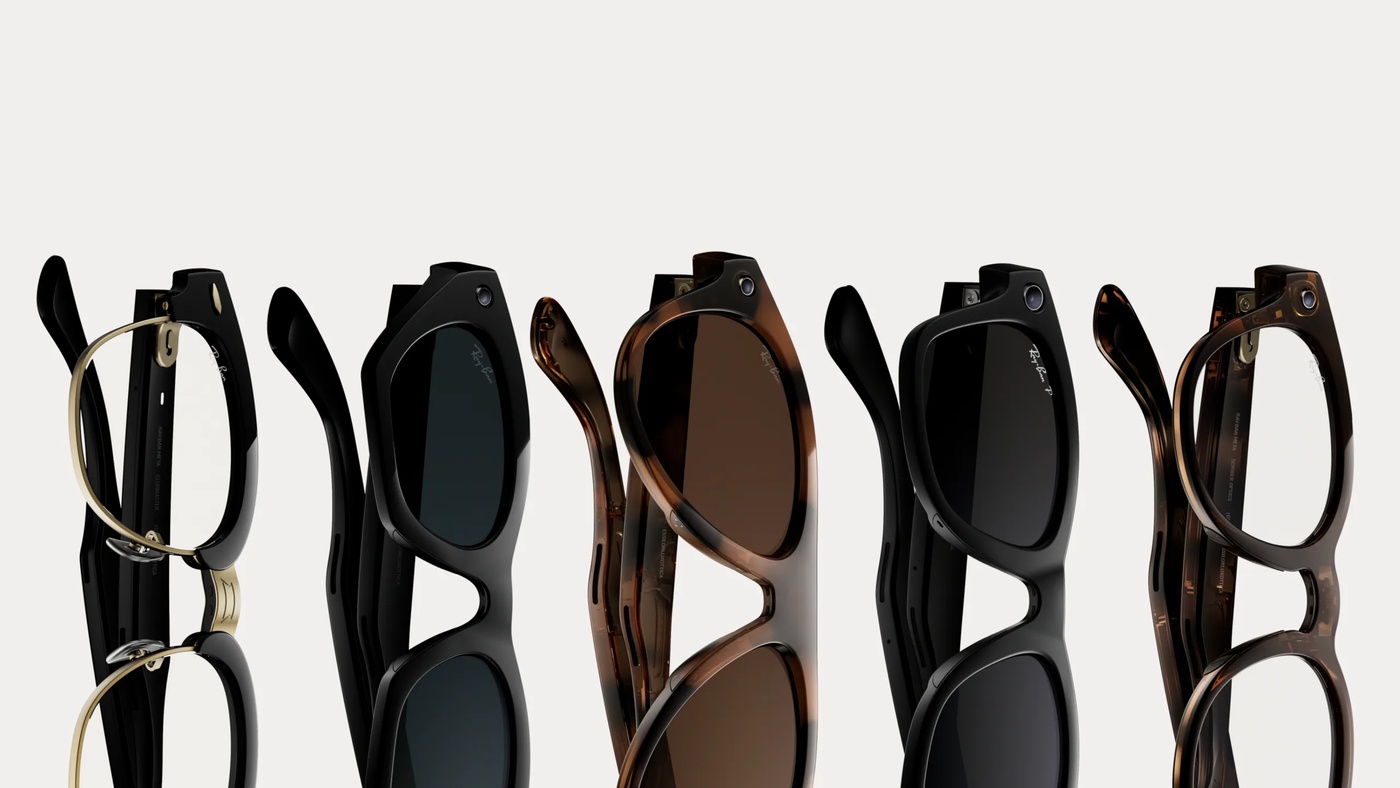 Photo: Meta
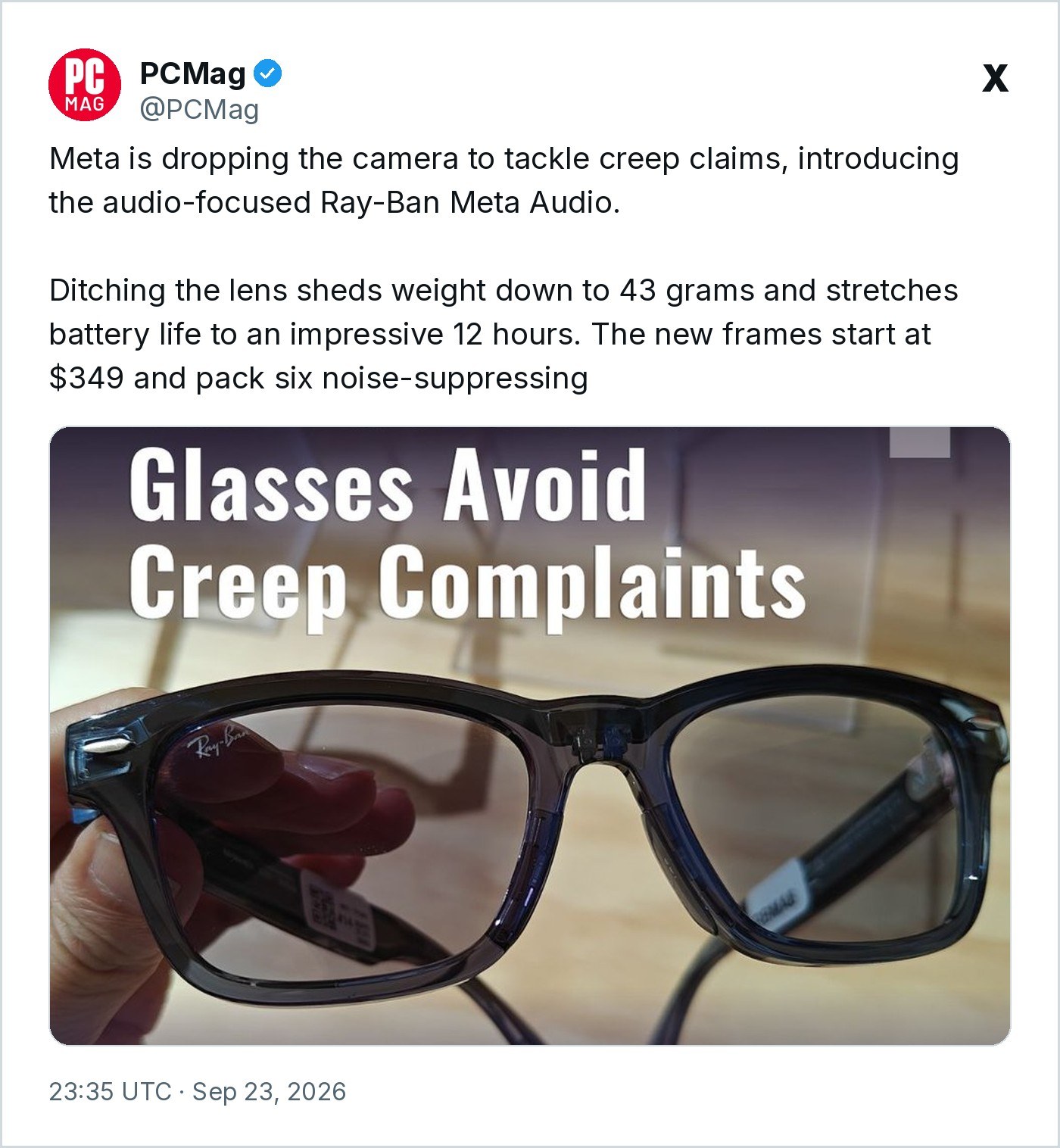
Meta’s official Connect post says Audio packs earbuds and AI into its lightest, slimmest AI glasses yet, with prescription support and 23 color and lens combinations. Gen 3, still on sale from $449, keeps the 12-megapixel camera, 3K video and the LED that is supposed to warn people when recording starts. Audio drops all of that. Tom’s Guide’s Scott Younker tried the frames at Connect and framed the launch against the “pervert glasses” reputation that has stuck to camera-equipped Ray-Ban Metas. Even Realities’ CEO, he noted, has argued that putting a camera on glasses brings more downsides than upsides.
Cutting the camera is a real fix for that specific fear. You cannot take a covert street photo if there is no sensor. Neighbors who flinch at an LED they never noticed will sleep easier when the LED is gone because the camera is gone.
Here is what still rides on your face. Tom’s Guide reports Audio uses the same six-microphone array and the same “Hey Meta” and temple-button path as Gen 3, minus photos and video. Meta’s own copy sells clearer calls than earbuds and all-day talk with the assistant. Stuff magazine’s Tom Morgan-Freelander put the bystander problem cleanly earlier this month: once you leave the house with a gadget that is always listening for a wake word, other people do not get a vote, whatever the fine print says about deletion. Apple faced a similar fight over Watch Audio Intelligence and answered with an eleven-page privacy note. Meta’s glasses answer is thinner. No camera is not the same as no capture surface.
 Photo: Meta
I am not arguing that Audio is a bad gadget. For buyers who want open-ear sound and voice AI without looking like a walking camcorder, $349 for a 12-hour frame is a coherent SKU, even if Tom’s Guide is right that older camera Metas still undercut it on price. The Opinion question is narrower. Meta is selling camera-free as the social-acceptability upgrade. That only works if the company also names what the mics do in a crowded cafe, what leaves the device when you say “Hey Meta,” and how a stranger can tell the difference between Audio and Gen 3 from across a table. Without a visible cue, consent becomes a trust exercise in Meta’s marketing, not a signal people can see.
 Photo: Meta

Ship day is the right moment to say this out loud. Buy Audio if you want lighter, longer-lasting glasses without a lens. Do not treat the missing camera as a full privacy absolution. Six microphones still hear the room. Meta still processes the wake. The people next to you still did not opt in. Until glasses wear a clear, honest indicator for listening as well as recording, camera-free is a useful product cut, not a finished social contract.