Opinion
Opinion: Google Finally Lets You Keep Gemini History Without Training Its AI. Turning History Off Now Means Two Months of Storage.
Splitting chat history from AI training is a real privacy improvement. The same update stretches the off setting from 72 hours to about two months.
Mountain View, Calif. · Marcus Reid, Opinion · Nov 18 2026
MOUNTAIN VIEW, Calif. - Until this week, the Gemini privacy deal was all or nothing. If you wanted to scroll back through your old chats, Google could use them to train its models. If you wanted your words kept out of training, you lost your history. One switch, Keep Activity, did both jobs.
On Monday Google finally broke that switch in two. “New settings let you keep your Gemini chat history, while opting out of generative AI model training,” the company wrote in a short blog post. That is a real improvement, and Google deserves credit for it. Users who already turned Keep Activity off will find both new settings off by default, and people who had it on keep their history but can now say no to training on its own.
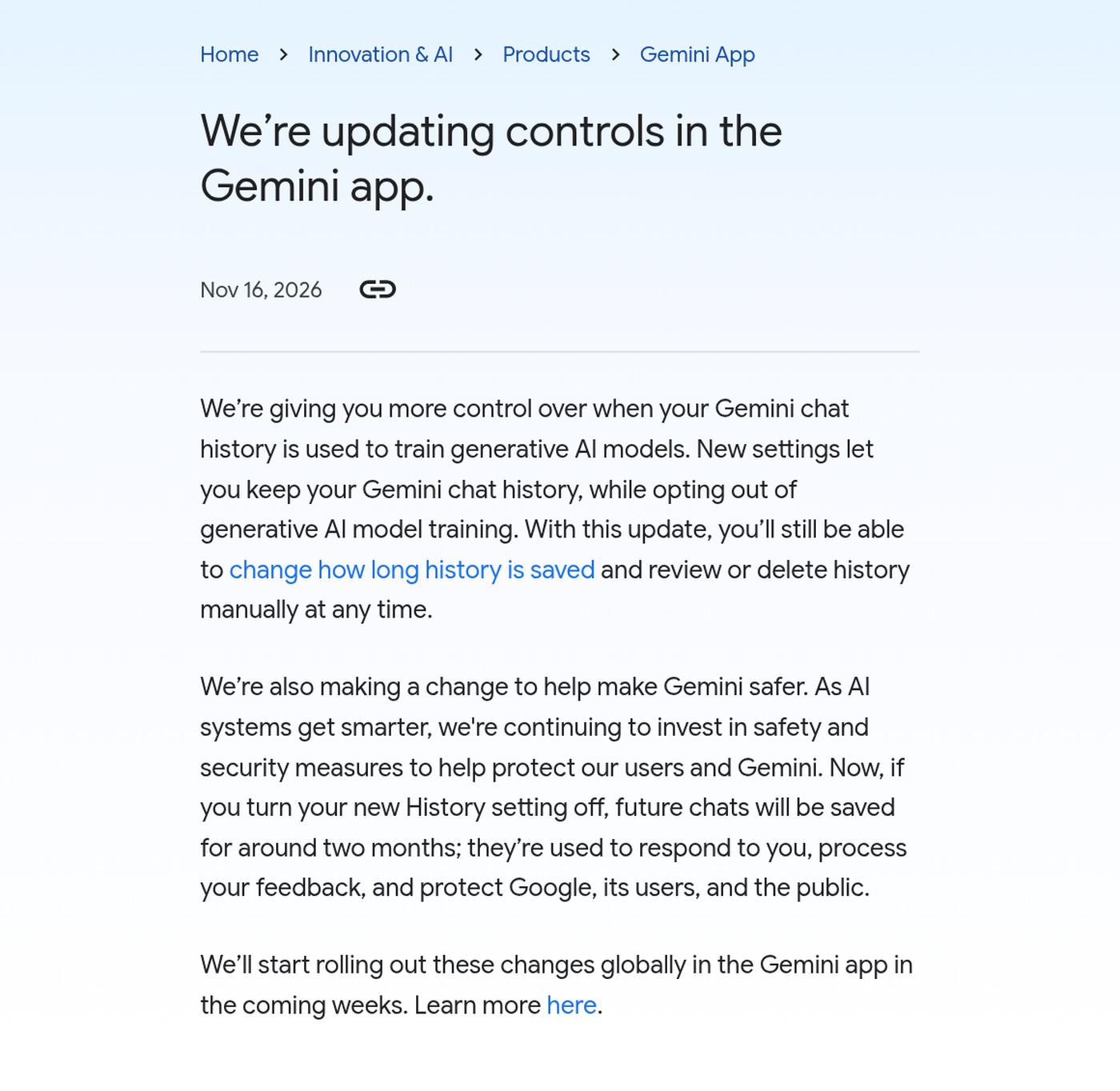
Image: Google
Then comes the second paragraph. “Now, if you turn your new History setting off, future chats will be saved for around two months; they’re used to respond to you, process your feedback, and protect Google, its users, and the public,” the post says. Google framed it as a safety measure: “As AI systems get smarter, we’re continuing to invest in safety and security measures to help protect our users and Gemini.”
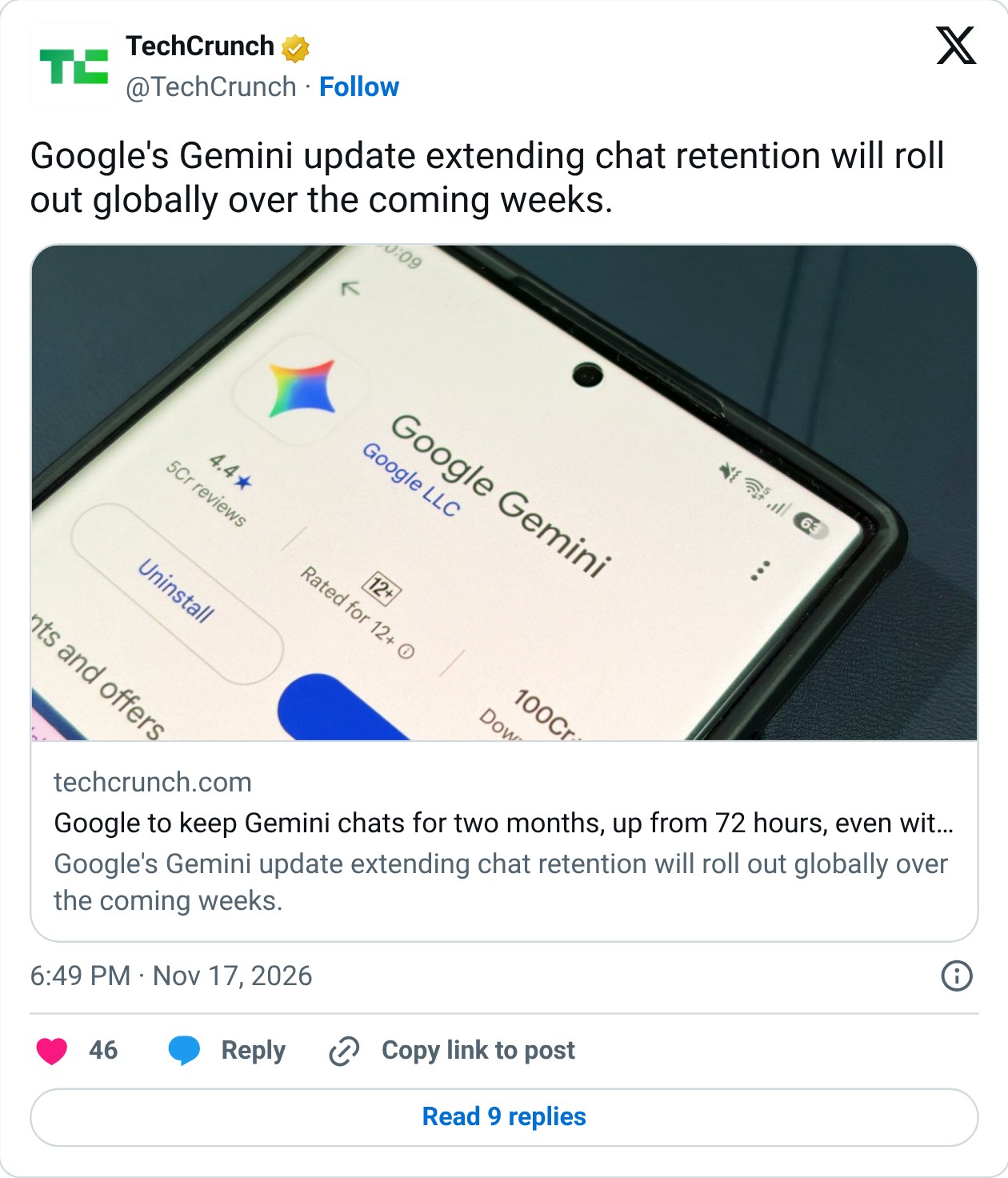
Two months is not a small tweak. Until this update, according to TechCrunch, which checked an archived copy of Google’s Gemini Apps Privacy Hub from Nov. 12, chats with history off were kept for 72 hours. 9to5Google reported the same split: 24 hours for chat context and 72 hours to help protect Google, its users and the public. Around two months is roughly 20 times longer. It is also about double what rivals say they keep: TechCrunch notes that OpenAI may keep temporary ChatGPT chats for up to 30 days and that Anthropic retains incognito Claude chats for 30 days by default.
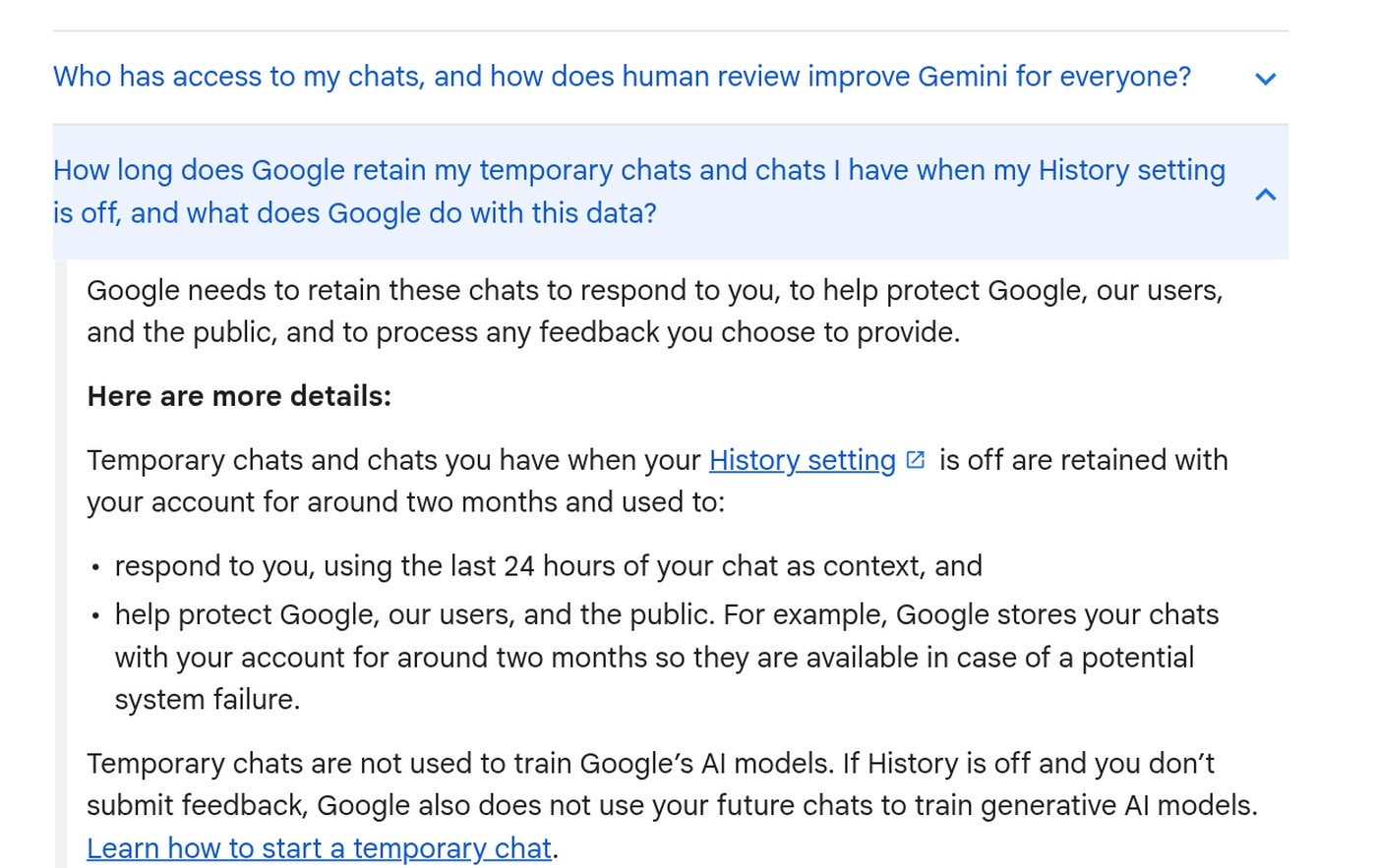
Image: Google
The updated Privacy Hub offers one concrete reason. “For example, Google stores your chats with your account for around two months so they are available in case of a potential system failure,” it says. It also promises that “Temporary chats are not used to train Google’s AI models.”
I take Google at its word on training. But read the system failure line again. A person who turns History off is telling Google, as plainly as the product allows, that they do not want the conversation kept. Keeping it for two months in case of an outage protects the service, not the person who asked for less. And the same help page is clear that these saved chats are not simply sitting in cold storage: future chats with History off are used to “protect Google, its users, and the public, with help from human reviewers.” Chats that reviewers look at, it adds, “are saved for up to 3 years, even if you delete them.”
Screenshot: @TechCrunch on X
None of this is hidden. Google put the two-month figure in its blog post, its help pages and, according to 9to5Google, an email to users. The problem is the order of the news. The headline is the win, keeping history without training. The cost arrives one paragraph later, and it applies to the very people who were most careful with their settings.
Google also has not said what prompted the change. TechCrunch reported that the company did not answer questions about why it made the switch or whether it would affect how conversations are accessed or reviewed. When the retention window for the most private setting grows twentyfold, “safety” in a blog post is not a full answer.
There is an easy fix that keeps both the safety work and the trust. Explain in plain words what kinds of review happen inside that two-month window, and offer a truly short-lived option for people who want one, the way the old 72 hours worked. Separating history from training was the hard part. Google already did it. It should not let a quiet two-month footnote turn a privacy win into a trade.
The changes roll out globally in the Gemini app over the coming weeks. There is still time to get the second half right.