Opinion
Opinion: ChatGPT Is Letting Businesses Talk Back Inside Your Chats. The Labels Are Doing a Lot of Work.
OpenAI's new Business Hub and Business Agents could make shopping in ChatGPT more useful. They also put a company's own salesperson one click from the answer you asked for, and a sponsored one beside it.
Los Angeles · Marcus Reid, Opinion · Nov 11 2026
LOS ANGELES - Ask ChatGPT for a gift idea and, starting this week, the store it recommends may be able to answer you itself. On Tuesday OpenAI introduced Businesses in ChatGPT, a beta that lets companies claim a verified profile, keep their prices and stock current, and, for eligible U.S. ecommerce and online service businesses, launch a Business Agent that talks to customers on the brand’s behalf.
There is a real case for this, and I want to make it first. Chatbots are bad at knowing what a small shop has on the shelf today. A verified profile with a live product feed is better than a model guessing from a stale web page. If I am comparing two products, a conversation with the seller’s own agent, built on the seller’s own information, can answer questions a general chatbot cannot.
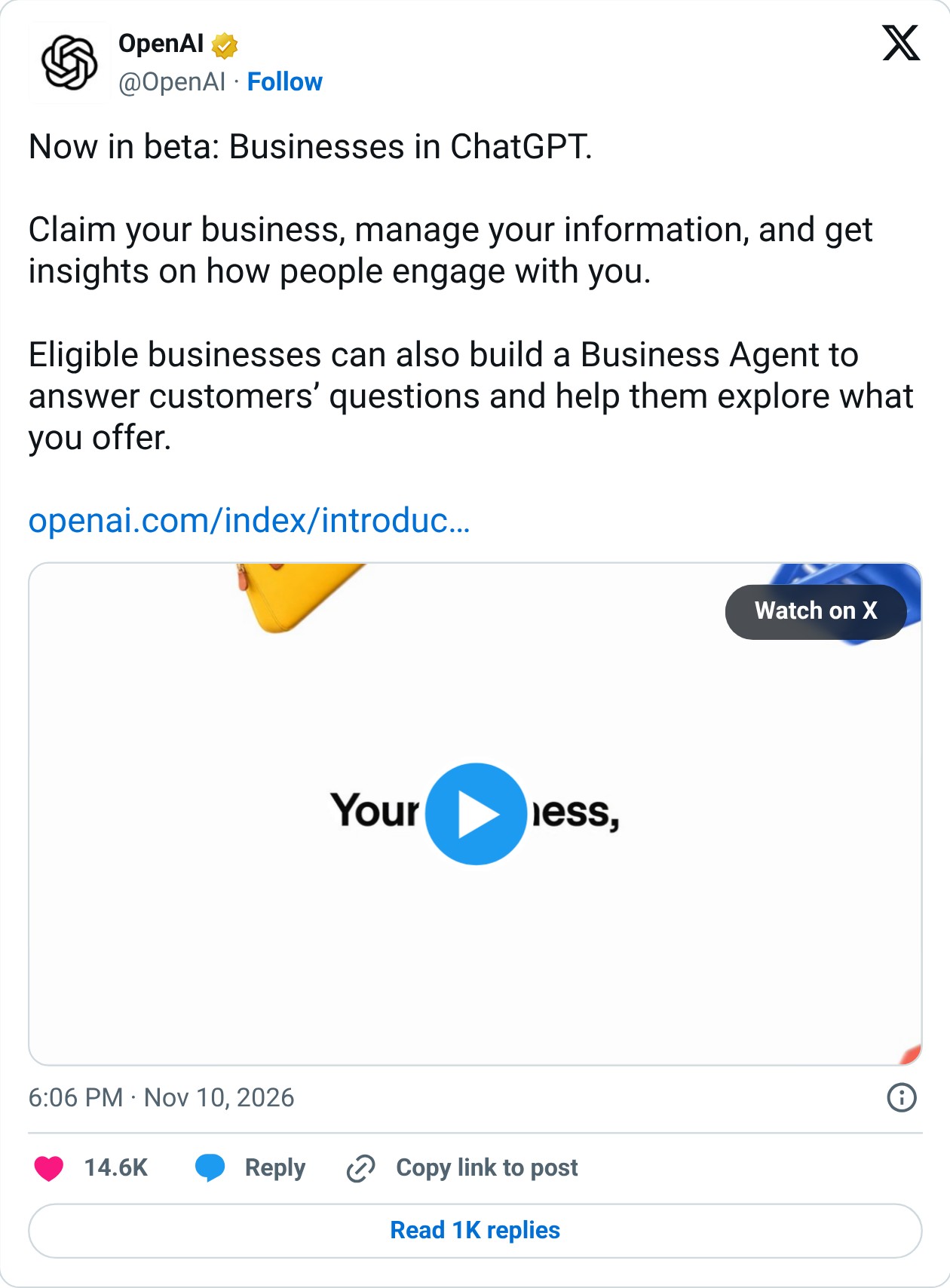 Screenshot: @OpenAI on X
The problem is what sits next to that. OpenAI’s post says businesses “can also sponsor their Business Agent and use it as the destination for ChatGPT Ads to reach more potential customers.” So the same agent that answers your follow-up questions can be bought placement. OpenAI’s answer is labeling. “Sponsored placements are clearly labeled and separate from ChatGPT responses,” the company wrote, and a Business Agent conversation is “clearly labeled, separate from the customer’s original ChatGPT conversation, and distinct from ChatGPT’s independent answers.”
The phrase “independent answers” carries the whole product. Search engines made the same promise for two decades, and anyone who has scrolled past a stack of ads to reach the first real result knows how a clear line drifts once revenue depends on it. OpenAI itself says “protecting the trust people place in ChatGPT remains our North Star.” Good. Then the line between an answer and an advertisement should be a design rule that does not move, not a label that gets smaller each quarter.
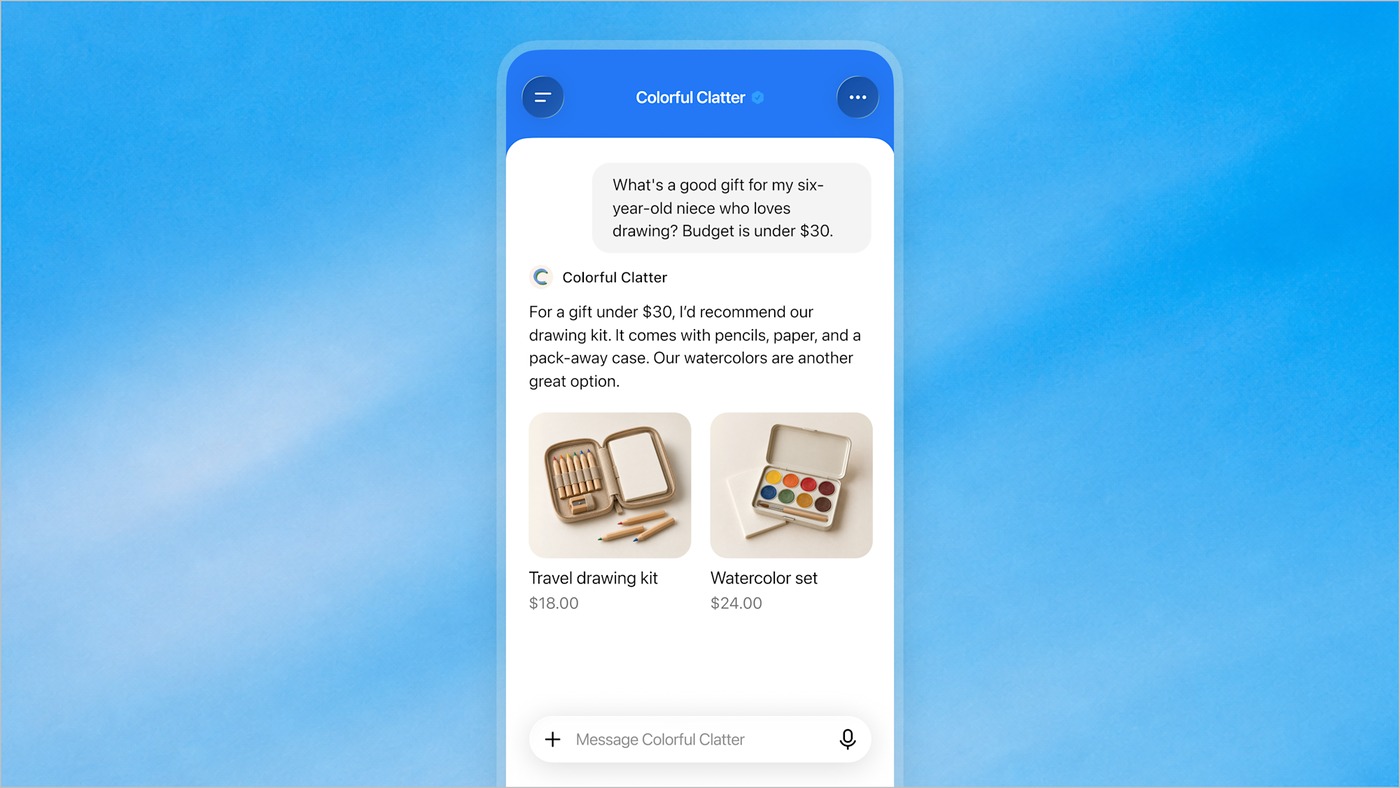 Image: OpenAI
Verification is the next soft spot. Businesses must be verified before they can update details or build an agent, but OpenAI has not explained the process in public. Benji Shomair, OpenAI’s vice president of monetization, told reporters there are “multiple verification methods that we use for different types of business in different markets,” TechCrunch reported. For a feature that puts a brand’s voice inside a tool 1.2 billion people use each week, that is thin.
OpenAI deserves credit on privacy. It says it does not share users’ conversations or Business Agent chats with businesses, and that the insights it offers, such as mentions, website clicks and discovery topics, are aggregated and appear only above certain thresholds. That is the right default, and it should stay that way as the program grows.
This is also not OpenAI’s first try at commerce. TechCrunch noted that an earlier push to let users buy products directly in ChatGPT, which included a checkout cart, was retired in March. Business profiles are a more Google-shaped bet. If OpenAI wants ChatGPT to become, in its words, “the platform for people and businesses to connect through AI,” it should publish how verification works, show users exactly when an agent is sponsored, and keep paid agents out of the answer itself. The labels are a start. Rules people can check would be better.