
Opinion
Opinion: Apple Will Start Checking Your Public iCloud Links. It Owes Users a Definition of 'Harmful.'
Starting with iOS 27.3, anything shared with "Anyone with the link" can be scanned by Apple. The idea is defensible. The vague wording and the account penalties are not.
Cupertino, Calif. · Marcus Reid, Opinion · Nov 5 2026
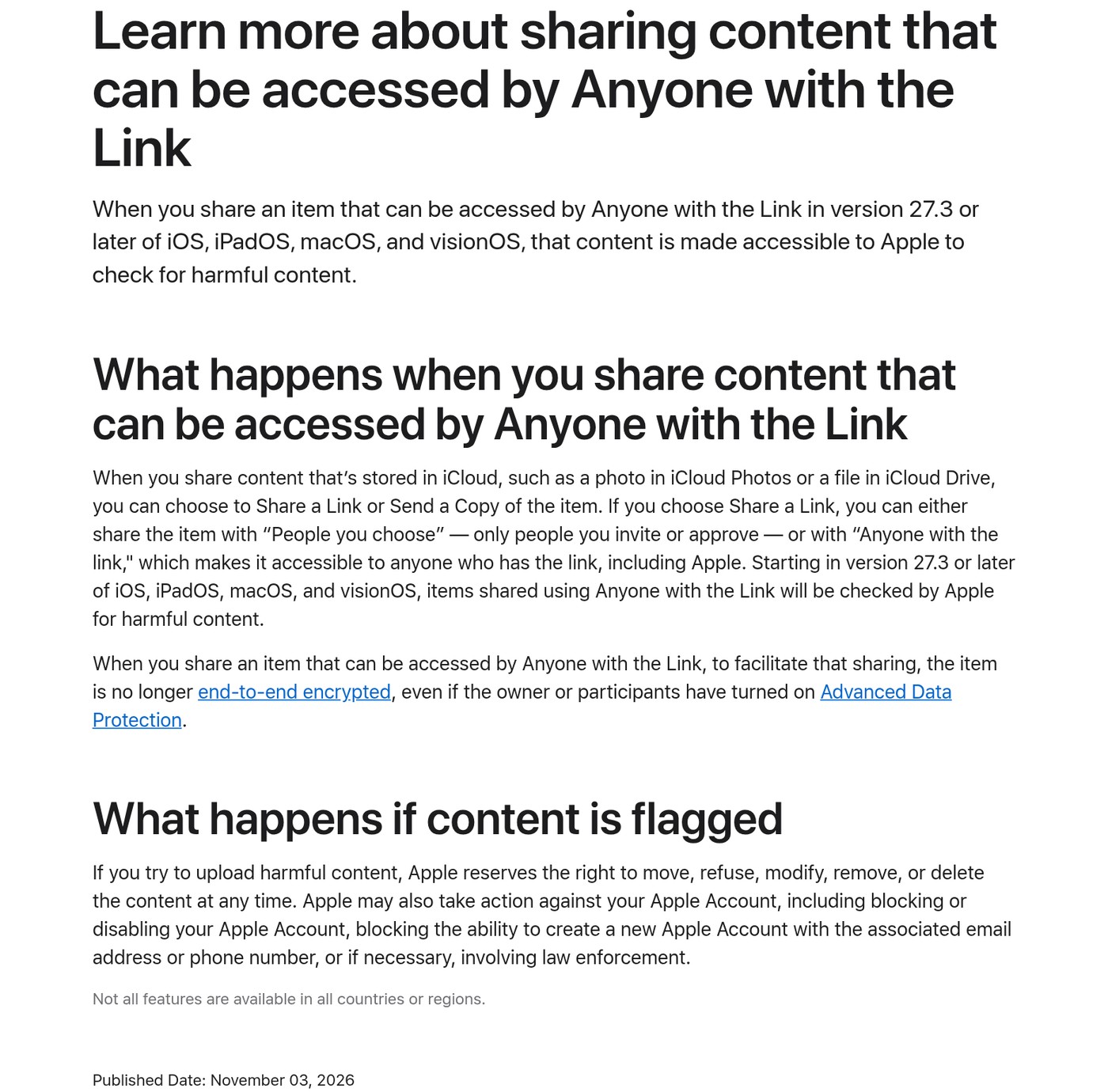
CUPERTINO, Calif. - Apple posted a short support document this week that will change how a lot of people share photos and files. Starting with version 27.3 of iOS, iPadOS, macOS and visionOS, “items shared using Anyone with the Link will be checked by Apple for harmful content.”
That sentence is defensible. Public links are public. Apple’s own support page points out that an item shared with “Anyone with the link” is accessible to anyone who has the link, “including Apple.” Open links are also an easy way to pass around illegal material, and The Verge noted that the change follows calls from protesters for Apple to crack down on child sexual abuse material stored in iCloud. A company that hosts files for the world has a fair claim to look at what it is hosting.
 Screenshot: Apple Support
This is also narrower than what Apple tried before. In 2021 it announced a plan to detect known child abuse images on iPhones themselves, then shelved it after a backlash from privacy researchers and dropped it the following year. The new checks apply only to items a user has chosen to make public, not to a private photo library.
The problem is everything around that sentence. Apple’s document never says what “harmful content” means. It could be malware. It could be abuse material. It could, in some future version, be something else, and users would have no way of knowing where the line sits.
The penalties are not vague at all. Apple “reserves the right to move, refuse, modify, remove, or delete the content at any time,” the document says, and it may take action against your account, “including blocking or disabling your Apple Account, blocking the ability to create a new Apple Account with the associated email address or phone number, or if necessary, involving law enforcement.”
An Apple Account is not a side login. It holds your purchases, your backups, your photo library and the keys to your phone. Losing it to a false positive, with no stated process for appeal, would be a disaster for an ordinary customer who shared a vacation album with the wrong setting.
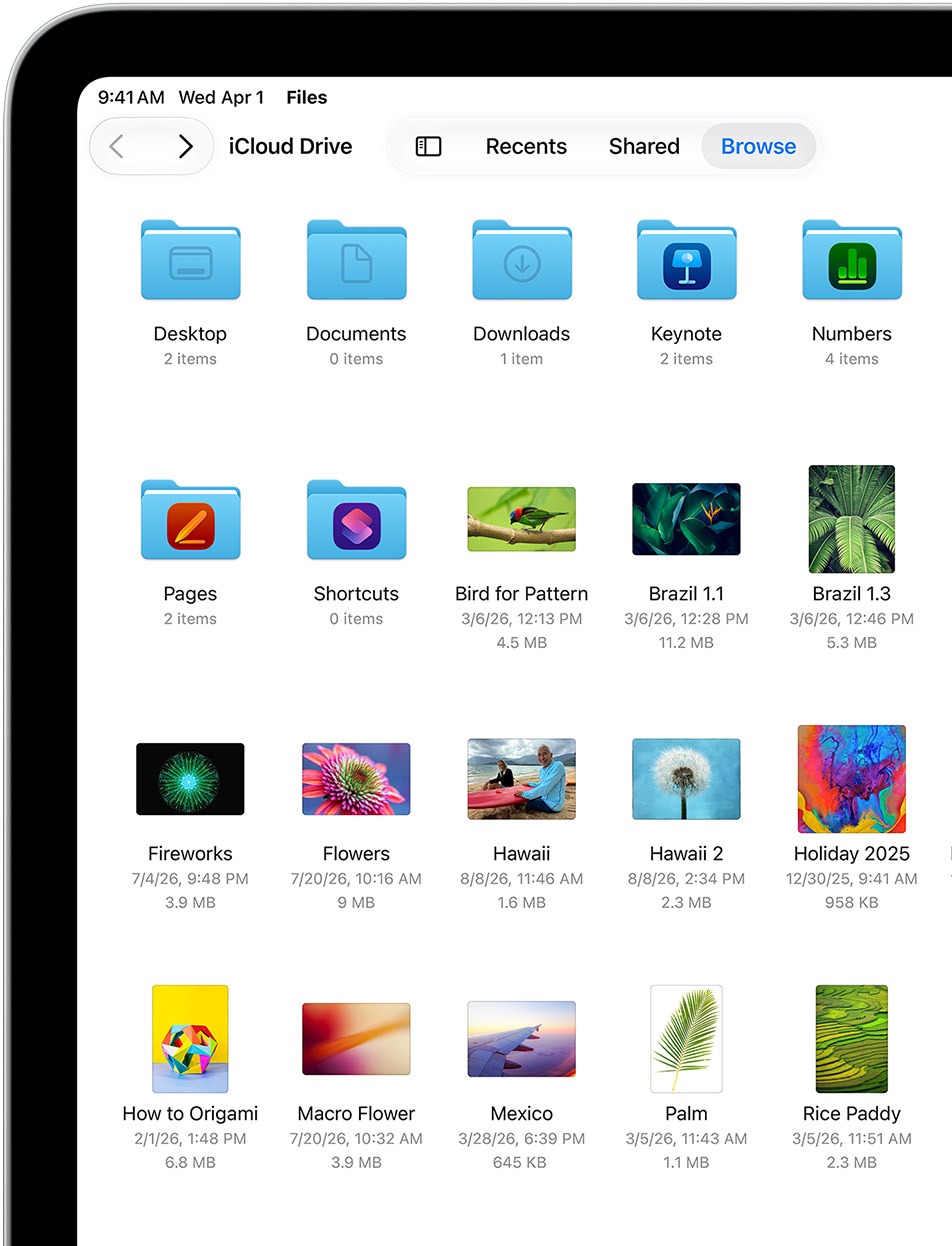 Image: Apple
There is a quieter change, too. Apple says an item shared with “Anyone with the link” is “no longer end-to-end encrypted, even if the owner or participants have turned on Advanced Data Protection.” Many people who switched on Advanced Data Protection probably assume it covers everything. It does not, and the share sheet should say so at the moment you tap the button. MacRumors also pointed out that Apple has not said whether links created before 27.3 will be checked.
None of this is hard to fix. Apple should publish the categories it checks for. It should tell users when an item is flagged and why. It should offer a real appeal before any account is disabled. And it should say plainly whether old links are in scope.
The first 27.3 betas reached developers on Tuesday, and Apple has said it plans to release iOS 27.3 in December. That leaves a month to turn a sweeping support note into a clear policy. For a company that sells privacy as a feature, that should be the easy part.