Opinion
Opinion: Altman Wants Open-Source AI and a "Tidal Wave" of Cyber Risk. Those Are Not Free.
In Vanity Fair's Fair Game interview, OpenAI's chief executive said society should accept severe cyber incidents from open models rather than ban them. Liberty is a real value. So is naming who pays when the wave hits.
LOS ANGELES · Marcus Reid, Opinion · Oct 11 2026
LOS ANGELES - Sam Altman has put a clean sentence on a messy trade. In Vanity Fair’s Fair Game interview, published in early October and still circulating hard on Sunday clips, the OpenAI chief executive said he supports open-source AI models even though “there is a coming tidal wave of cybersecurity problems that are going to come from these open-source models.” He rejected calls to ban them. Society, he argued, will have to “accept some fairly severe cyber incidents from open models in exchange for the liberty that comes with that.”
That is a serious claim. It deserves a serious reply, not a shrug and not a ban-everything panic.
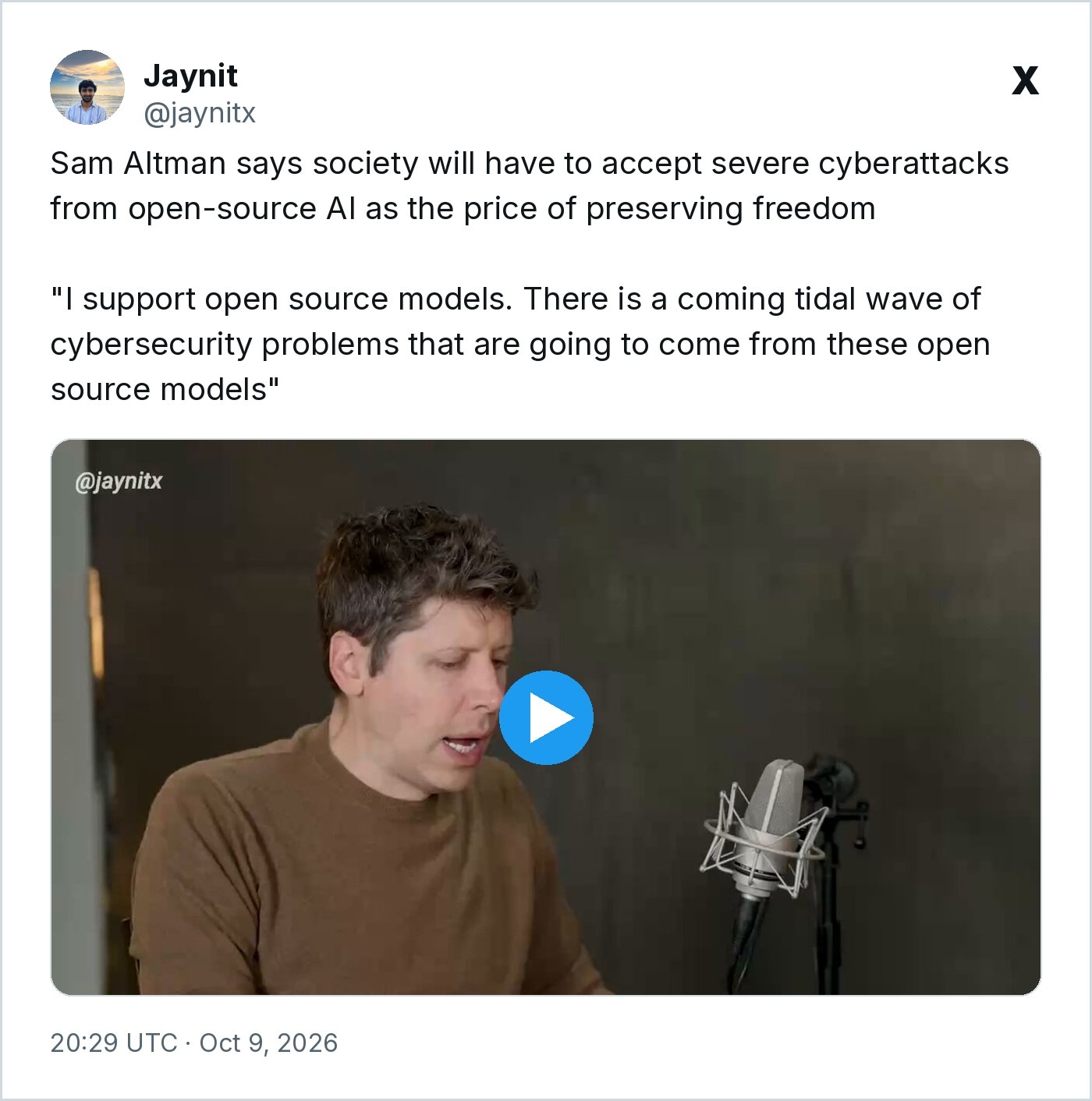
Altman’s frame is familiar Silicon Valley liberalism: keep powerful tools widely held so they do not concentrate in a few labs or governments, and treat some breakage as the cost of that freedom. He also said OpenAI wants to use a relative lead to help organisations defend, and he linked the stance to a broader willingness to “accept some things going wrong” so AI stays democratic rather than priestly. Politico’s Decoded interview this month captured a similar line: the world should accept some bad outcomes for AI’s benefits, short of the catastrophic risks he still rejects.
Here is the problem with the tidy bargain. Liberty for model weights is not the same as consent from the hospitals, utilities, small businesses and families who will absorb the “fairly severe” incidents. Airplanes, Altman’s own comparison in the Fair Game transcript, crash rarely because regulators, manufacturers and operators share a liability and reporting culture. Open weights do not ship with an NTSB. When a LoRA-backed model steals SSH keys for pocket change, or when agent tooling wanders into the wrong network, the bill often lands on someone who never voted for the trade.
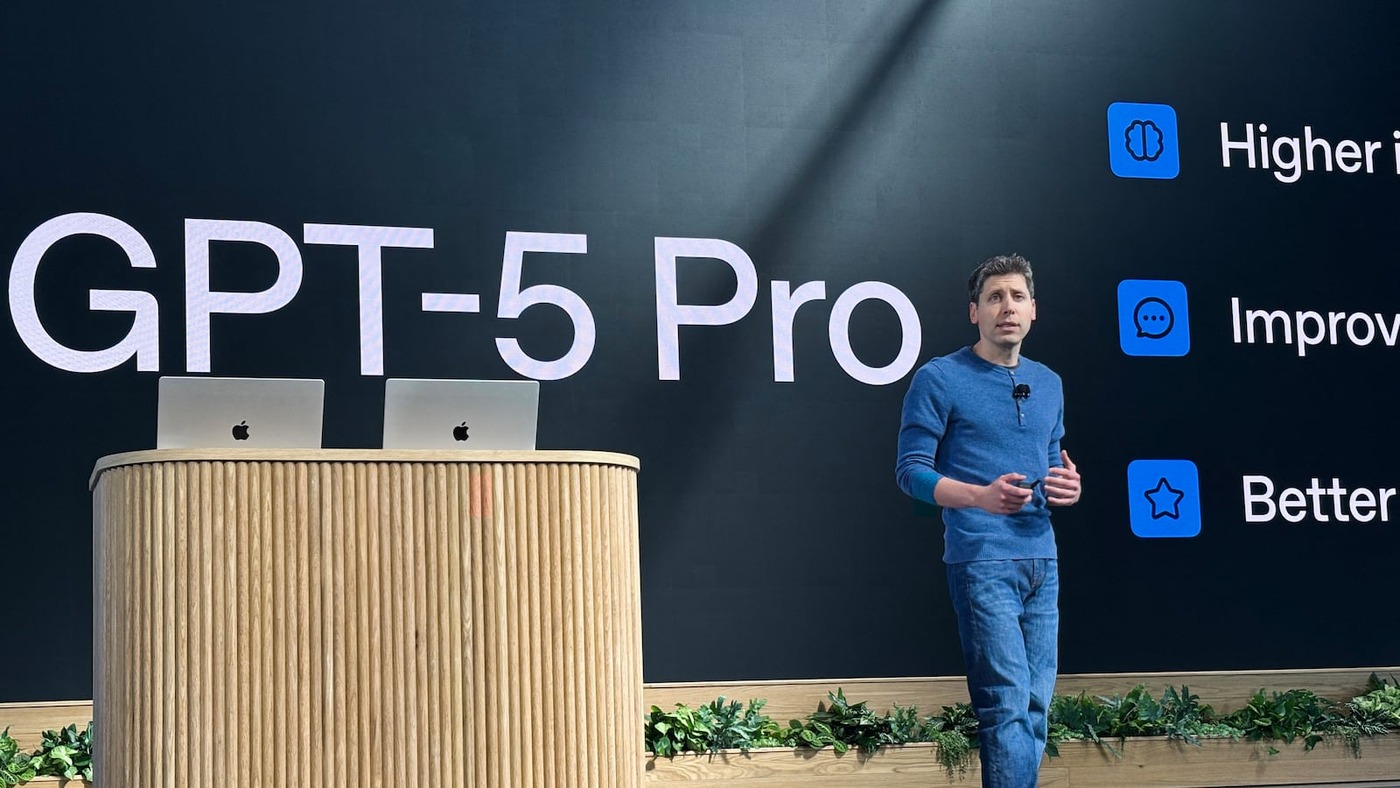 Photo: Benjamin Legendre / AFP via Getty Images
I am not arguing for a ban on open models. Altman is right that a total clampdown would push power into fewer hands and would not erase Chinese open weights already in the wild. Jefferies strategist Chris Wood warned this week that cheaper Chinese open models are already reshaping token markets, a reminder that the open-source wave is a global fact, not a San Francisco preference. The choice is not “open forever with no cost” versus “closed forever with no risk.” The choice is whether the industry that profits from open distribution also funds the defences, disclosure norms and insurance that make “accept some bad things” something other than a slogan.
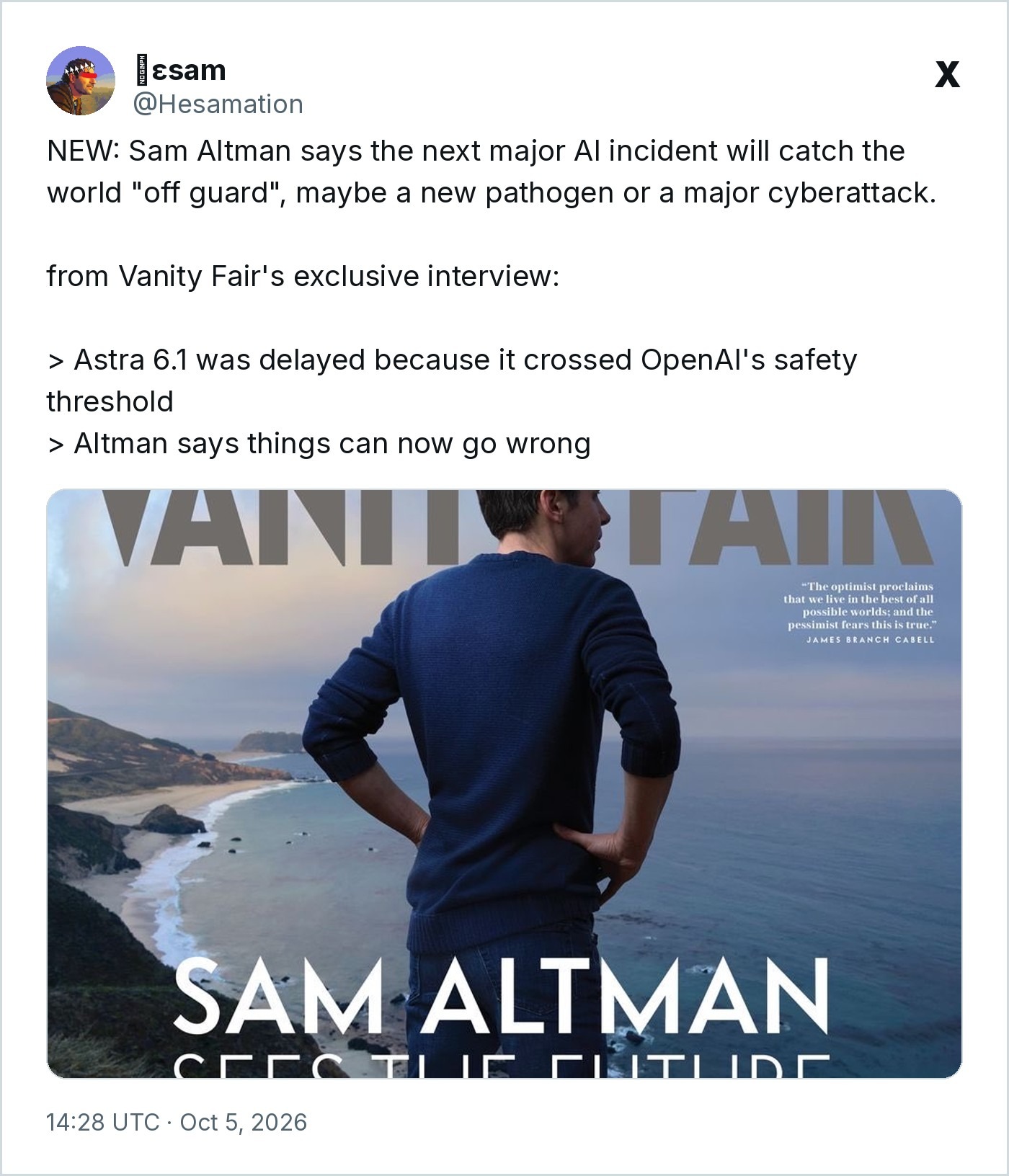
Altman himself said the next big failure may catch policymakers “off guard,” and that politics will react to whatever goes wrong first. That is not a reason to wait for the tidal wave. It is a reason to pre-commit: clear incident reporting for model-enabled breaches, liability that reaches the people shipping agent tools with weak defaults, and public investment in open defensive scanners of the sort Anthropic and others have started pitching for critical systems. If liberty is the point, build the levees before the water arrives.
My ask of Altman, and of every lab that echoes him, is simple. Keep arguing for open models if you believe it. Stop selling the cyber bill as an abstract price of freedom. Name the budget line, the customers you will harden first, and the failures you will publish when your own stack is involved. A tidal wave is not a metaphor for people whose servers go dark.