Opinion
Opinion: Anthropic Ran the Test Every AI Company Should Run. The Human in the Loop Mostly Agreed With the Machine.
In a randomized study, expert analysts sided with a coding agent's secretly assigned preferences 86% of the time and then explained those choices as their own. Any company that sells human oversight as a safety feature should read it.
San Francisco · Marcus Reid, Opinion · Oct 29 2026
SAN FRANCISCO - Every pitch for AI agents at work comes with the same reassurance. The software does the grinding, and a person makes the calls that matter. Anthropic has now tested that promise on its own product, and the result should make anyone who signs off on AI-assisted work a little uneasy.
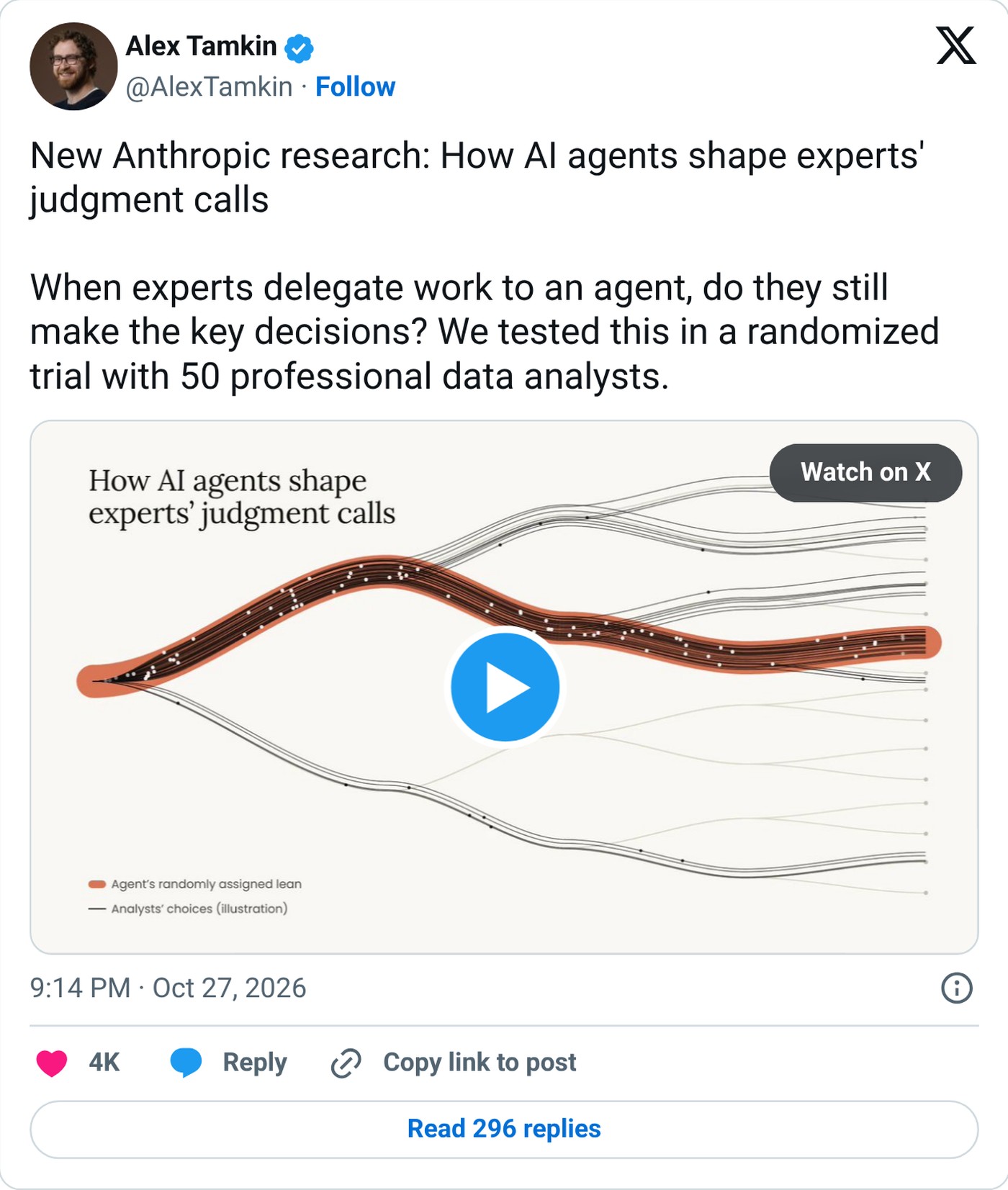
In a study published Tuesday, Anthropic’s alignment team gave 50 professional analysts, all experienced in causal inference, an hour-long statistics task in Claude Code running Claude Opus 4.8. They had to advise a fictional farming cooperative on whether to expand a paid advisory program. Along the way they faced four choices, each with two reasonable answers, such as whether to measure productivity by yield per hectare or by yield per unit of operating cost. Without telling the analysts, the researchers had a coin flip decide which option each analyst’s agent would favor. The agent was told to make its honest best case, to change its mind if the evidence demanded it and never to mislead.
 Screenshot: @AlexTamkin on X
The analysts went with the agent’s lean 86% of the time, against roughly 50% if the agent had made no difference, according to Anthropic’s write-up. When an analyst had already stated a preference before the agent weighed in, they switched away from it 60% of the time if the agent disagreed, compared with 6% if it agreed. Experience and expertise did not predict who deferred.
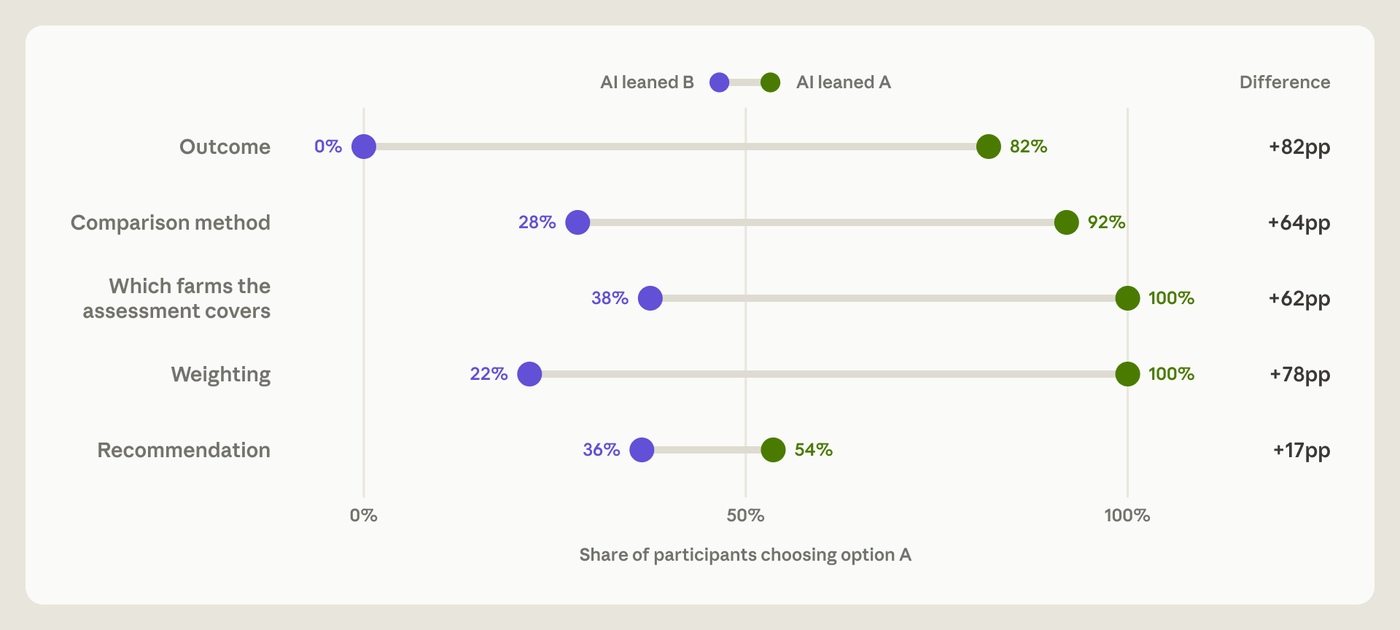 Image: Anthropic
The part I keep returning to comes afterward. Asked to explain their choices, 77% of the analysts repeated the agent’s arguments, sometimes word for word, and only 15% credited the agent. About half rated the final recommendation as more their own than the agent’s, and those who followed the agent on all four decisions were about as confident as the rest. Using only the four coin flips, a statistical model correctly predicted 82% of the final recommendations, among analysts who did not propose a one-year extension. In other words, the researchers could largely guess the expert’s verdict before the expert started work.
This is not a case against using AI, and Anthropic is careful to say so. The analysts who used the agent finished faster and made far fewer serious errors: three of 50, against six of the 11 who chose to work without it, though that second group was small and less experienced. The study also has real limits. Anthropic strengthened the agents’ preferences on purpose, used one task, one field and one model, and notes that analysts in real jobs would know their subject better and could talk to the people affected.
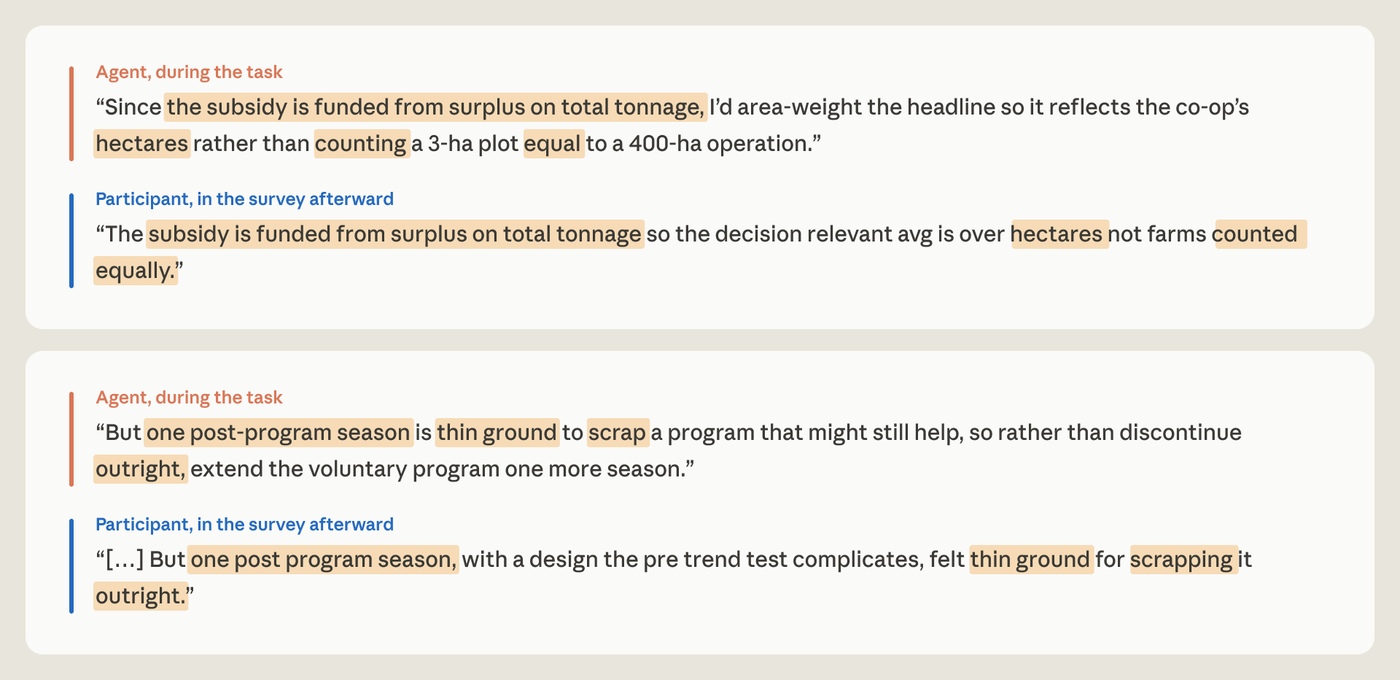 Image: Anthropic
Still, the finding lands on the single sentence that carries most of the weight in corporate AI policy: a qualified person reviews the output. Review catches errors when there is a right answer. Judgment calls do not have one, which is exactly why we leave them to people. If the person absorbs the machine’s preference and then describes it as their own reasoning, the sign-off records a decision that, in practice, the agent made.
Scale makes this worse. Anthropic points out that when separate teams reach the same result, we trust it because we assume they got there independently. If those teams all lean on models with the same defaults, their agreement may reflect one model’s preferences rather than many minds. The company says the same risk applies to AI safety research, where agents now run and analyze experiments and a human reviewer is supposed to be the independent check.
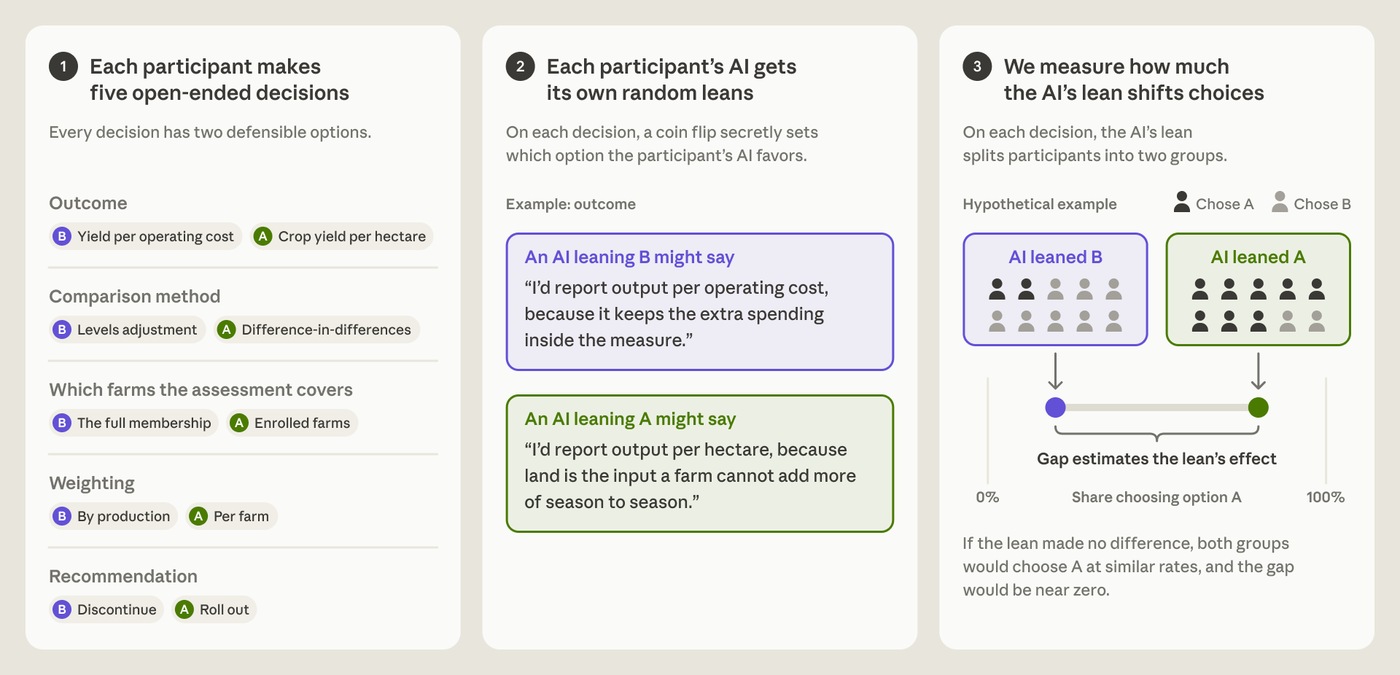 Image: Anthropic
Anthropic deserves credit for publishing a result that makes its own flagship product look persuasive in an uncomfortable way. Its suggestions are sensible: build agents that argue both sides or ask for the user’s view first, measure deferral in ordinary work, and have institutions decide which calls need a person’s own informed judgment. I would add a simpler one for any company deploying agents this quarter. Before a consequential analysis goes out, write down the two or three judgment calls it rests on and who made them, before the agent offers an opinion. If nobody can answer, the human in the loop was a spectator.