
AI
OpenAI Will Watermark ChatGPT Text in the EU, but Says Light Editing Can Erase the Signal
The company's new textGrain system hides a statistical pattern in word choices to meet the EU AI Act. Swapping a quarter of the words cuts detection to 17 percent.
San Francisco · Jordan Hale, AI · Oct 6 2026
SAN FRANCISCO - OpenAI said it will add an invisible watermark to text that ChatGPT and its Codex coding agent produce for users in the European Union, its answer to an EU AI Act rule that requires generative AI providers to make machine-written text identifiable. The rollout to eligible ChatGPT and Codex users across all plans in the EU begins over the coming weeks, the company said Monday. Outside Europe, it will not be on by default.
The technology is called textGrain. OpenAI said it “adds an invisible statistical signal to the model’s word choices,” and that a matching detector looks for that signal to judge whether a passage carries an OpenAI watermark. API customers anywhere in the world can opt in for select models starting Monday, but watermarking stays off by default in the API. OpenAI said it is also working with cloud partners to offer watermarking on its models through their services in the coming weeks.
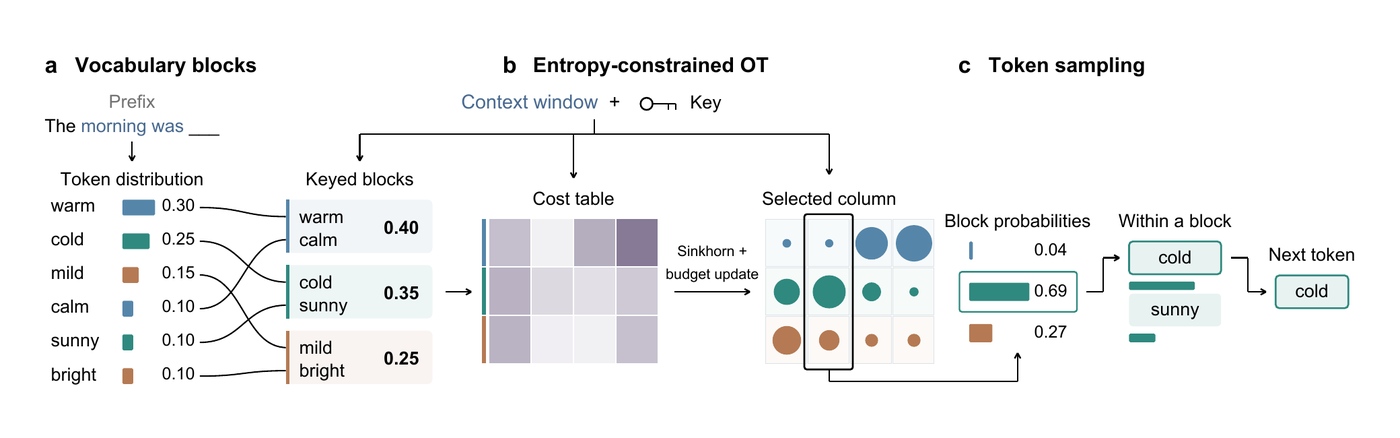 Chart: OpenAI, textGrain technical report
The company was unusually blunt about the limits. At a target false positive rate of 1 percent, its detector found the watermark in about 80 percent of 200-token passages and about 95 percent of 400-token passages for content such as psychology, OpenAI said. Detection was “substantially lower” for mathematics, where there is less freedom in word choice. Editing hurts too. In 400-token passages, replacing 10 percent of the words with synonyms cut detection from about 92 percent to 66 percent, and replacing 25 percent cut it to 17 percent.
Those numbers drew a cool reception. The Register called it “weak sauce watermarking” in a Tuesday headline and said the watermark “is easily defeated by word substitution.” OpenAI, for its part, said textGrain “matched or exceeded” the other approaches it tested, including Google DeepMind’s SynthID for text, while warning that “strong performance under ideal conditions does not guarantee reliable detection in everyday use.”
 Photo: Cbliu / Wikimedia Commons (CC BY-SA 4.0)
The detector itself is not public. OpenAI opened applications for approved researchers and expert organizations, with access granted case by case. The tool will report only whether it finds an OpenAI watermark, without identifying the user or revealing prompts or conversations, the company said, adding that the risk of missed watermarks and false positives is why it is not releasing it publicly at launch. OpenAI said it plans to release the technology as open source and will add detail to its technical report in the coming weeks.
OpenAI also listed what a watermark cannot do. It does not measure how much a human contributed, establish ownership or responsibility, identify a person or account, or verify whether a passage is accurate. “The absence of a detected watermark does not prove human authorship,” the company wrote, since text may be too short, edited, translated or produced by another company’s tools.
The rule behind all this is Article 50(2) of the AI Act, which requires providers to mark AI output “in a machine-readable format.” Most of the law’s articles applied from Aug. 2, and providers whose models were released before that date have until Dec. 2 to comply with this one or face fines of up to 3 percent of worldwide annual turnover, Mashable reported.
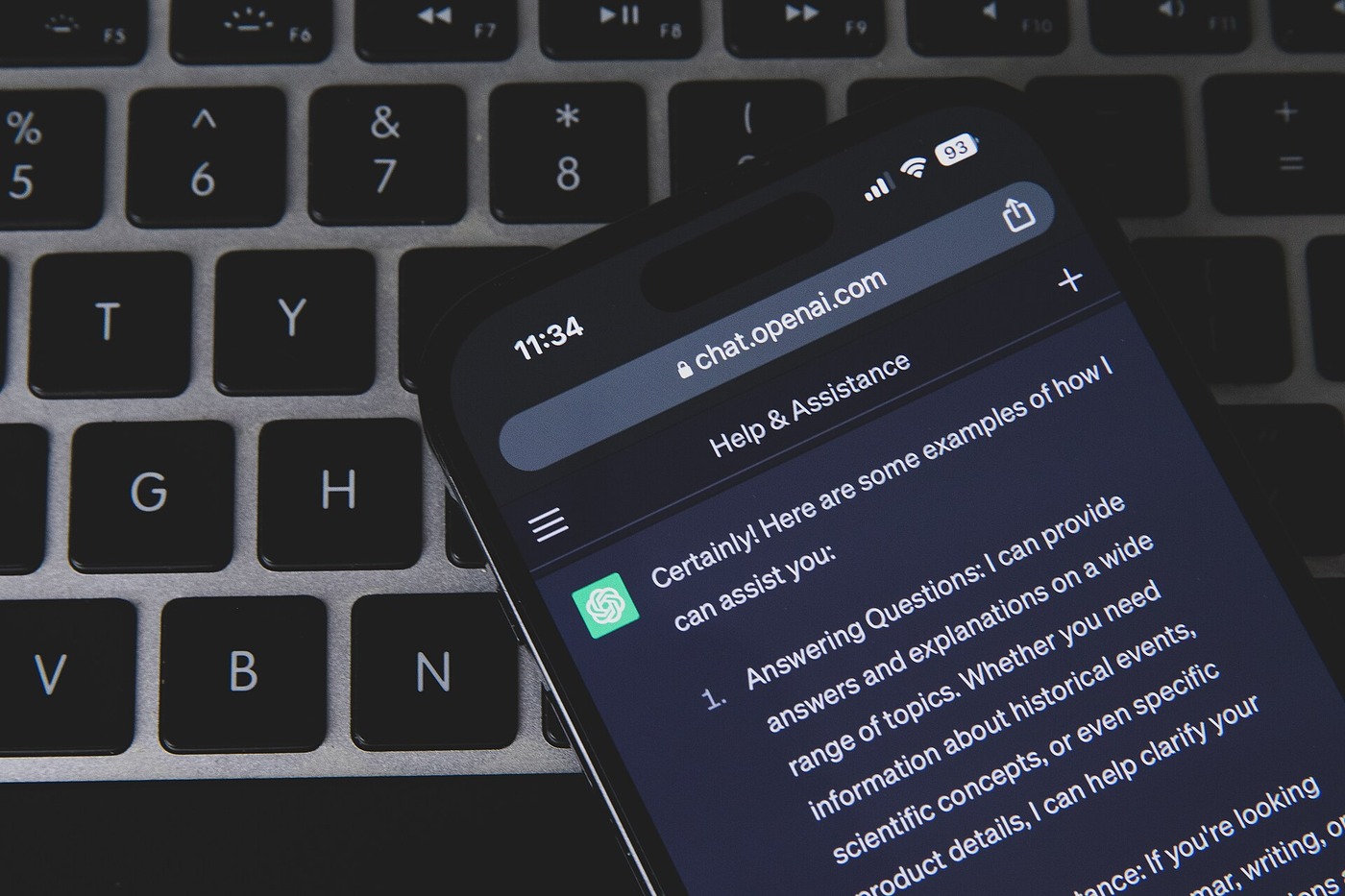 Photo: Jernej Furman / Flickr via Wikimedia Commons (CC BY 2.0)
OpenAI is not first. Anthropic announced in August that Claude would watermark its text to meet the same rules, using Google’s SynthID-Text algorithm and applying it globally rather than only in Europe, according to The Verge and The Register. OpenAI said it chose a regional launch to “learn from real-world use and feedback,” and that it already adds Content Credentials to supported images and keeps its image and audio verification tools publicly available.
On quality, OpenAI said it saw no meaningful performance differences on the benchmarks it uses for Astra, its latest frontier model. In figures published by OpenAI and compiled by 9to5Mac, watermarked output scored 56.06 percent on Terminal-Bench 4.0 against 53.90 percent without the watermark, and 93.94 percent on GPQA Diamond against 94.44 percent.