AI
OpenAI Says GPT-6 Astra Designed a Handheld Gadget for Talking to Codex, From the Case to the Circuit Board
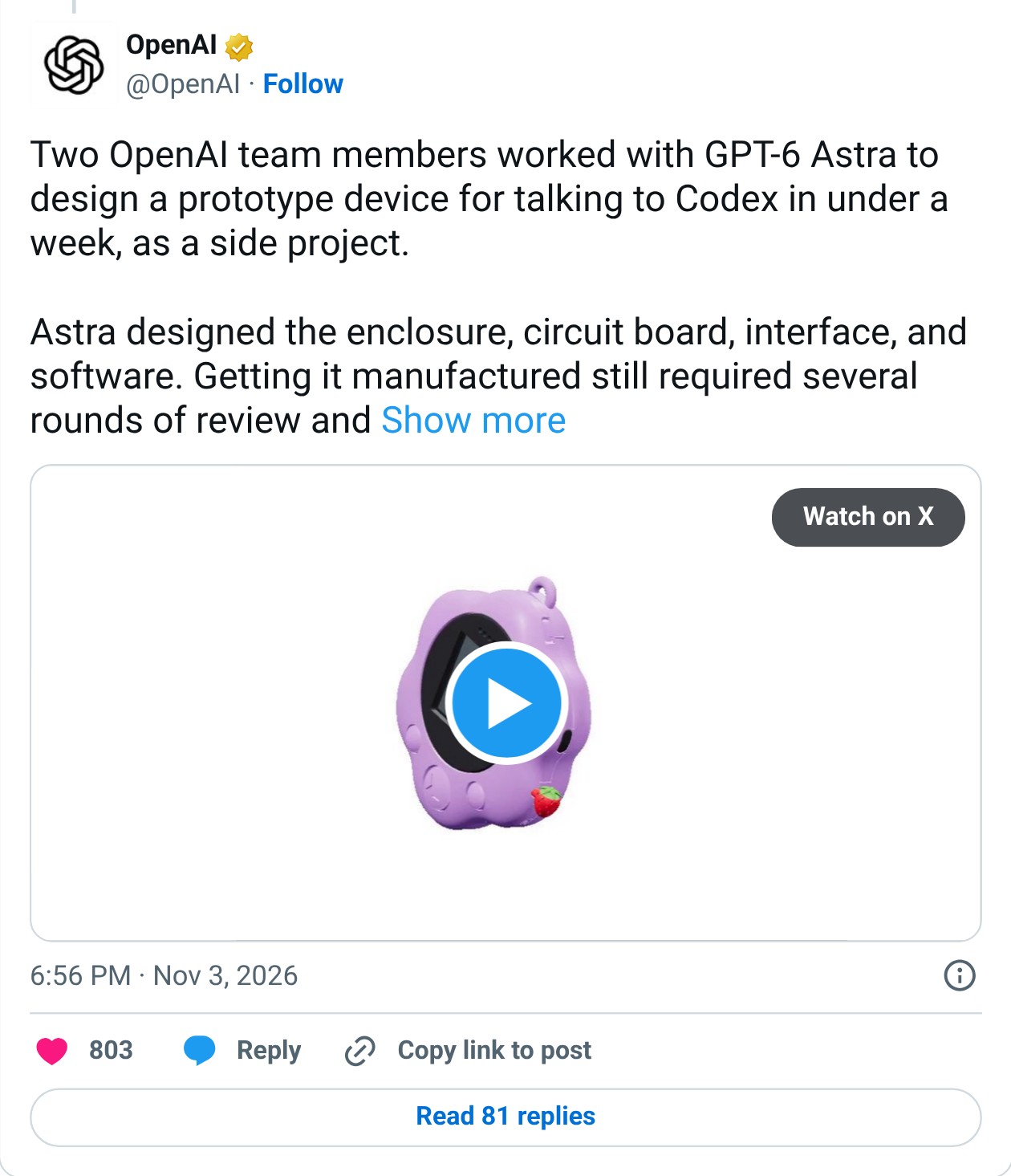
Two staff members built the prototype with Astra in under a week as a side project, and a contract manufacturer made a small batch in under a month. OpenAI admits the model still missed real factory limits.
San Francisco · Jordan Hale, AI · Nov 4 2026
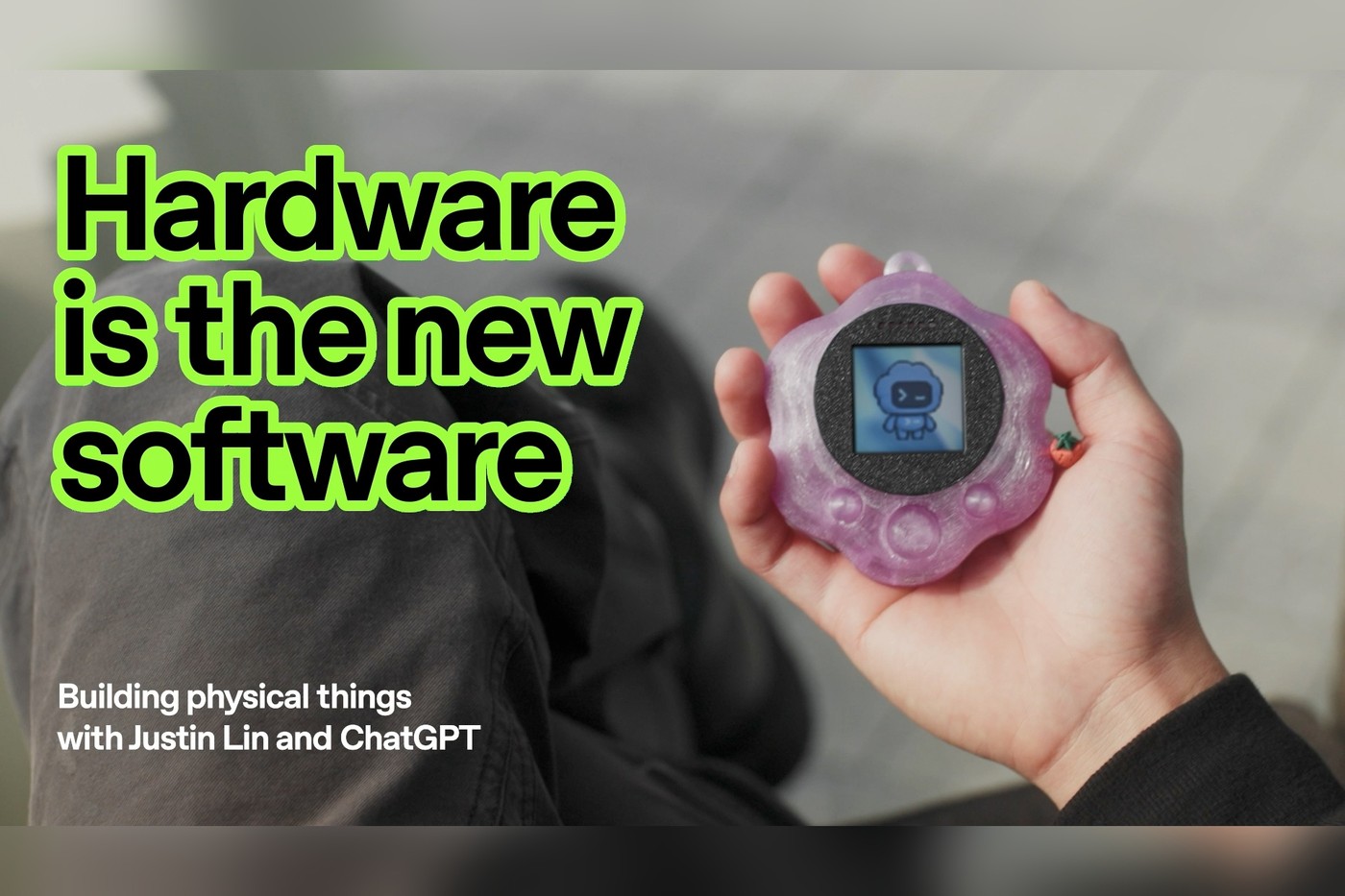
SAN FRANCISCO - OpenAI has a new answer to the question of what its models can build: a small, purple handheld with a square screen that exists so you can talk to Codex. The company said on Tuesday that GPT-6 Astra designed the device’s look, its enclosure, its printed circuit board and its software, in a test meant to see whether a model could create hardware “without any direct human edits.”
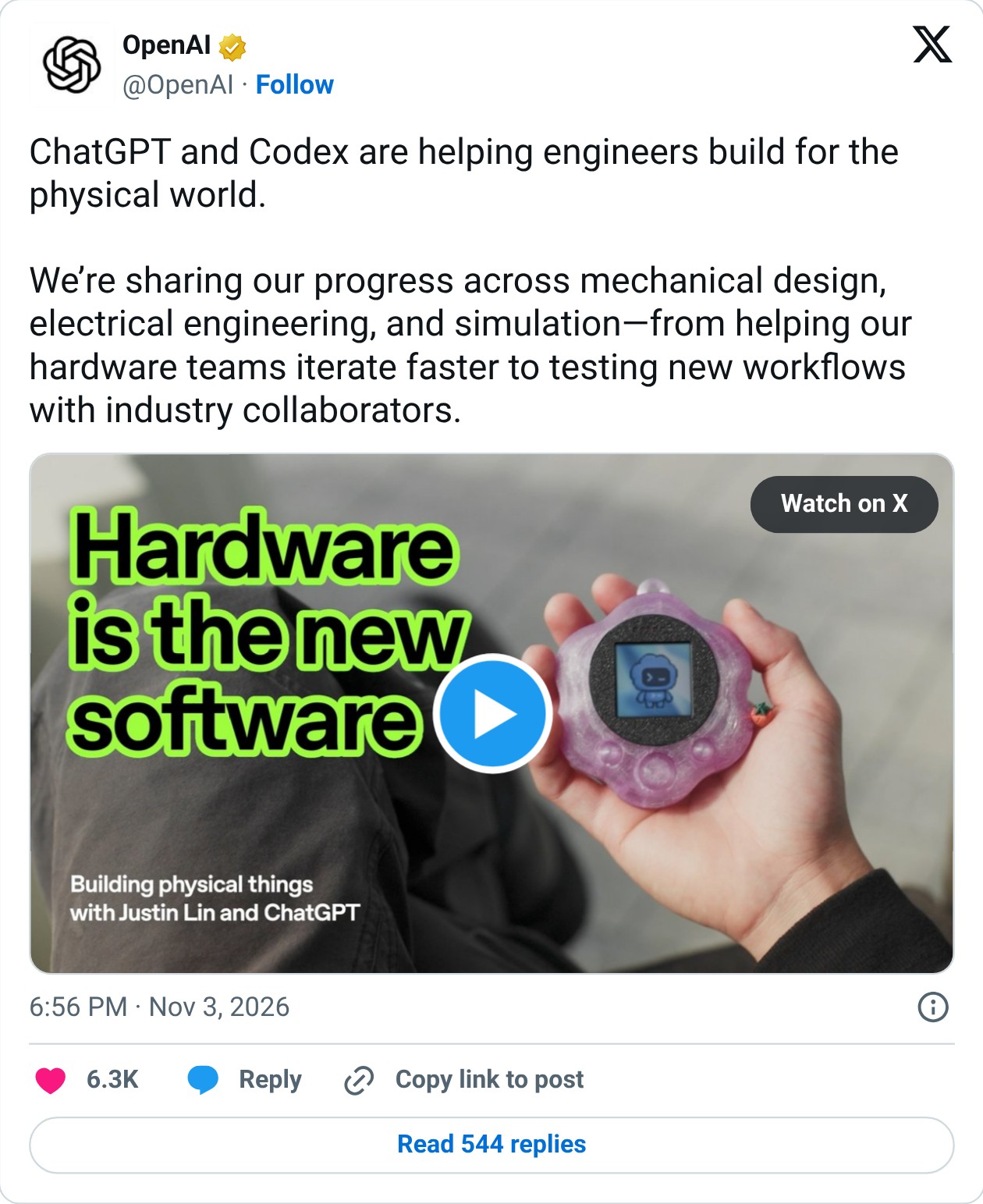
The gadget was the headline example in a post titled “Accelerating engineering for the physical world,” where OpenAI laid out how its models are being used for mechanical design, electrical engineering and simulation. The company said GPT-6 was used to define the functional requirements, and Astra handled the rest.
 Screenshot: @OpenAI on X
According to OpenAI, Astra developed the device’s styling, drawing on the company’s recent collaboration with the keyboard maker Work Louder and on references from games and toys. It designed the enclosure and the internal structures that hold the parts in place, picked the electrical components, laid out the circuit board to fit inside the shell, and generated the interface, firmware and software that connect the device to Codex, OpenAI’s coding agent.
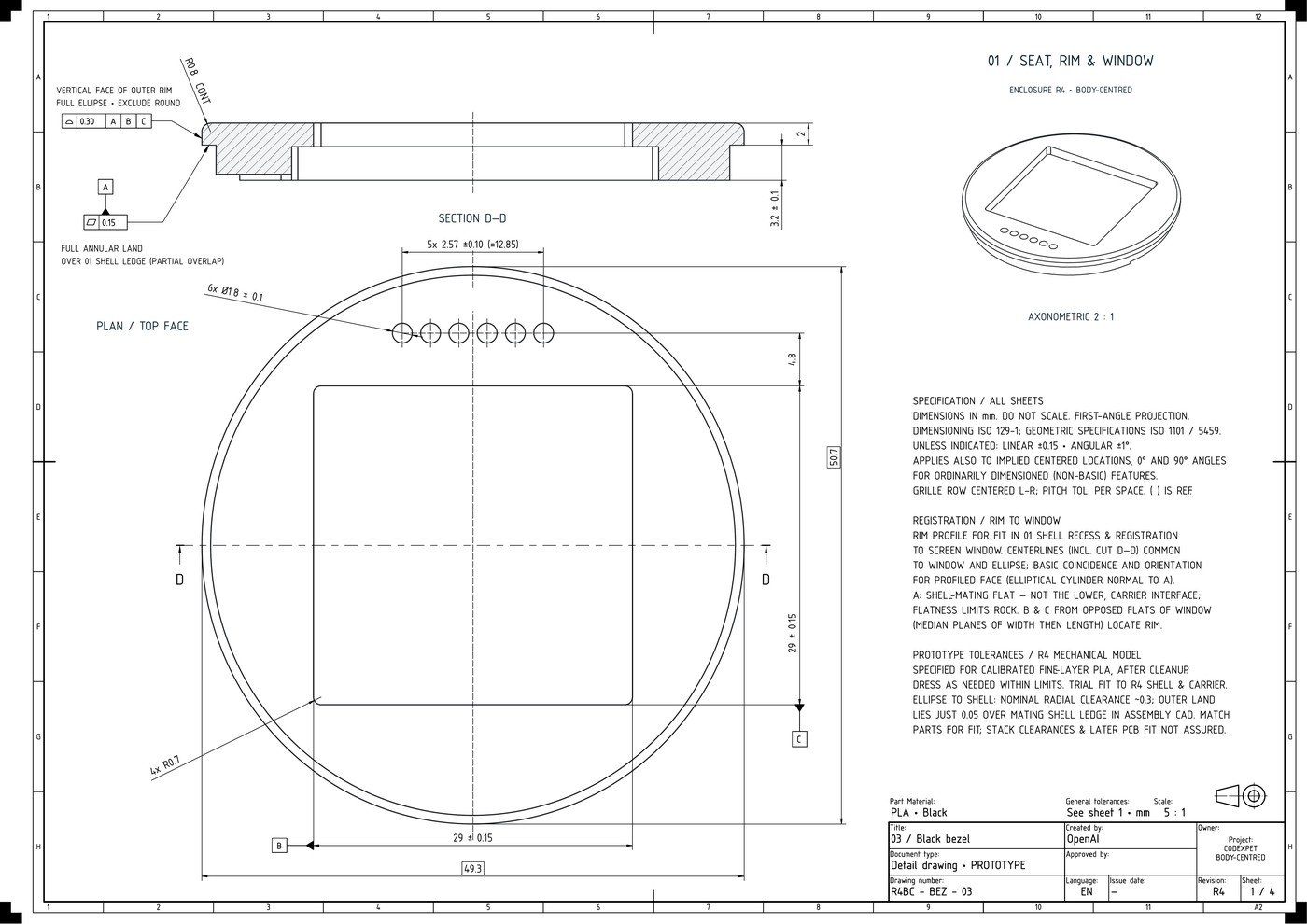 Image: OpenAI
The timeline is the eye-catching part. OpenAI said two team members designed the device with Astra in under a week, working on it as a side project, and a contract manufacturer built a small batch of prototypes in under a month.
OpenAI was also clear about where the model fell short. Getting the device ready for manufacturing “still required several rounds of review and iteration,” the company wrote, because Astra “did not consistently account for the manufacturer’s production limits, tolerances, or details required for assembly.” OpenAI said those gaps are showing it what future models need to do better. It has not said whether the device will ever be sold.
 Screenshot: @OpenAI on X
The device is a demo, but the post describes a broader push into hardware work. OpenAI said its own hardware and infrastructure teams use Codex and ChatGPT to create and revise CAD models, prepare manufacturing drawings, set up simulations and review designs across robotics and compute infrastructure. Since February, the company said, its hardware teams’ model usage, measured in tokens, has grown 23-fold.
“Codex has dramatically accelerated how we move from an idea to an engineered part,” Grace Lam, a forward deployed engineer at OpenAI, said in the post.
The company also pointed to a new internal yardstick. On BenchCAD 2.0, a test of whether models can rebuild 3D parts and assemblies and identify connections on circuit boards, OpenAI said a newer internal model averaged 0.875, compared with 0.594 for GPT-6 Astra at its highest reasoning setting. OpenAI did not name the newer model.
Outside the company, OpenAI said it is expanding work with Chip Ganassi Racing on turning 3D scans of existing parts into editable CAD models and 2D manufacturing drawings, which helps when the original design files are gone. It also announced a research collaboration with Mazda, whose aerodynamics and crash-safety engineers are testing how the models can help develop and evaluate new vehicle designs.
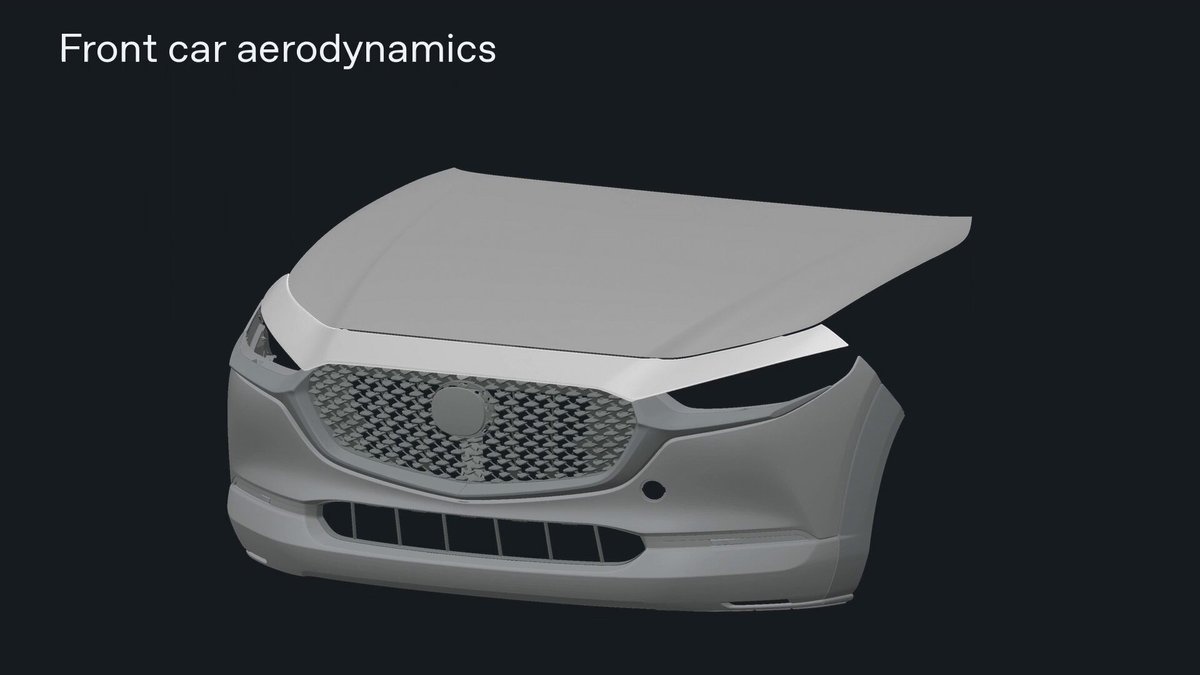 Image: OpenAI
“Does it have to look like that?” is a question Mazda’s designers often ask when engineers find a shape that improves airflow, said Akihiro Nakata, a principal engineer at Mazda. He said Astra in Codex helps the team understand “which features matter for aerodynamics and where designers have room to explore.”
OpenAI said it is looking for engineers, engineering firms and software vendors in mechanical, electrical and electromechanical design to help shape the next round of training, and that industry engineers are reviewing the models’ output for accuracy before anything is used for real.