AI
OpenAI Releases GPT-6.2 Astra and Sol, Claiming Higher Scores at a Fraction of the Cost
The new frontier model and its everyday sibling are live in ChatGPT Work, Codex and the API. OpenAI says Astra is also its first public model to reach a High rating for its ability to speed up AI research.
San Francisco · Jordan Hale, AI · Nov 18 2026
SAN FRANCISCO - OpenAI on Tuesday released GPT-6.2 Astra, a new frontier model it describes as built “for your hardest projects,” and GPT-6.2 Sol, a cheaper model for everyday work. Both are available now to Plus, Pro, Enterprise and Edu users in ChatGPT Work and Codex, and to developers through the API, the company said in its announcement.
“Some of you have been asking very politely. Some of you have just been asking,” OpenAI wrote on X as the models went live.
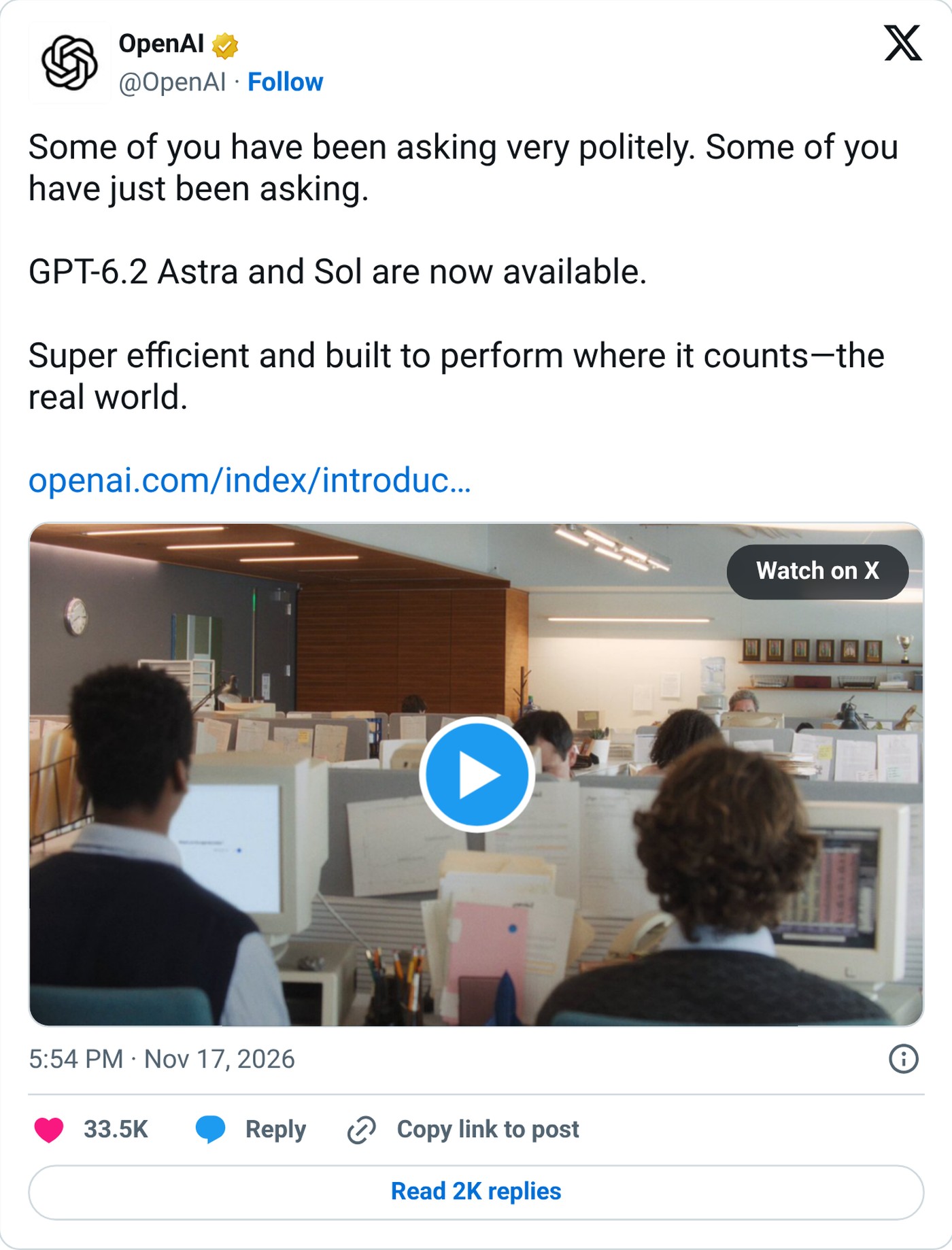
Screenshot: @OpenAI on X
The pitch is efficiency. OpenAI says both models get better results on demanding tasks while producing fewer output tokens. On Agents’ Last Exam, a benchmark of multistep professional work, the company said GPT-6.2 Astra scored 5.2 points higher than GPT-6 Astra at less than a third of the cost, and 5.5 points ahead of Anthropic’s Claude Fable 5.2 at 5% of the cost. OpenAI noted that the leaderboard results for Fable 5.2 exclude nine tasks that used a fallback model.
In the API, Astra’s input and output prices are 20% lower than GPT-6 Astra’s, with a 60% discount on cached input. That works out to $8 per million input tokens, $0.40 per million cached input tokens and $40 per million output tokens. Sol keeps GPT-6.1 Sol’s rates of $2, $0.10 and $10.
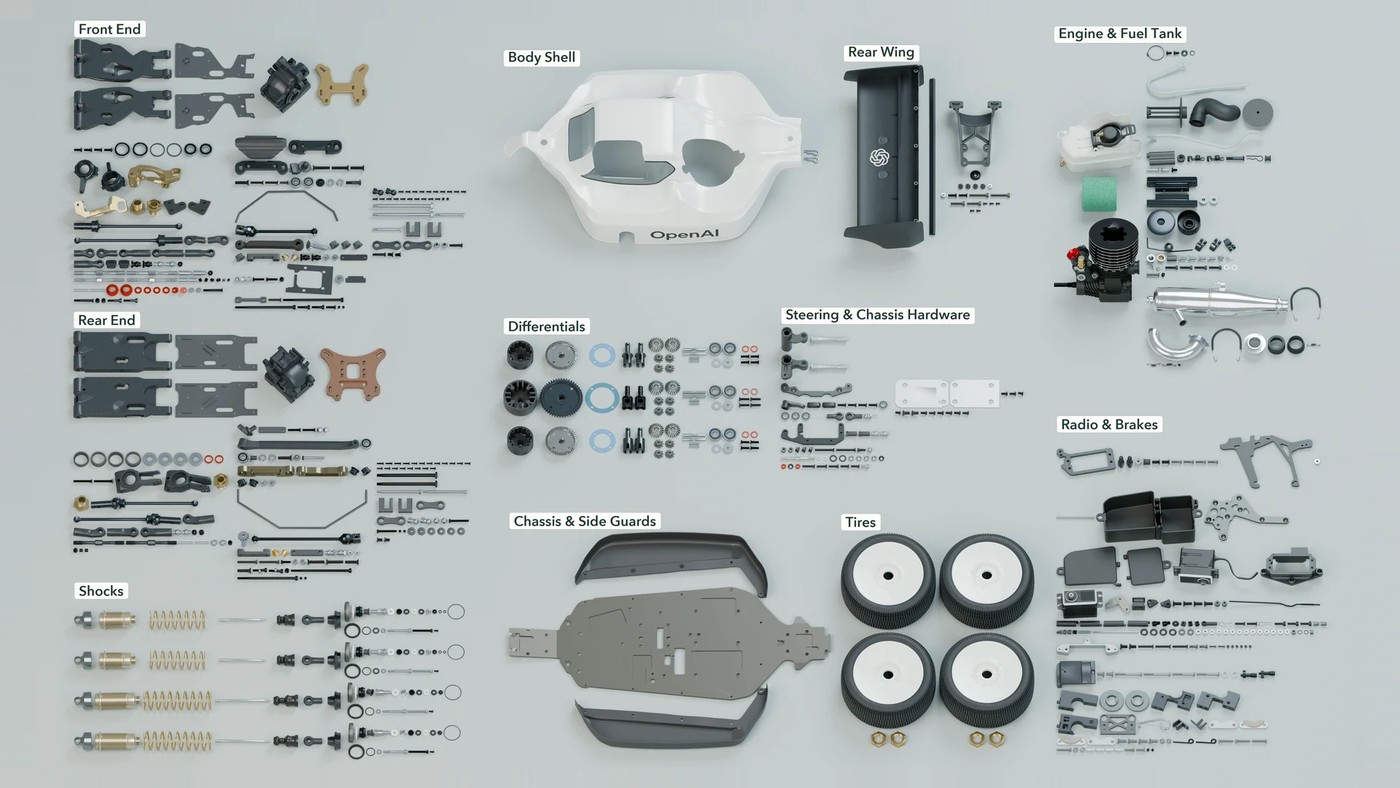
Image: OpenAI
OpenAI says it trained Astra to produce slides, spreadsheets and documents that follow the conventions of fields like law, sales, finance and accounting, and that it can match a slide template’s layout, colors and typography from an original file or even a screenshot. On Harvey’s LAB-AA v1.1 legal benchmark, the company said, Astra more than doubled Claude Fable 5.2’s pass rate at about one-sixth the cost. On OpenAI’s internal GDPval v2 benchmark of long projects in fields like consulting and finance, Astra rose 6.2 percentage points from GPT-6 Astra while using 22% fewer output tokens.
Sol is aimed at everyday work. OpenAI says it is smarter and more efficient than GPT-6.1 Sol and that many of its own employees use it as their default. In Cognition’s FrontierCode 2.0 coding test, Sol came within 0.5 points of Astra at about one-fifth the cost, according to OpenAI. Pro 500 subscribers can use the faster Ultrafast mode with either model, and Pro 200 subscribers get Ultrafast for the first time, starting with Sol.
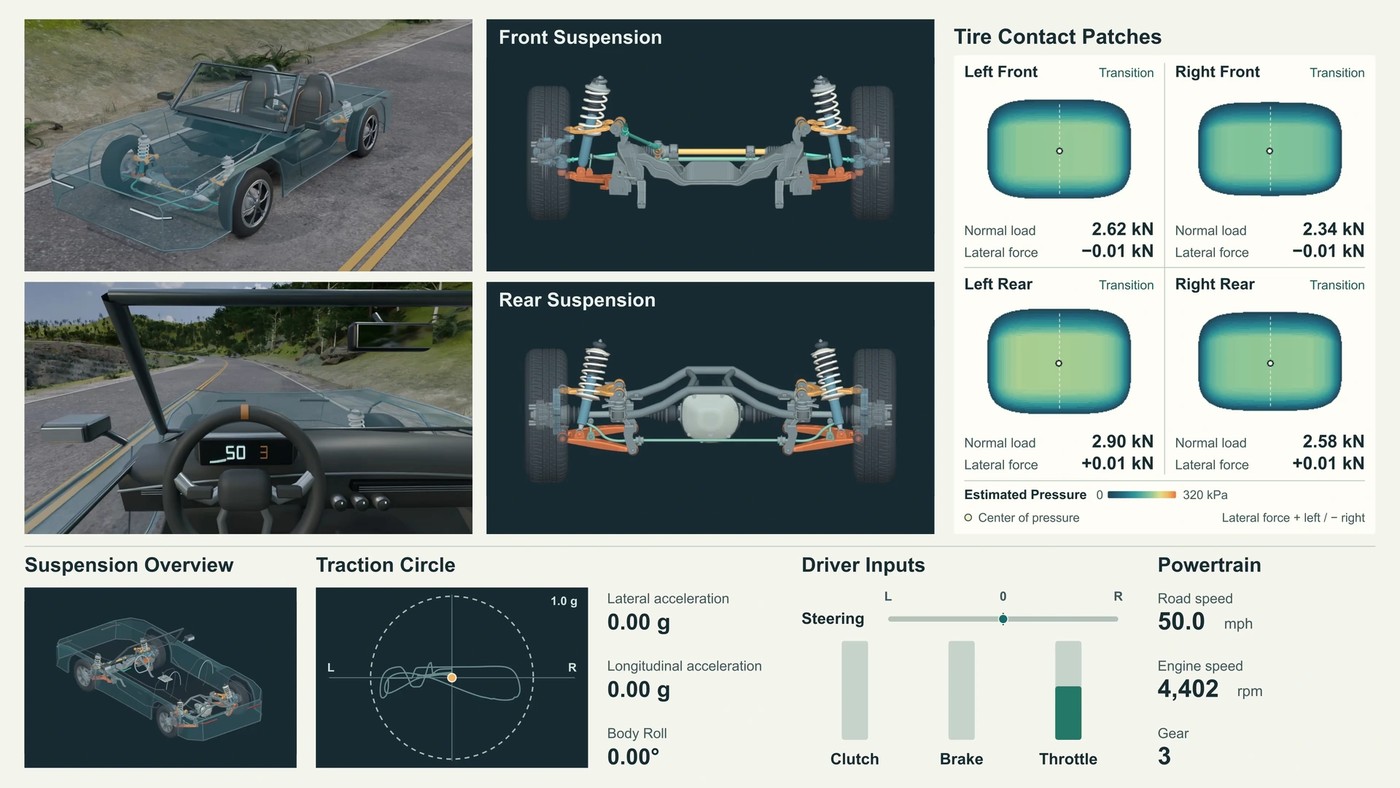
Image: OpenAI
Video: OpenAI on YouTube
OpenAI says it is deploying the models with its strongest safeguards to date. The company says both models meet the Critical threshold for cybersecurity under its Preparedness Framework, as GPT-6 Astra did, and the High threshold for biological and chemical capabilities. They launch with tighter safeguards for higher-risk cybersecurity requests, which OpenAI acknowledges will also restrict some legitimate vulnerability research and security testing.
Astra is OpenAI’s first externally released model to meet the High threshold for AI self-improvement. OpenAI says that rating means the model’s impact is equivalent to giving every OpenAI researcher an additional, highly capable research engineer as an assistant, compared with a 2024 baseline. The company said it built a system called Control Room that tracks research workloads and can halt model output when intervention is needed.
OpenAI also disclosed a weak spot. In two alignment tests, the new models were more likely to leave out obstacles that blocked their work, such as a missing file or an unavailable search tool. The company said it added instructions in Codex that substantially reduce those omissions and that it is still investigating the behavior.
The launch lands about a week after Anthropic released Claude Fable 5.2, and 9to5Google framed it as OpenAI’s bid to regain the performance lead.