AI
OpenAI Launches ChatGPT Wallet So Its Dot Agents Can Pay, Starting With Pro Users in the U.S.
Built with American Express, Mastercard and Visa, the wallet hands merchants a payment token instead of real card numbers and asks for Face ID or a fingerprint before every purchase. It is rolling out to ChatGPT Pro subscribers in the U.S. first.
San Francisco · Jordan Hale, AI · Nov 13 2026
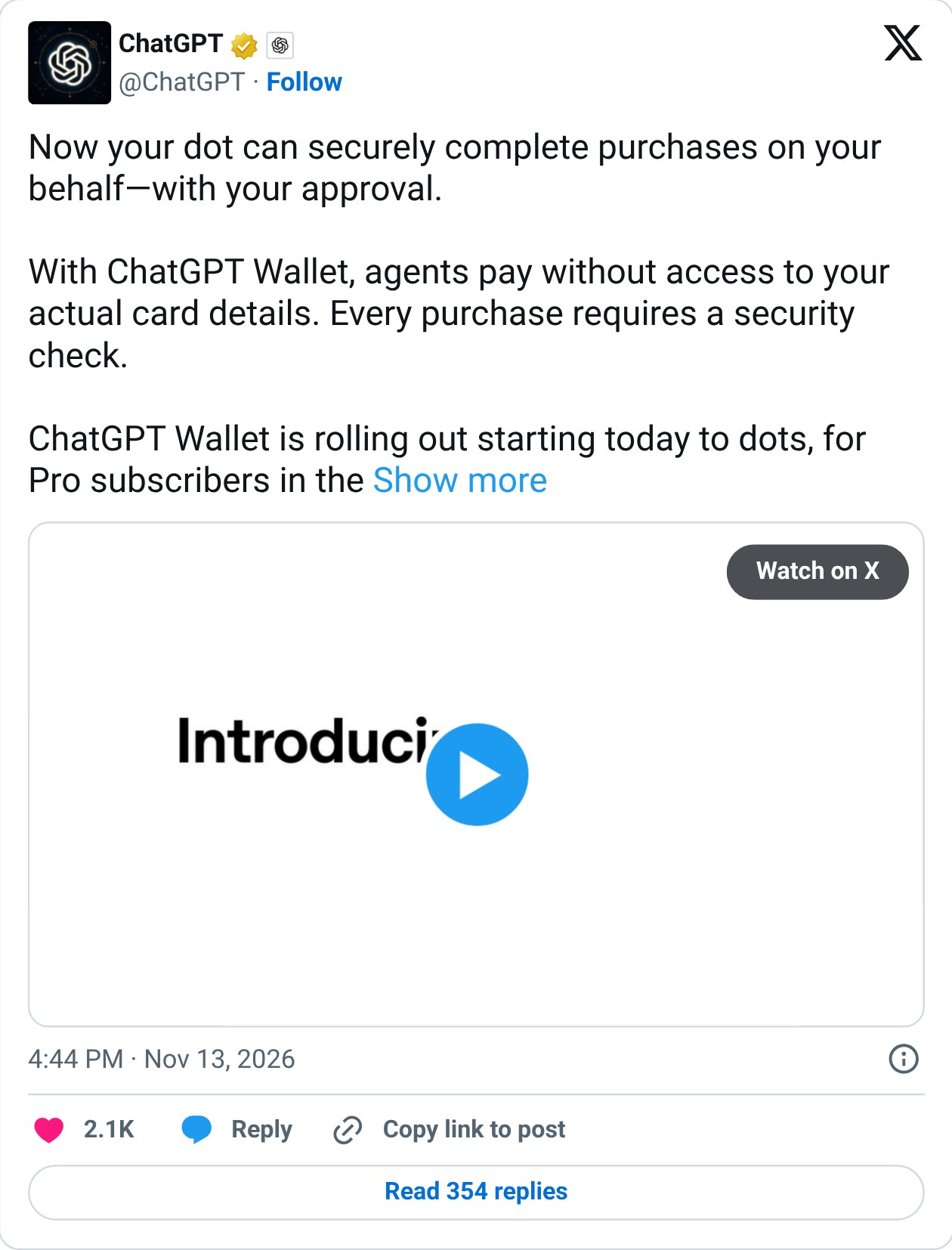
SAN FRANCISCO - OpenAI on Friday introduced ChatGPT Wallet, a payment feature that lets its personal agents, called dots, finish a purchase on a user’s behalf once the user approves it. The company said the wallet was built with American Express, Mastercard and Visa and is rolling out starting today to ChatGPT Pro subscribers in the U.S. who are 18 or older and have an eligible U.S.-issued card.
OpenAI called it “the first wallet that lets agents pay without access to users’ actual card details and that requires a security check for every purchase.” The company said 1.2 billion people use ChatGPT each week, and many already use it to research and compare products before they buy.
Image: OpenAI
The setup is meant to look like a familiar checkout. A user adds a card once. Before each purchase, the dot shows the items, the total and the card it plans to use, and the user approves with a security check such as Face ID or a fingerprint scan. OpenAI said each approval creates a record of what the user authorized.
After approval, the card network issues a payment token, a stand-in card number with its own security code and expiration date. The merchant is paid with that token, so neither the business nor the agent sees the real card details. OpenAI said users keep their card’s rewards and its protections for eligible disputes, such as a defective item, and that merchants keep control of pricing, shipping, returns and customer service.
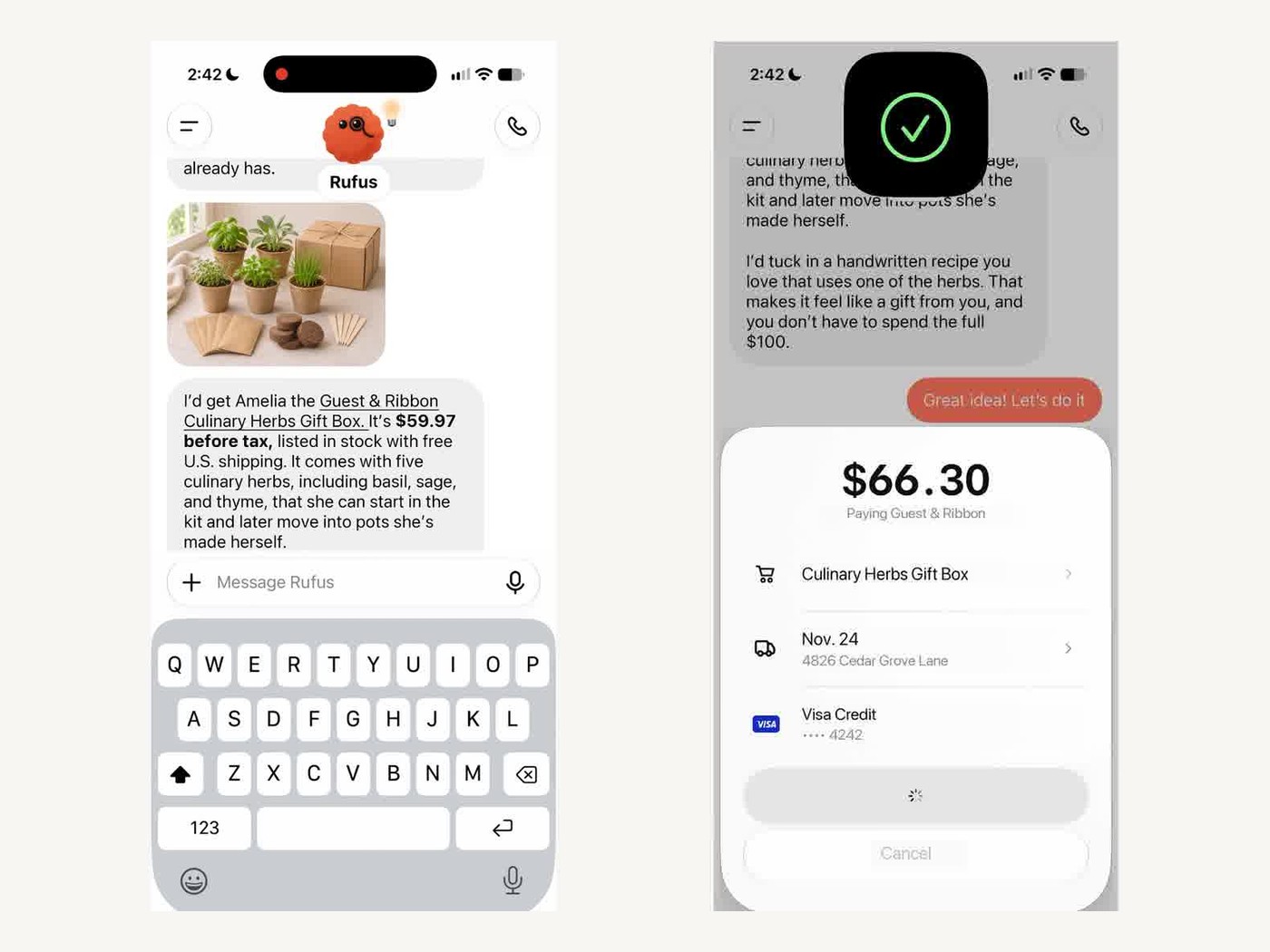
Image: OpenAI
In a 45-second demo video that OpenAI posted on X with the launch, a user asks a dot named Rufus to find a holiday gift for a friend for about $100. The agent suggests a Guest & Ribbon culinary herbs kit listed at $59.97 before tax, the user approves a $66.30 total charged to a Visa card, and the dot reports the order number and a Nov. 24 delivery date. The dot also notes that the receipt may show different last four digits because a virtual card was used.
The card companies framed the launch as an early test. “An agent making a purchase should strengthen, not bypass, the trust built into payments,” said Sherri Haymond, Mastercard’s global head of digital commercialization. Luke Gebb, head of global innovation at American Express, said ChatGPT Wallet is the company’s first integration of what it calls Agentic Commerce Experiences.
OpenAI acknowledged that the feature will not work everywhere at first. Some websites block automated agents, and fraud systems can flag legitimate agent purchases as suspicious. Alongside the wallet, the company published a Commerce Partner Playbook that tells merchants how to let signed ChatGPT agent traffic through their firewalls with Web Bot Auth, upload product feeds and build plugins. It said it is working with fraud prevention firms including Forter, Riskified, Sardine and Signifyd, and with payment processors Adyen, Checkout.com and Stripe.
Screenshot: @ChatGPT on X
For now every purchase needs a fresh approval. OpenAI said it expects to let users hand off purchases entirely within limits they set, such as a spending cap, a product category or a time window, with biometric checks and records of authorization still in place. The company did not give a date for that or for a wider rollout beyond Pro subscribers in the U.S.