AI
Meta's Muse Can Now Build Custom Trackers, Planners and Games That Update Themselves From Your Apps
Spaces turns a one-line description into a persistent mini app that lives in the Muse sidebar. It is rolling out to every Muse user, alongside new memory and focus upgrades trained with Muse Wonder.
Menlo Park, Calif. · Jordan Hale, AI · Nov 8 2026
MENLO PARK, Calif. - Meta wants its Muse assistant to stop answering in chat bubbles and start building things you keep. On Friday the company introduced spaces, a feature that turns a short description into a custom, app-like screen inside Muse, from a holiday gift tracker to a trivia game, and then keeps it current on its own.
“A space is a custom experience you create inside Muse by describing your idea, like a holiday gift tracker, a daily word game, or a planning board for your next DIY project,” Meta wrote in its announcement. Each space is saved as part of the app. Users can pin spaces to the sidebar, move them into the main tabs, hide them, or schedule when they show up. Meta’s own example: “For example, keep your weekly planner up front during the workweek, then swap it for your weekend plans on Saturday.”
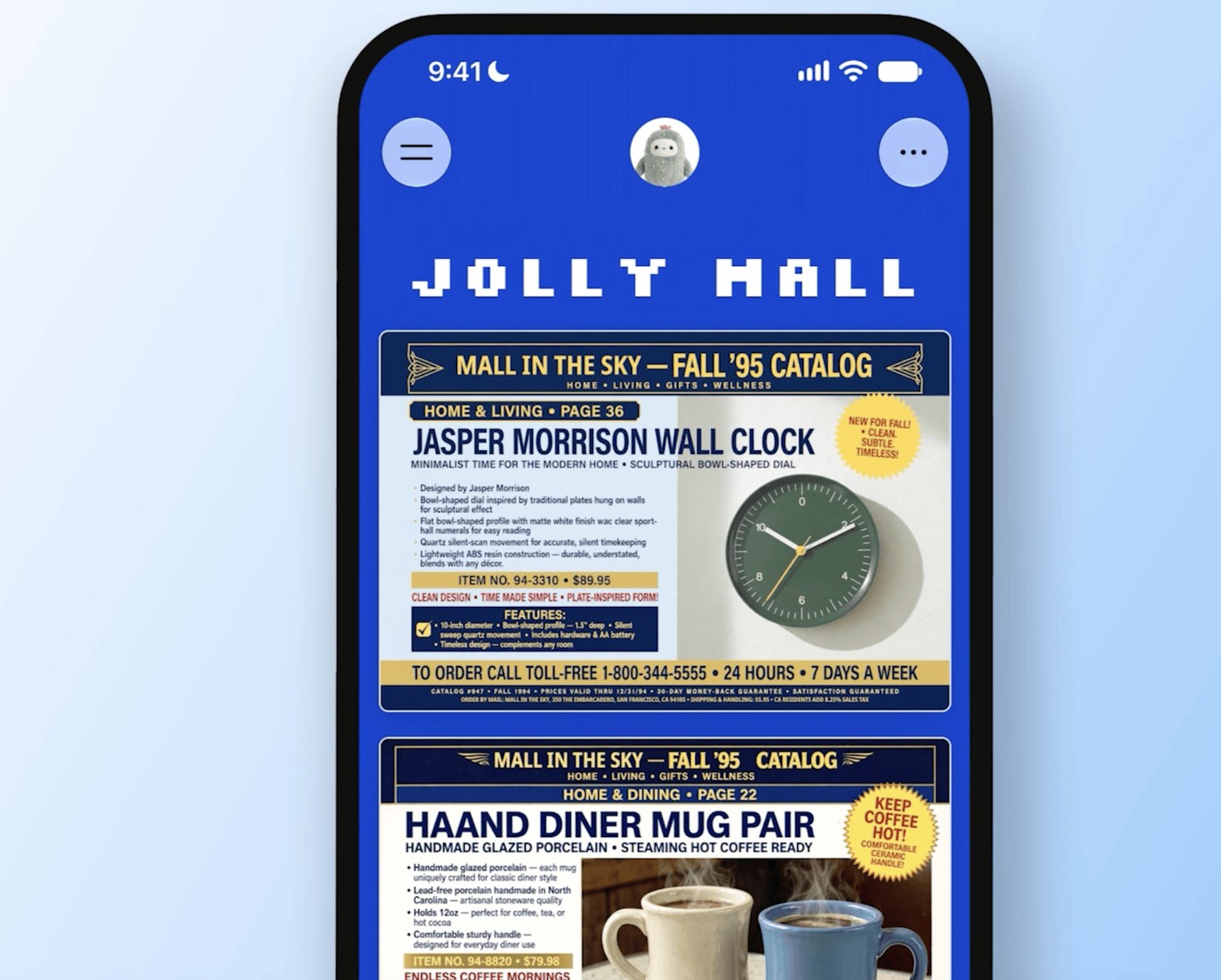 Image: Meta
The part that makes spaces more than a saved prompt is the data plumbing. When a user connects outside services that Muse already works with, including Gmail, Google Calendar, OpenTable and Notion, the assistant keeps pulling from them in the background, The Verge reported. “Connect the apps you use, and your spaces keep themselves up to date in the background, so new concert dates, price changes, or savings progress show up without you having to ask,” Meta said. Users can also check items off, add notes and edit directly inside a space.
Meta’s suggested builds read like a list of apps people already juggle: a shopping hub that pulls gift ideas, Instagram saves and Marketplace listings into one view; a school dashboard that finds events in school emails and adds them to the calendar; a wedding planner with RSVPs and vendor invoices; an order tracker for a small business; and a trip planner with flights, hotel, reservations and a day-by-day itinerary.
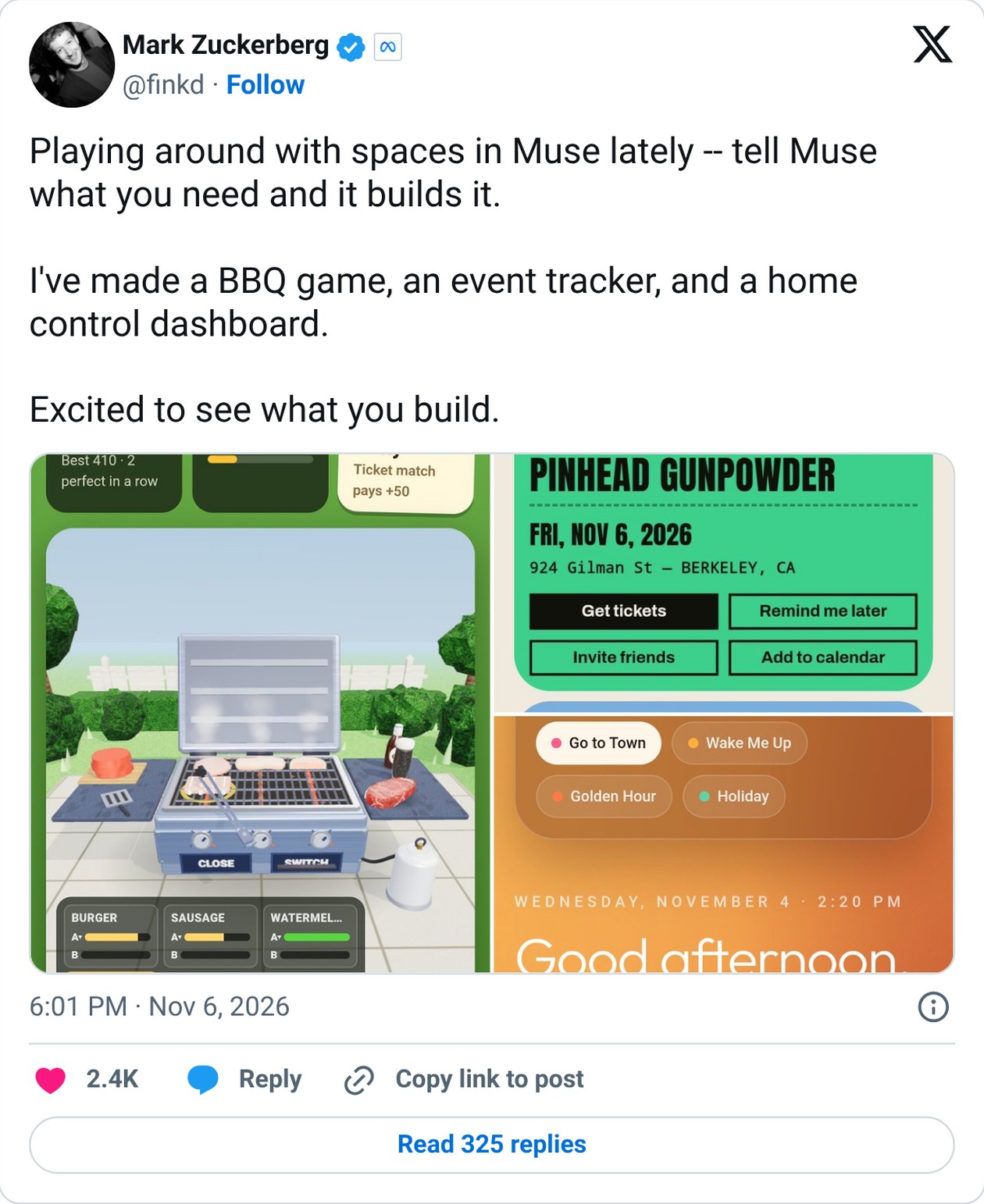
Mark Zuckerberg showed off his own experiments on X the same day, writing that he had made “a BBQ game, an event tracker, and a home control dashboard.”
 Screenshot: @finkd on X
Spaces are available everywhere Muse is offered, starting now, and Meta said it is exploring ways to let people share spaces and work on them together. The launch is the second Muse feature in a week, after Muse Voice on Thursday, TechCrunch reported. Zuckerberg said on Meta’s October earnings call that the Muse agents had 10 million users in the United States and Canada, according to TechCrunch.
 Image: Meta
Meta is also changing the models underneath. In a separate research post, it said it is rolling out specialized versions of the Muse and Meta AI models trained using Muse Wonder, its most capable model series. The update brings two abilities from Wonder. Active Memory is meant to tell temporary details from lasting ones and notice when an earlier fact matters again; Meta said the improved Muse models showed a 2.4x reduction in forgetting critical information and used critical context correctly in 90% of its test tasks, up from 76%. Active Focus is meant to keep the assistant working when a task hits a snag, and Meta reported a 67% improvement on everyday tasks where unexpected issues arise.
Those are Meta’s own benchmarks, and spaces will be judged on something simpler: whether the gift tracker still has the right prices in three weeks.