AI
Google Opens Its SynthID AI Detector to Everyone, and It Now Spots OpenAI and Nvidia Watermarks Too
Anyone can now upload a photo, video or audio clip to a new website and learn whether it carries the hidden watermark used by Google, OpenAI, Nvidia and Kakao, with Apple support coming.
London · Jordan Hale, AI · Oct 7 2026
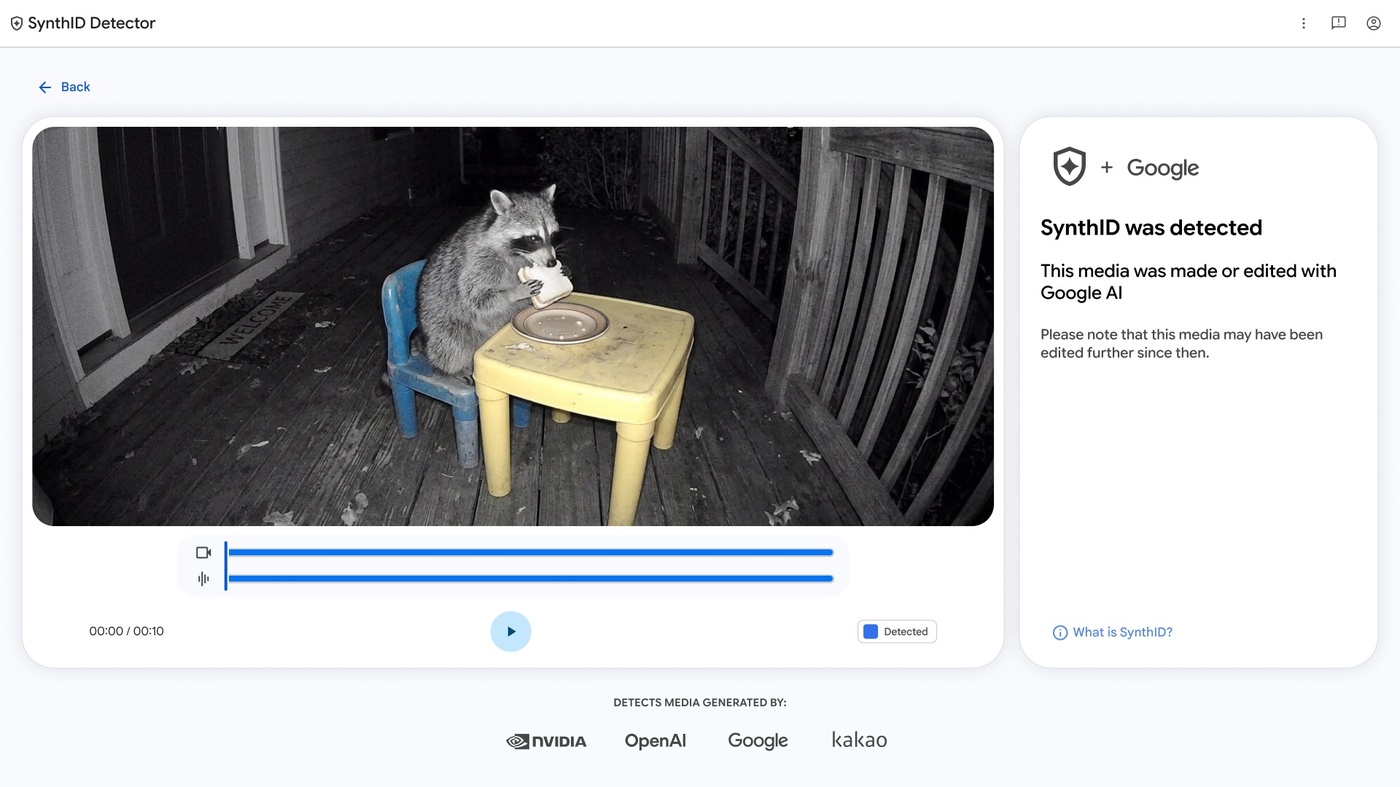
LONDON - Google on Wednesday opened its SynthID Detector, a tool that checks whether an image, a video or an audio file was made with artificial intelligence, to anyone in the world, and it widened the tool to recognize watermarks from other AI companies, not just its own.
The detector lives on a new website, synthid.com, and is available globally in English starting Wednesday, Pushmeet Kohli, a vice president at Google DeepMind, wrote in a company blog post. Users upload a file, and the site reports whether it carries SynthID, the imperceptible watermark Google has embedded in AI-generated media since 2023. Google said it has now watermarked more than 180 billion images and videos, along with 240,000 years of audio.
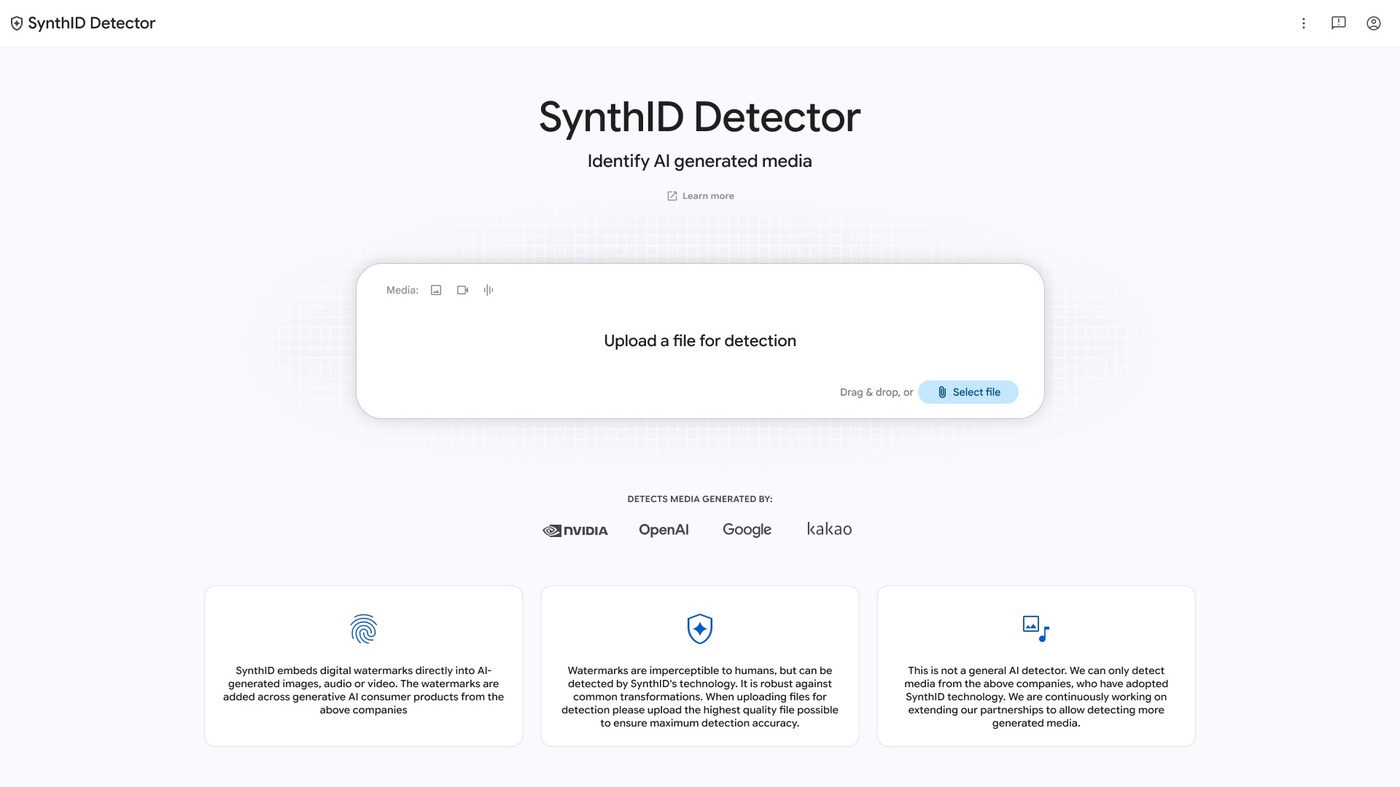 Image: Google
The bigger change is who the tool covers. Google said the detector can now check for media made with AI from Google or its partners, including OpenAI, Nvidia and Kakao, and that Apple will be added soon. Ars Technica noted that the earlier version only checked for Google’s own version of SynthID, so a ChatGPT image carrying the watermark would not have been flagged. Each partner uses its own distinct watermark, and the new site checks for all of them in one place.
Google first gave the detector to a limited group of journalists, media professionals and researchers last year. TechCrunch reported that the site accepts common image formats including JPEG, PNG, WEBP, AVIF and HEIC, videos in MP4, MOV and WEBM, and audio files including WAV, MP3, FLAC and M4A.
*Video: Google DeepMind on YouTube, "SynthID: A tool for watermarking and identifying AI-generated content"*There are limits. People must sign in to use the site, with a Google, OpenAI or Apple account, and Google says each user gets a daily quota of roughly 10 checks across images, video and audio, according to Ars Technica. The public version also gives less detail than the earlier tool for professionals, which highlighted the parts of an image that contained SynthID pixels. The website returns a simple message saying whether SynthID was used to produce or edit the media.
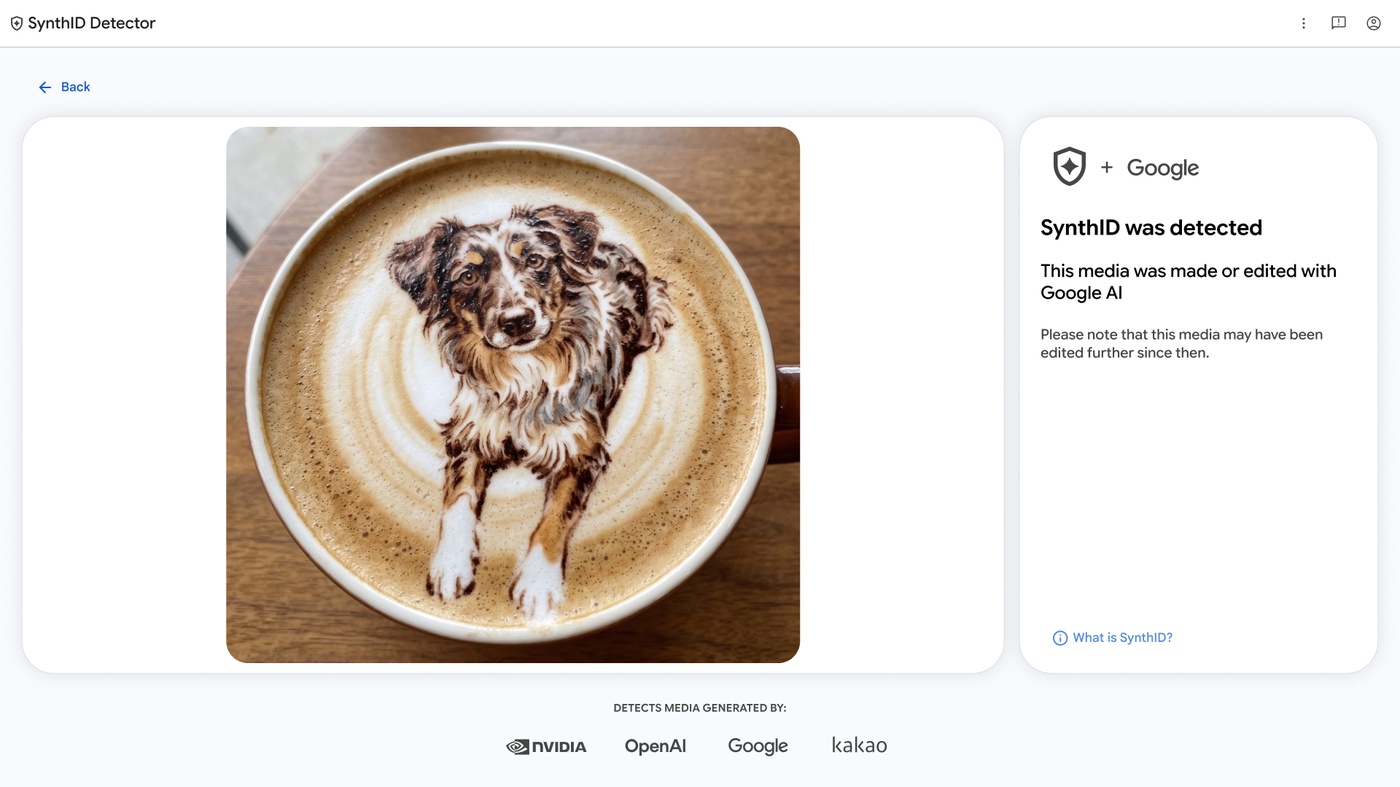 Image: Google
The watermark is applied by Google’s Nano Banana, Veo and Lyria models and by tools such as Gemini, Flow and Vids, TechCrunch reported. Google has also built SynthID checks into Search, the Gemini app and Chrome, and the company said those features now handle more than 1 million verification requests a day.
A positive result is strong evidence, but a negative one proves little. The detector can only find content that carries SynthID, so a file without the watermark is not necessarily authentic. Microsoft and Meta use their own standards for watermarking and verifying content, TechCrunch noted, adding that such tools are not infallible and often fail to identify content created by their makers’ own models.