
AI
Google's Satellite Data Center Just Answered Its First Prompt From Orbit, With a Haiku
The Project Suncatcher prototype booted one of its four TPUs, ran Gemma 4 and sent a poem back to Earth over Svalbard. Next come radiation and heat tests, and two linked satellites in 2027.
Mountain View, Calif. · Jordan Hale, AI · Nov 1 2026
MOUNTAIN VIEW, Calif. - Google’s first data center satellite has done its first piece of real work. The company said on Friday that its Project Suncatcher prototype booted a Tensor Processing Unit in orbit, ran Google DeepMind’s open Gemma 4 model on a prompt sent up from the ground and beamed the answer back to Earth. The answer was a haiku.
“Blue marble below / Data streams in silent grace / Starlight feeds my core,” the model wrote, finishing with a sparkle emoji. Google said the poem came down as the satellite passed over Svalbard, Norway.
“After launching our prototype satellite a few weeks ago, we’ve now successfully sent a command up to orbit, booted up the TPU, ran the prompt, and received our first complete response back on earth - a haiku!” Google chief executive Sundar Pichai wrote on X.
 Screenshot: @sundarpichai on X
Travis Beals, senior director of Google’s Paradigms of Intelligence team, called it the mission’s “Hello World” milestone in a blog post, and described it as “the first-ever AI response from a data center class TPU in orbit.” According to The Register, the prompt asked the model to “Write a haiku from the perspective of a TPU orbiting Earth, with the wonderful world spinning beneath you.” After the poem, the team tried space-themed limericks and prompts that asked the payload to report its own technical status.
The satellite, built with Planet, launched on Oct. 1 aboard SpaceX’s Transporter-18 rideshare mission. Engineers then spent about three weeks working through a commissioning checklist, powering up the host computer and TPU trays and running early machine learning tests.
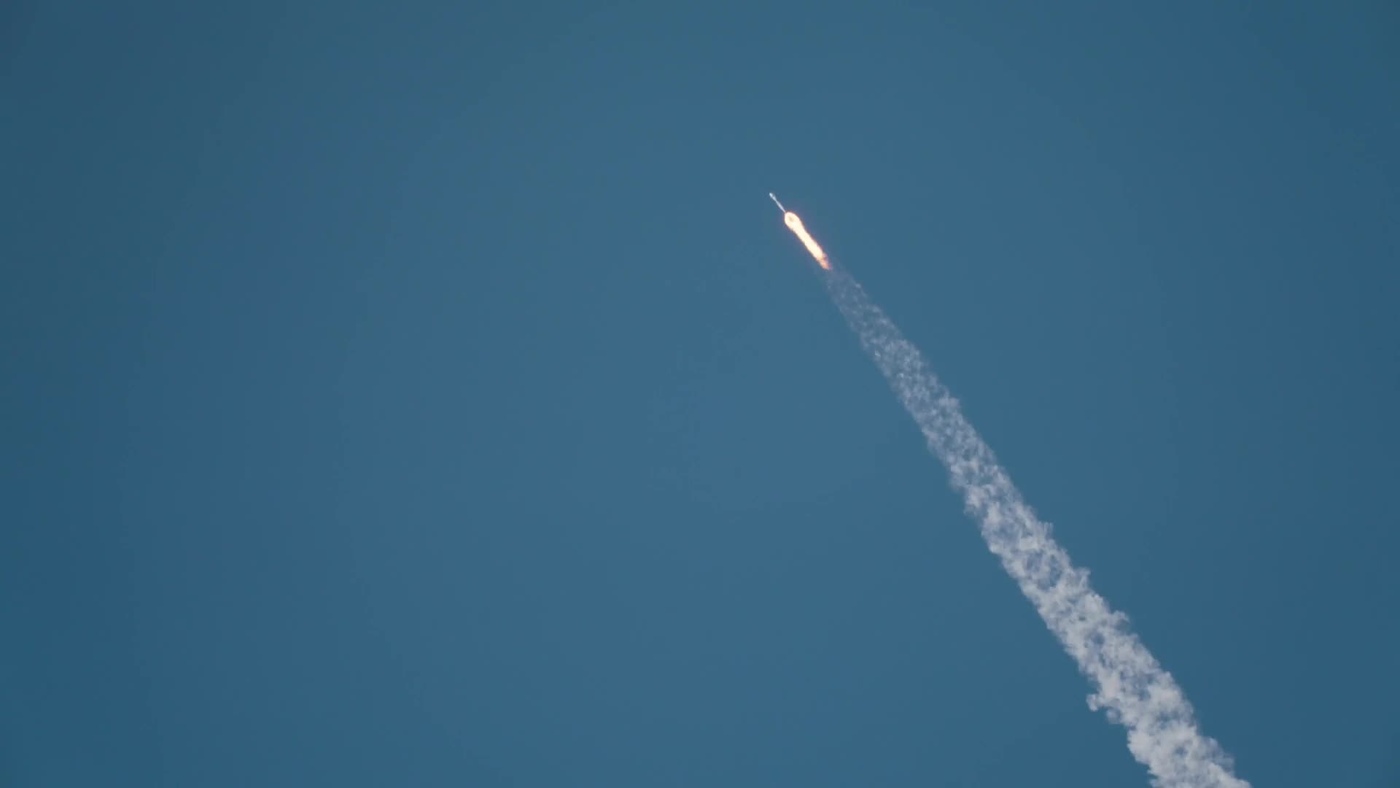 Image: Google
The hardware is modest by data center standards, and so is the power budget. TechCrunch reported that the spacecraft carries four TPUs and generates up to 1 kilowatt of electricity, enough to run only one TPU at a time for about 20 minutes. That window has to line up with the moments when the satellite can talk to a ground station.
The haiku is a test of plumbing. The harder questions are about radiation and heat. Google said its next experiments will measure how the TPUs perform under thermal stress and radiation exposure in orbit. Radiation can flip bits in memory and quietly corrupt data. In earlier ground tests with a 67 MeV proton beam, Google researchers estimated a silent data corruption rate that works out to roughly one failure in 3 million inferences, assuming one inference per second, a level they called likely acceptable for inference. They said its effect on training jobs needs more study.
 Image: Google
If the chips hold up, Google plans to launch two interconnected satellites in 2027. TechCrunch reported that those spacecraft will generate more power and test optical links between satellites, the piece Google needs for its long-term idea of close-flying constellations that share large inference workloads.
*Video: Google / YouTube*The economics are still a decade away. Google’s researchers have argued that if launch costs fall to around $200 per kilogram, a satellite’s launch cost spread over its working life could be comparable to what U.S. data centers spend on electricity, and they expect that price could arrive around 2035. For now, Google has a single satellite, one TPU awake at a time and a three-line poem. “Our chips have officially earned their space wings,” Beals wrote.