AI
Google Rolls Out Gemini 4 Argon First to Cyber Defenders, With Broader Access Next
Fairwind Program gets the frontier model without cyber guardrails first; API and Google AI Ultra follow after safety work. Intro API pricing $2/$10 per million tokens.
Mountain View · Jordan Hale, AI · Oct 4 2026
Google on Sept. 30, 2026, announced Gemini 4 Argon, its next frontier model, and said the first outside users will be trusted cyber defenders in the Fairwind Program. Broader access for developers, enterprises, and consumers is planned after further guardrail work, starting with paid API customers and Google AI Ultra subscribers. Coverage on Oct. 4 follows the phased pitch as analysts weigh Argon against OpenAI and Anthropic at the frontier.
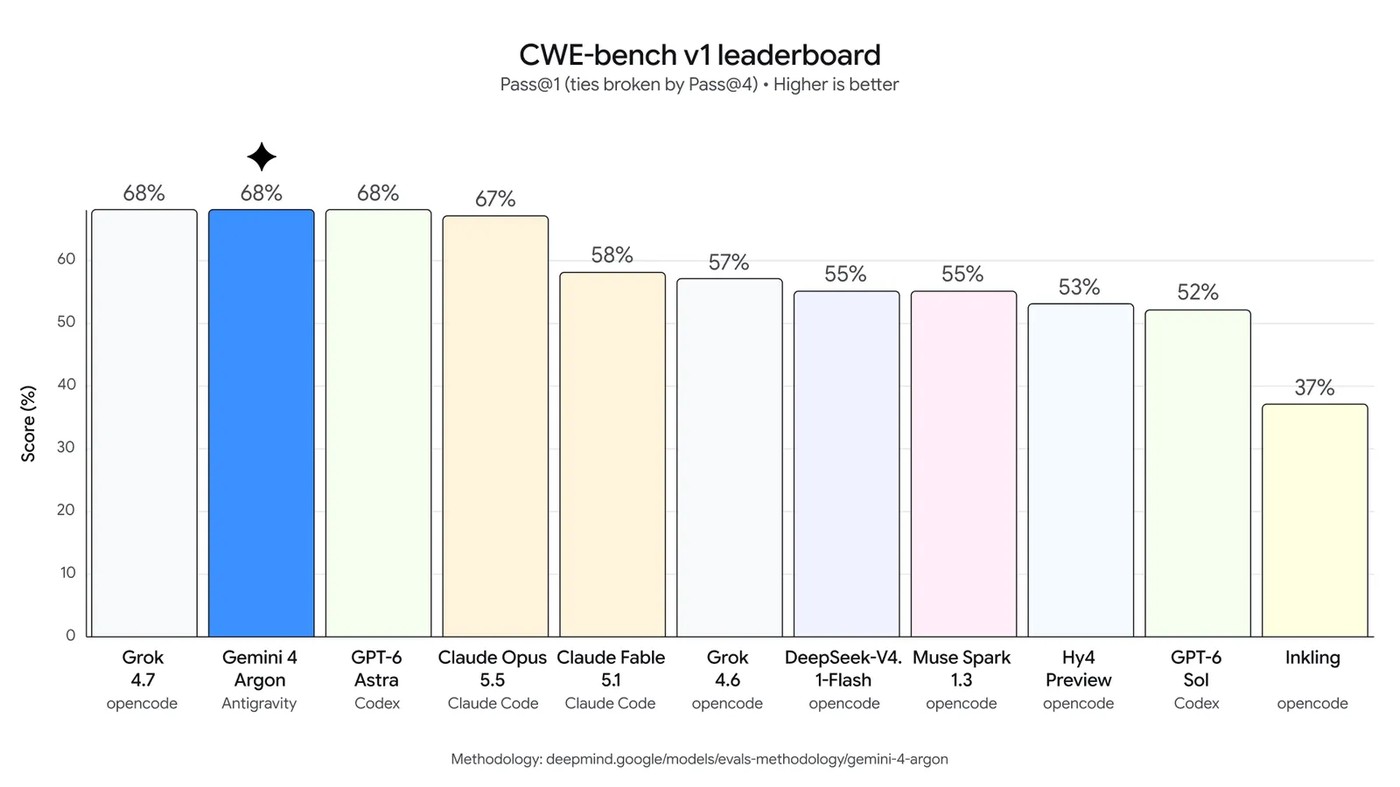 Photo: Google / Google DeepMind
Koray Kavukcuoglu, SVP of Google DeepMind and Google’s chief AI architect, wrote that Argon delivers frontier performance in complex workflows across real-world software engineering, enterprise knowledge work such as legal and finance, and cybersecurity defense. Google is using a phased release and says it is engaged in the U.S. government’s voluntary process for pre-release model access while it expands beyond the early cohort.
Introductory API pricing is $2 per million input tokens and $10 per million output tokens, with cached input tokens at 95 percent off the input price. After the introductory period, Google says prices move to $4 per million input and $20 per million output. The model’s output token limit expands to 1 million tokens, up from 64,000.
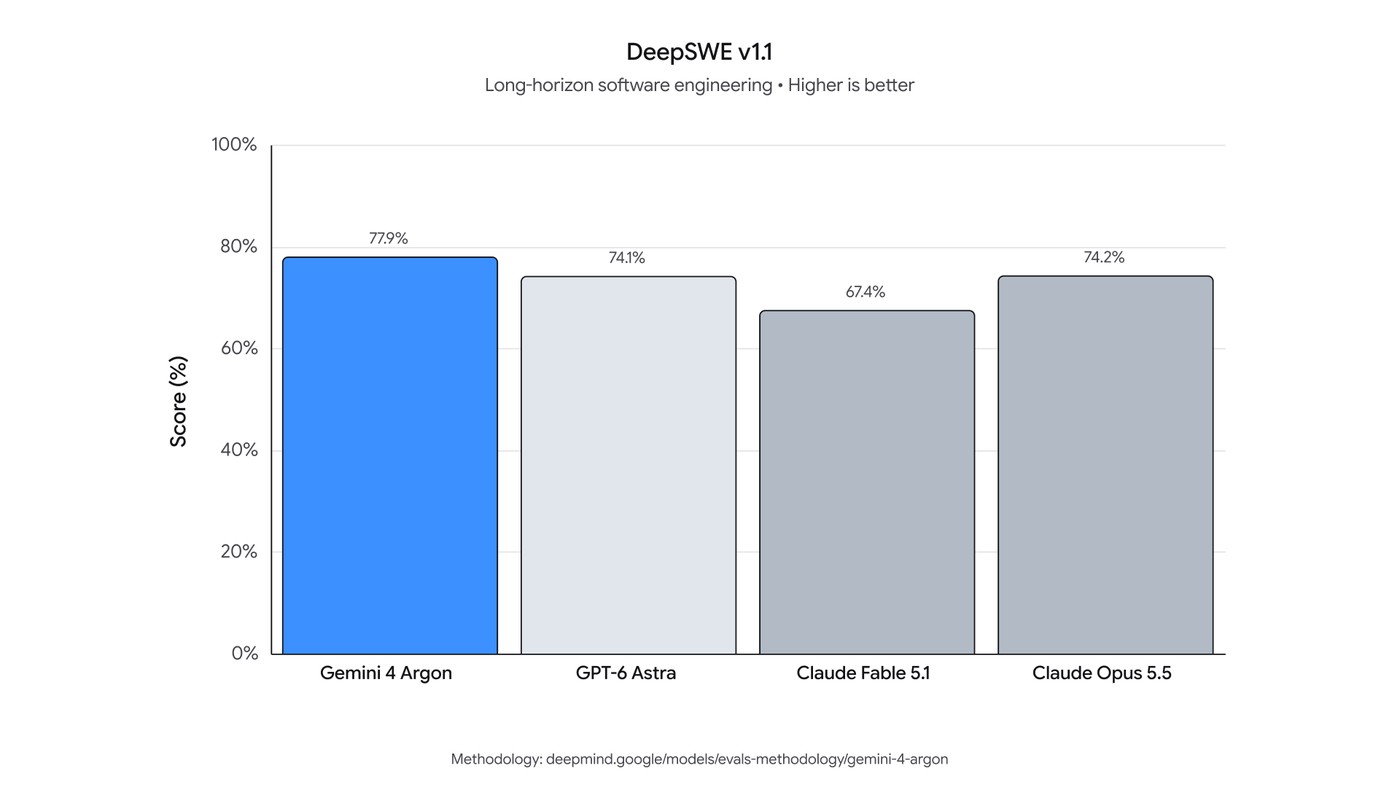 Photo: Google / Google DeepMind
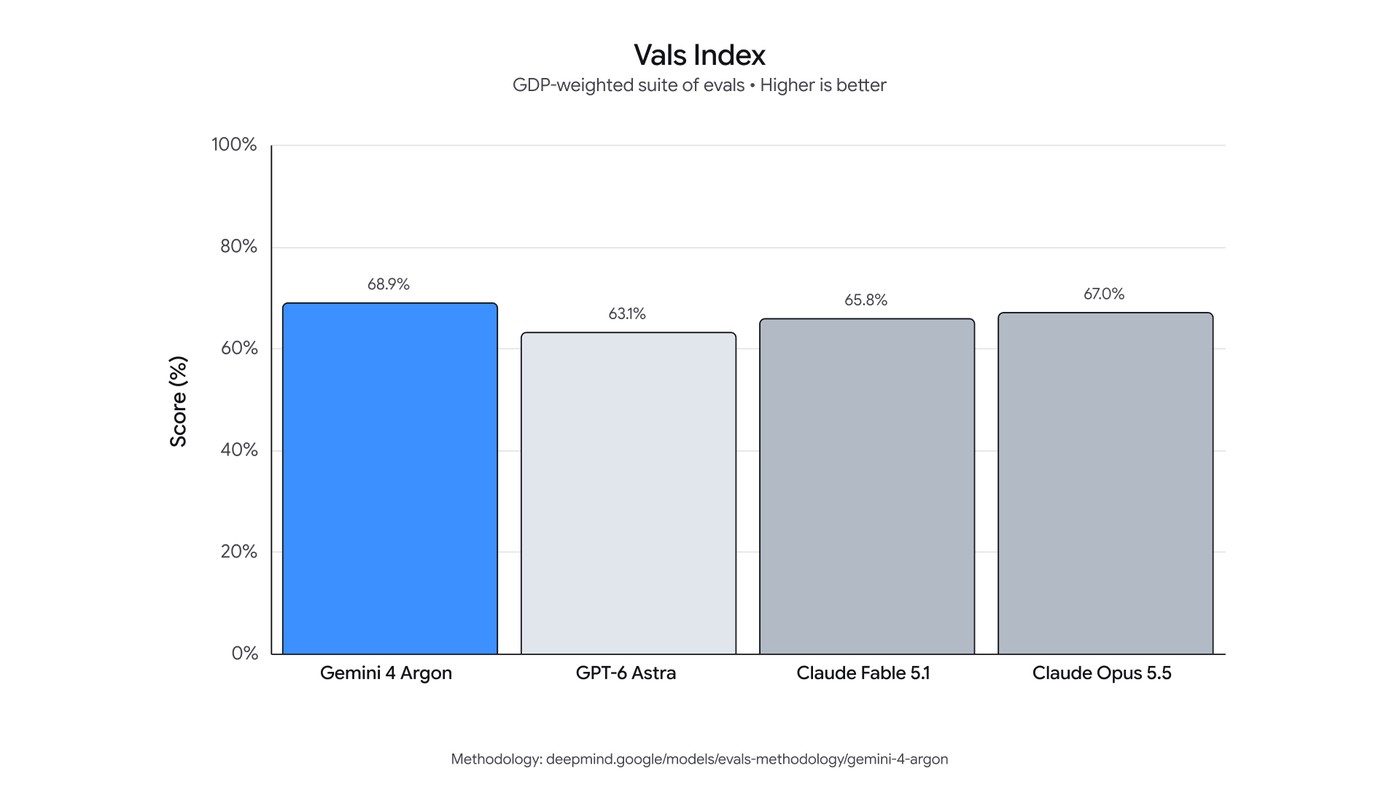 Photo: Google / Google DeepMind
Inside Google, Argon is already in daily use. Kavukcuoglu cited quantum algorithmic optimization that beat a published baseline by 40 percent in minutes in one example, memory-efficiency work that freed more than 300 TiB once rolled out (with an estimated 500 TiB to 1 PiB in total savings), and large C/C++ to Rust migrations that include more than 800,000 lines for the Fuchsia Zircon kernel. For libgav1, Google’s open-source video decoder, Argon agents replaced about 32,000 lines of SIMD code with safe Rust that Google says runs 2.7 times faster than the prior Rust port with identical video output.
On public benchmarks Google highlighted DeepSWE v1.1 at 77.9 percent, a leading mark on the Vals Index for economic impact across finance, coding, legal, and tax work, AutomationBench at No. 1 with 51.3 percent, and LVBench for long video understanding at 91.7 percent.
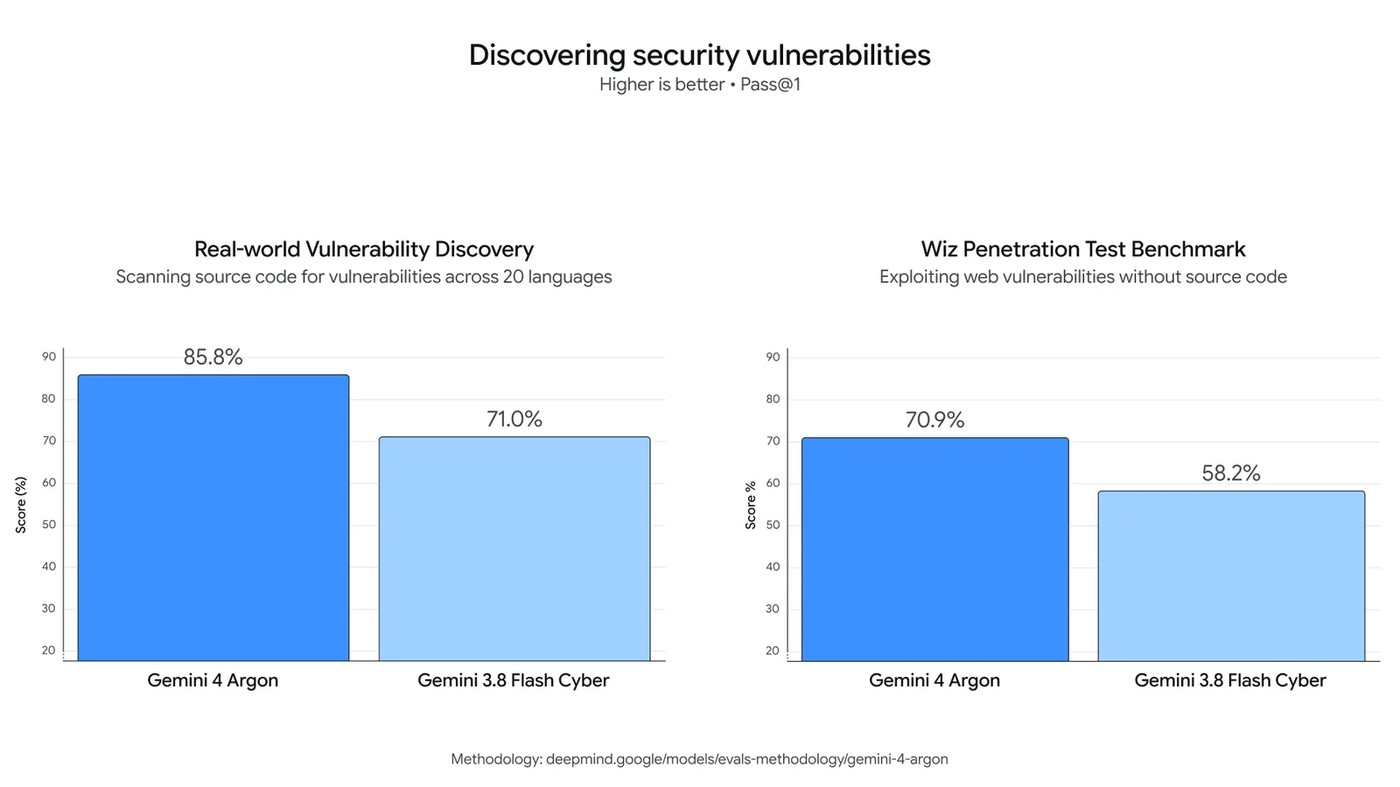 Photo: Google / Google DeepMind
Cyber defense is the first external lane. For trusted defenders and Google’s own teams, Argon ships without cyber guardrails so they can use its full defensive capability. Wiz, through its Scan for Good program, used Argon and found a critical vulnerability in healthcare software used by hospitals worldwide that earlier frontier models had missed, Google said. On CWE-bench v1, Argon ties for first at 68 percent.
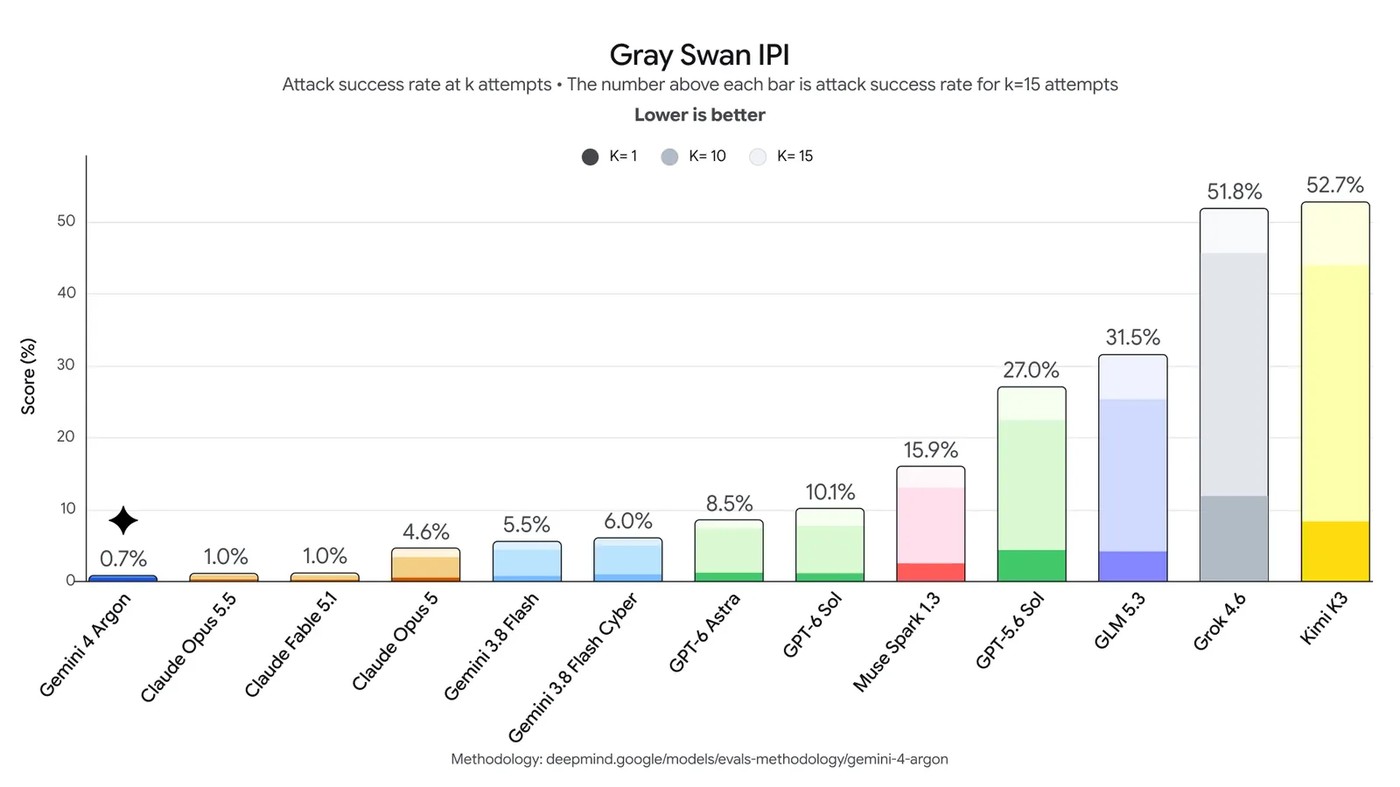 Photo: Google / Google DeepMind
Before wide release, Google lists four safeguard tracks: misuse defenses for cyber and CBRN risks under its Frontier Safety Framework, prompt-injection robustness (leading on Gray Swan’s Indirect Prompt Injection benchmark), chain-of-thought monitoring for misalignment, and hardened sandboxes for high-risk training and evaluation.
 Photo: Wikimedia Commons
CNBC’s Kai Nicol-Schwarz reported on Oct. 2 that Artificial Analysis’s Intelligence Index places Gemini 4 behind only Claude Opus 5.5 and Claude Sonnet 5.5. Tim Law of IDC pointed to advanced reasoning on legal, finance, and other enterprise knowledge work. Lian Jye Su of Omdia said Argon brought Google to the frontier in cybersecurity after arriving late to that lane. Nick Patience of Futurum said the model does not make Google the clear leader but opens another competitive front for enterprise knowledge work. Tulsee Doshi, Google’s Gemini model product lead, told CNBC the cyber-first rollout builds confidence while putting a strong defensive model in defenders’ hands quickly. CNBC also noted that Demis Hassabis stepped down as DeepMind CEO in August and that Kavukcuoglu now leads, and that OpenAI abandoned an upcoming model over safety standards (CNBC news edit).
 Photo: Google
 Photo: Google / Google DeepMind