Gadgets
Flipper Devices Opens Preorders for the $399 Flipper One, a Pocket Linux Computer for Network Tinkerers
The maker of the Flipper Zero is crowdfunding a larger, Debian-based device with Wi-Fi 6E, two gigabit Ethernet ports and an M.2 slot for modules like 5G and LoRa. Shipping is expected in July 2027.
New York · Noah Park, Gadgets · Nov 17 2026
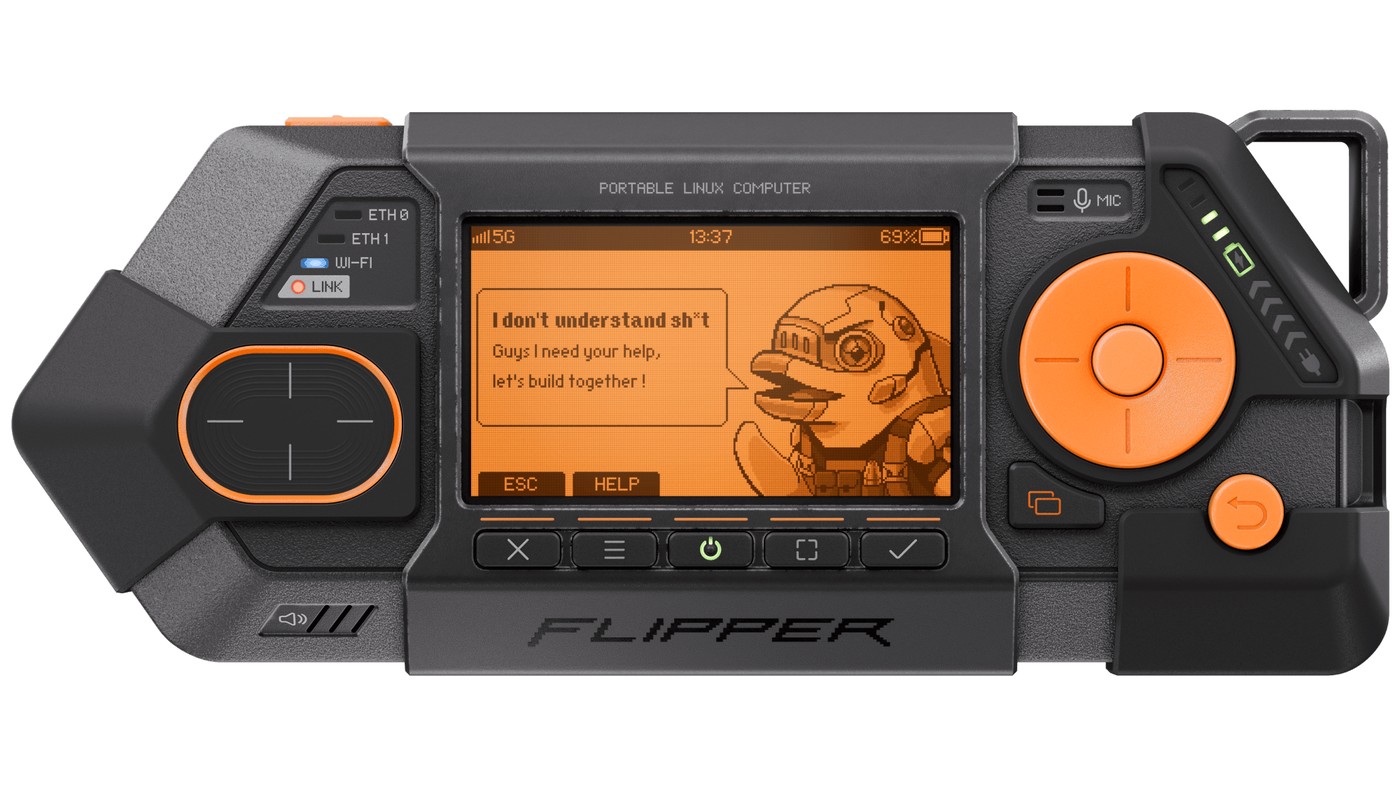
NEW YORK - Flipper Devices, the company behind the pocket-size Flipper Zero, opened a Kickstarter campaign on Tuesday for the Flipper One, a handheld Linux computer it describes as an “open Linux multi-tool built for high-performance computing and IP networking.” Backers can preorder it for $399, with shipping expected to begin in July 2027.
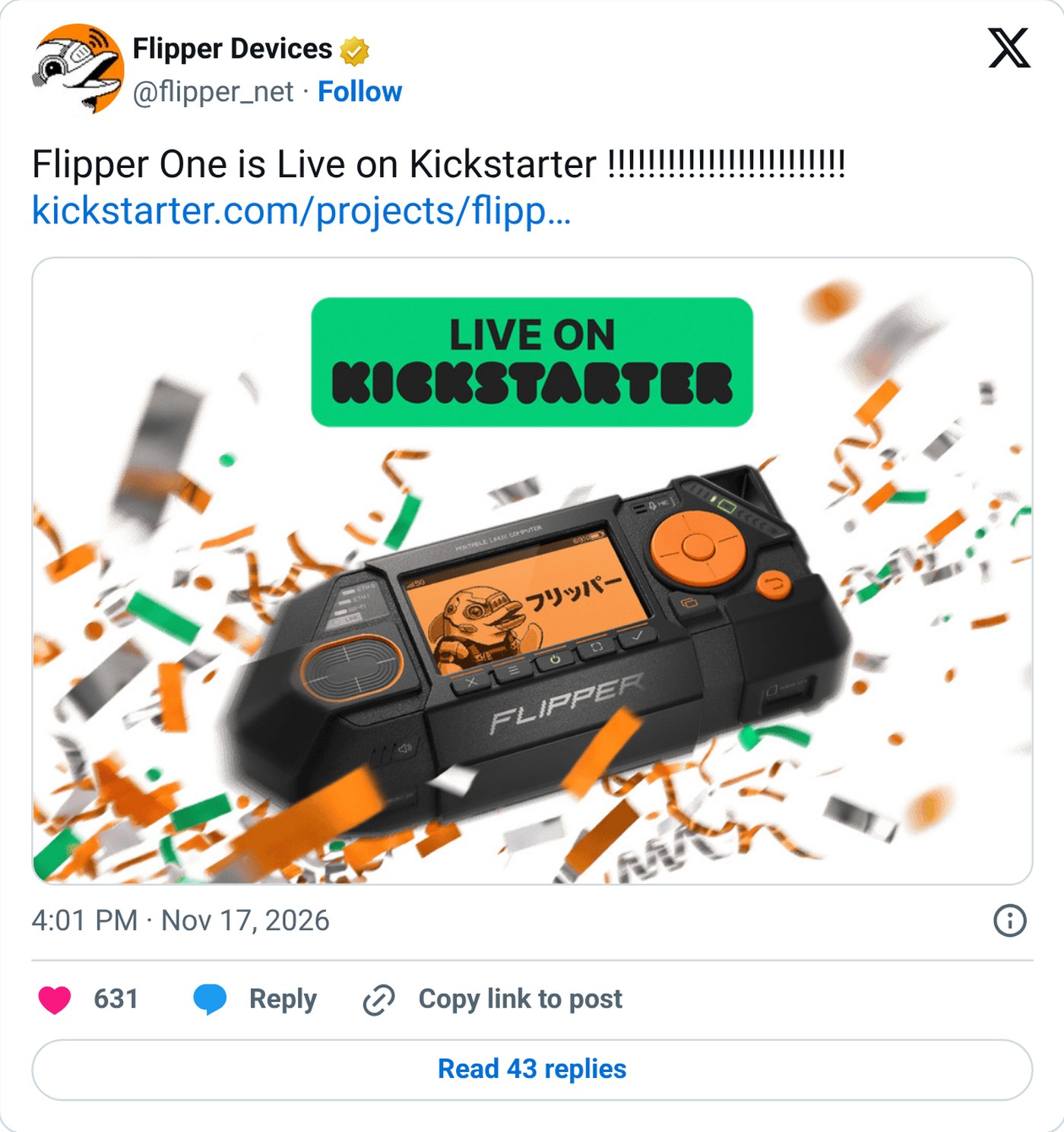
The campaign runs from Nov. 17 to Dec. 17 to fund the first production run, BleepingComputer reported. “Flipper One is Live on Kickstarter,” the company posted on X shortly after the campaign opened.
Screenshot: @flipper_net on X
The company says the One is not a successor to the $169 Flipper Zero but a different product. The Zero focuses on NFC, RFID, infrared and sub-1GHz radio. The One is built around wired and wireless IP networks. It has Wi-Fi 6E, two gigabit Ethernet ports, USB 3 and PCIe, and a built-in eSIM.
According to the Flipper One product page, it can manage up to five network uplinks at once, with routing, failover and load balancing, and can act as a Wi-Fi hotspot and client at the same time while tunneling traffic through a VPN. It can also map a network, find active devices and check which services are running, which makes it a diagnostic tool for people who run networks.
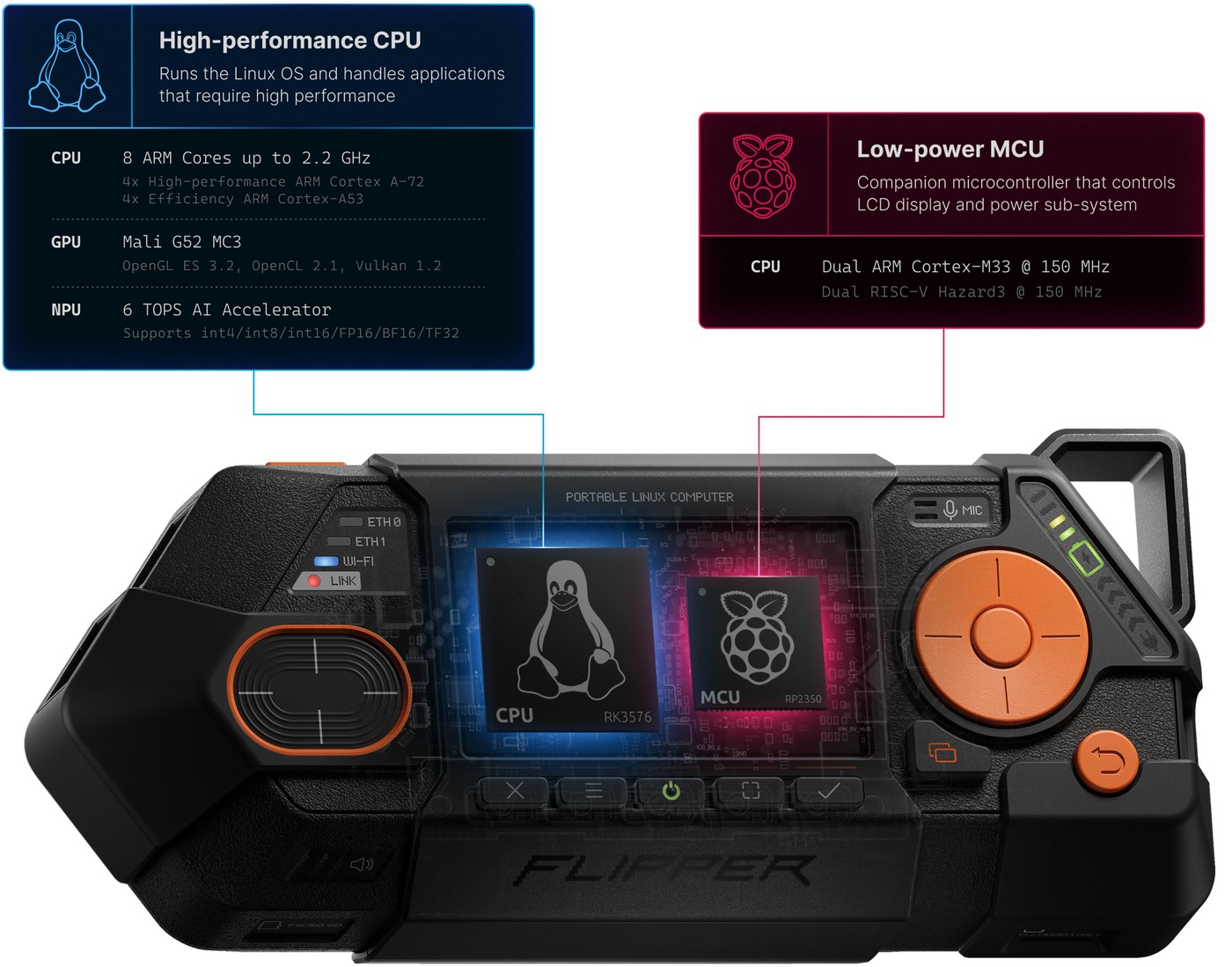
Image: Flipper Devices
Inside are two processors. An eight-core Rockchip RK3576 with a neural processing unit and a GPU runs the Linux system, which Flipper calls Flipper OS and bases on Debian. A separate low-power microcontroller drives the screen, buttons and status lights, so the device stays usable even when Linux is off. Flipper says the One runs on the mainline Linux kernel, and it is working with the consultancy Collabora to remove the remaining closed-source pieces.
A single USB-C cable can charge the device and give a laptop console access without drivers on macOS, Windows, Linux, iOS or Android. The same port supports DisplayPort, so the One can drive a monitor with a keyboard and mouse attached and be used as a small desktop computer.
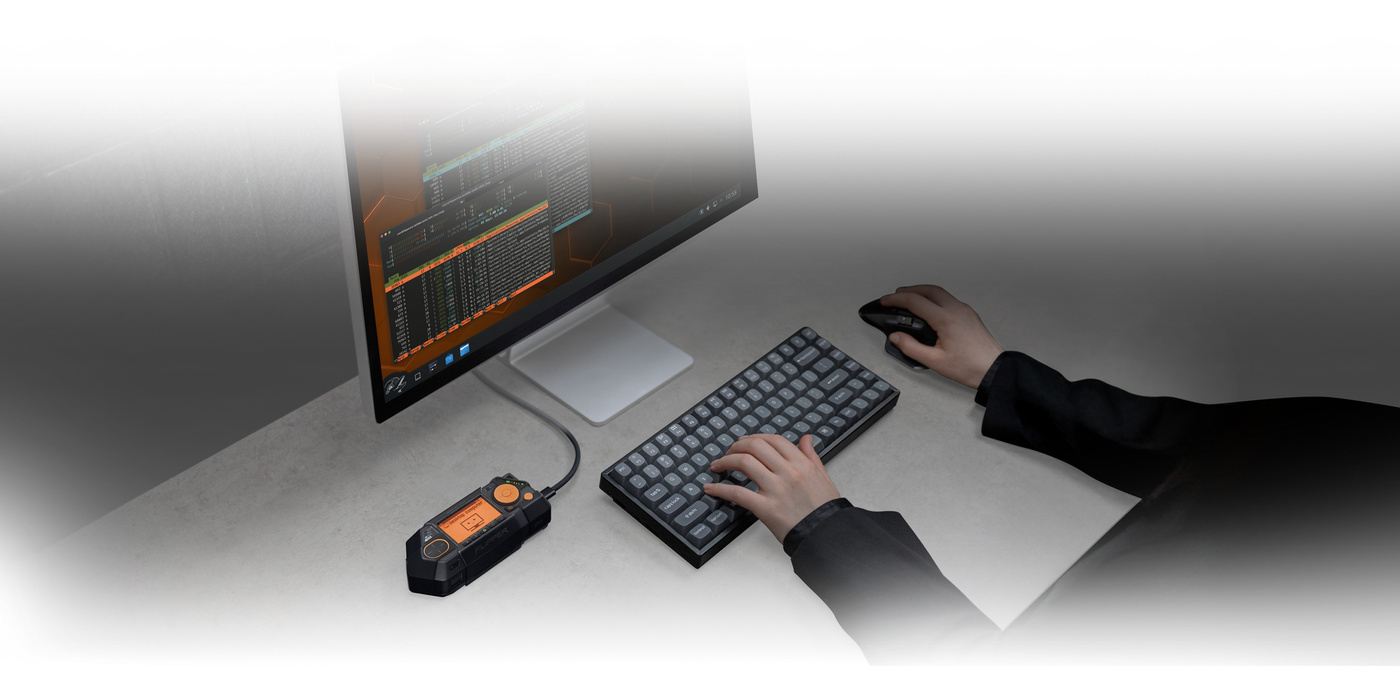
Image: Flipper Devices
Expansion is the other pitch. An M.2 slot under the back plate accepts modules for cellular modems, software-defined radio, AI accelerators and NVMe or SATA storage. Flipper is offering a 5G modem, a LoRa radio that supports mesh networks and a walkie-talkie mode, and a software-defined radio module, with full specifications for some modules still to come.
The price leaves no profit on the hardware, the company told BleepingComputer, because memory and storage make up half of the hardware cost at a time of rising RAM prices. “We aim to make Flipper One as accessible as possible without building a profit margin into the hardware’s price,” it said in a press release.
The Flipper Zero also started on Kickstarter, in 2020. It raised $4.8 million in 30 days, and Flipper has since sold more than one million units, BleepingComputer said.