Did You Know
Did You Know: There Is Now a $1,000 Mosquito Laser That Will Not Fire Until You Ace a 15-Question Safety Quiz
Photon Matrix's air defense system uses lidar from self-driving cars to find mosquitoes and a Class 4 laser to take off their wings. Before it will arm, every new owner has to pass a test in the app with a perfect score and register a fingerprint.
CHANGZHOU, China · Kenji Watanabe, Did You Know · Nov 2 2026
CHANGZHOU, China - Did you know that there is now a home gadget that makes you sit an exam before it will work? Photon Matrix, a startup based in Changzhou, about 100 miles northwest of Shanghai, sells a roughly $1,000 device that spots mosquitoes in flight and shoots them down with a laser. Buyers must first pass a 15-question safety test, and “only those who answer every question correctly can register a fingerprint to activate the machine,” Keith Bradsher reported in The New York Times after watching a demonstration at the company’s offices.
One sample question asks which room is least suitable for the device. The answer, according to The Times, is a bathroom, because of its high humidity, confined space and reflective surfaces. The company’s own FAQ puts the rule plainly: “First-time use requires a 100% pass on the 15-question app safety quiz.” Even then, the unit starts up in scan-only mode, and the owner has to switch on strike mode by hand in the app or on the device.
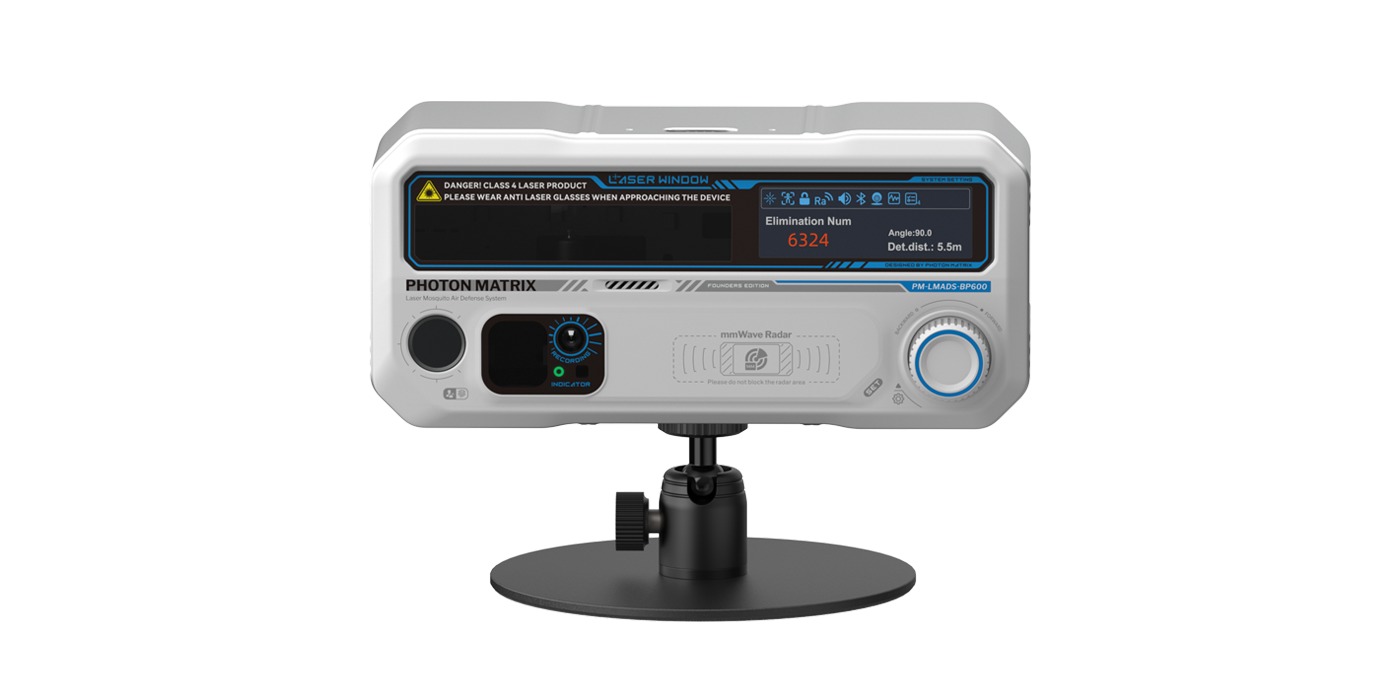 Image: Photon Matrix
The caution has a reason. The Laser Mosquito Air Defense System uses a Class 4 laser, the most powerful classification, which can cause retinal injuries in less than a second. Wang Chuan, the company’s founder and chief executive, told The Times that Photon Matrix first tried weaker Class 3 lasers but found they could not reliably disable mosquitoes. So it chose the stronger beam and limited each burst to one-hundredth of a second, which he said reduces, but does not eliminate, the risk to eyes. The wings absorb little heat, so they burn off before the body is much affected.
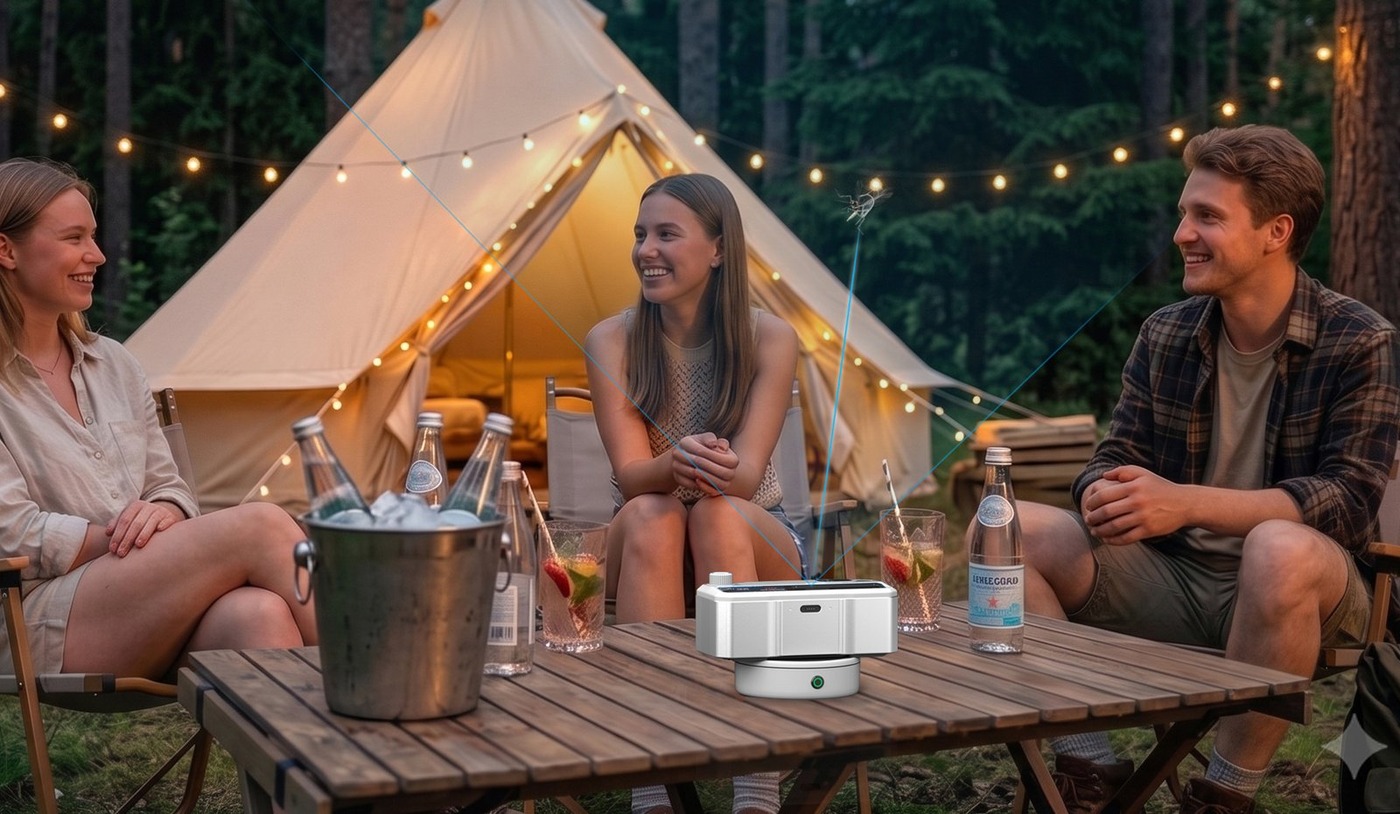
Finding the target is the job of lidar, the sensing technology used in self-driving cars. The device fires 100,000 very faint laser pulses a second to map a flat plane in front of it and watches for moving objects smaller than a pea, The Times reported. When something crosses that plane, the system checks its size, and only a match for a mosquito triggers the strike laser, which a mirror system steers along the same optical path, according to the company’s website. It looks for insects from 2 to 20 millimeters long flying no faster than 1 meter per second, across a 90-degree sector with a 6-meter radius.
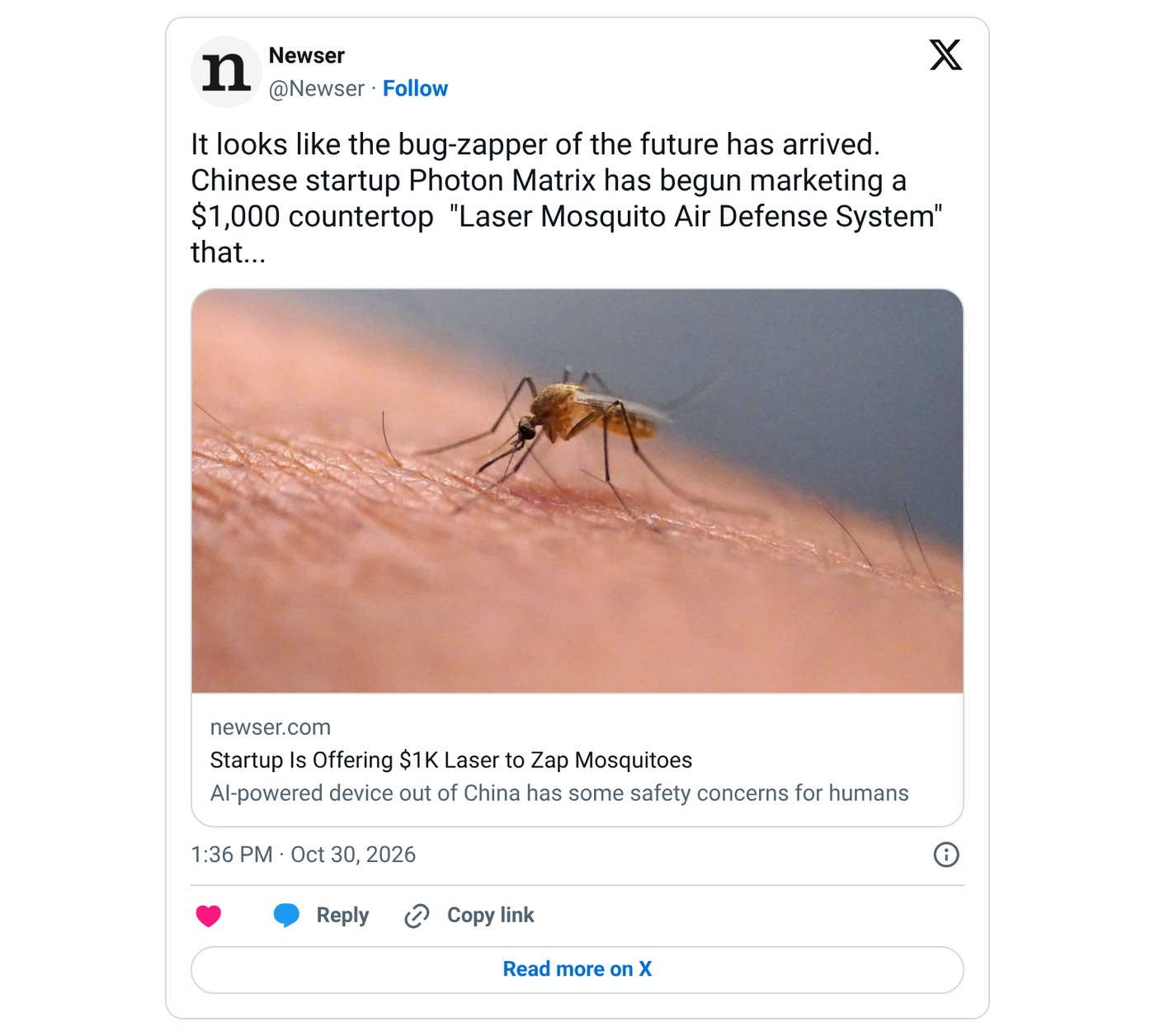 Screenshot: @Newser on X
The quiz is one layer among several. An AI camera recognizes people and pets and blocks the laser, a separate radar picks up their movement even in total darkness, and the system will not fire at reflective surfaces that could bounce the beam, The Times reported. The FAQ adds a blind zone close to the device and a rule that it will not shoot without a solid background behind the target. Ken Barat, a former laser safety officer at Lawrence Berkeley National Laboratory, told The Times those safeguards could make the device safe, but he cautioned that a Class 4 laser focused on something as tiny as a mosquito could pack “a lot of energy” into a small space.
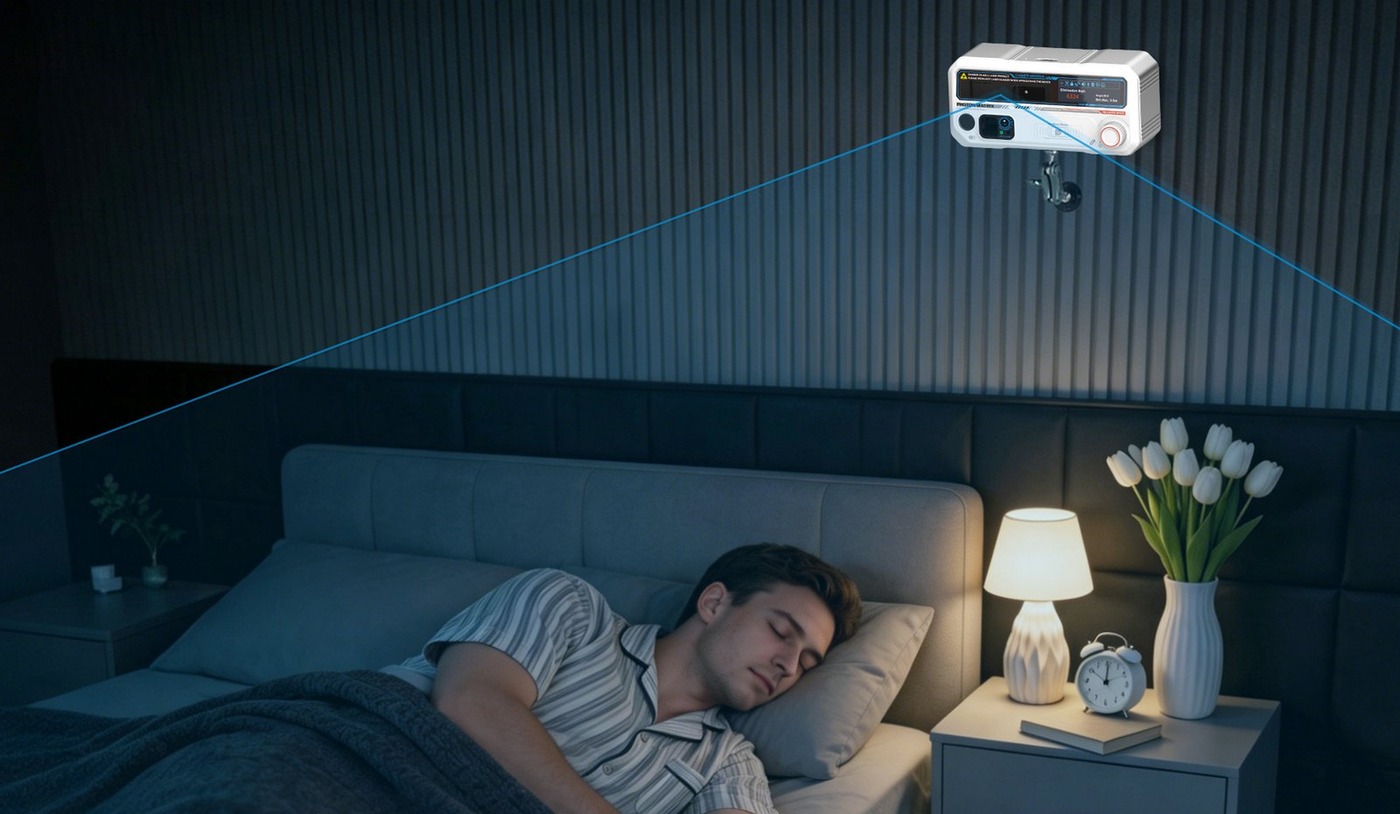 Image: Photon Matrix
There are two versions. The outdoor model fires a visible 450-nanometer blue laser and costs $1,088, while the indoor one uses an invisible 976-nanometer infrared beam and costs $988, New Atlas reported. The unit, built from aluminum alloy and plastic, weighs about 1.2 kilograms and draws about 20 watts. Photon Matrix says it is tuned only for mosquitoes and will not reliably target flies, wasps or moths.
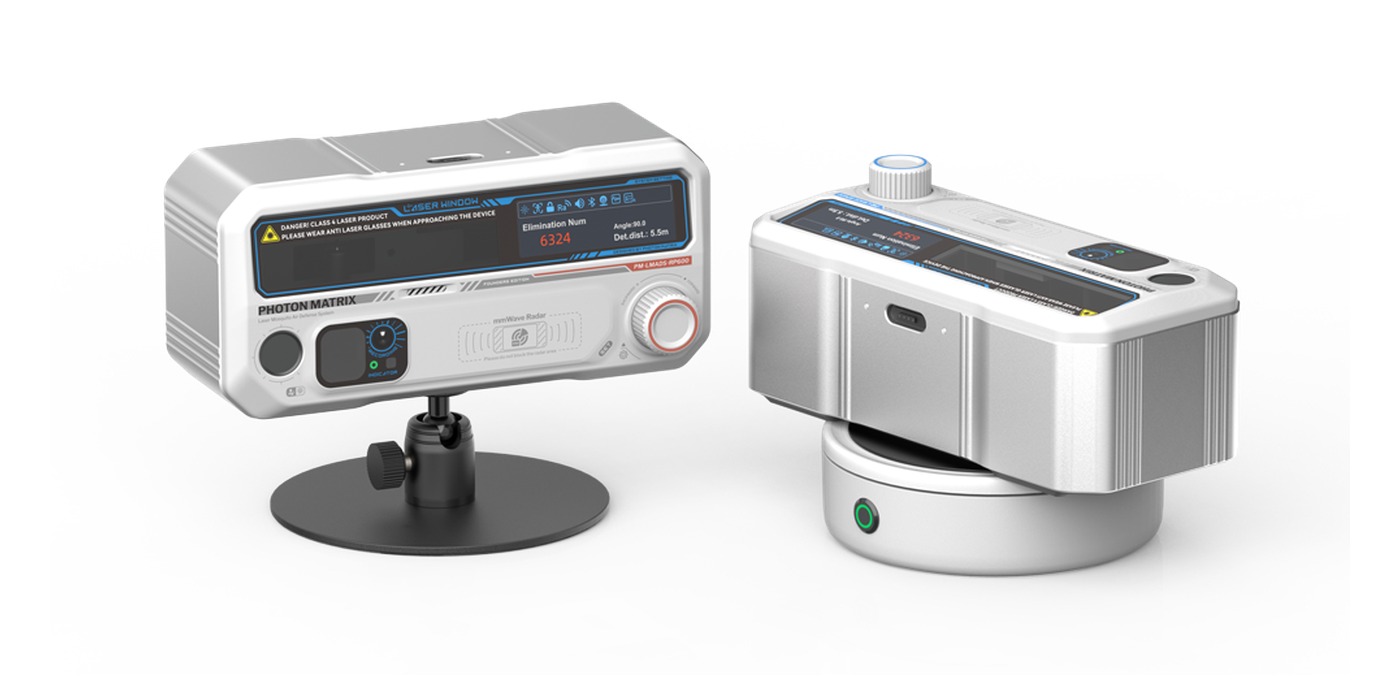 Image: Photon Matrix
Paperwork is the open question. The FAQ says CE certification is “still in progress” with no completion date promised, and that the list of standards in its documentation “does not mean that approvals or certifications have already been obtained.” Wang told The Times the company is seeking approval in China, Europe and the United States. The Register reported in August that the project had raised more than $2.8 million on Indiegogo and that some backers were uneasy about compliance and slow answers.
*Video: Photon Matrix on YouTube, "Photon Matrix Blue Laser Mosquito Air Defense | Field Test, February 2026"*Photon Matrix says it has 5,000 prepaid orders and a contract manufacturer, with mass production expected within weeks. The idea is not new. Intellectual Ventures showed a mosquito-shooting laser in 2010 but never mass-produced it. Wang is already planning a model with even shorter bursts, short enough, he hopes, that the moisture in the eye absorbs the energy before it reaches the retina. Until then, the pass mark stays at 100%.