AI
DeepSeek Open-Sources an Always-On Coding Agent That Waits in Your GitHub Repo for Work
The dsh-superagent prototype listens to GitHub and Feishu, opens its own work items and answers with pull requests. DeepSeek calls it research code, not a product.
Hangzhou, China · Jordan Hale, AI · Nov 2 2026
HANGZHOU, China - DeepSeek has published the blueprint for a coding agent that never logs off, and released a working prototype anyone can download. The Chinese AI lab’s Harness team posted a long design essay on X on Sunday, titled “Exploring Super-agent Design: Towards a More Autonomous Agent System,” alongside an MIT-licensed GitHub repository called dsh-superagent-prototype.
The prototype is a proactive coding agent for a single GitHub repository, packaged as a bundle for DeepSeek Harness, the company’s agent software. It listens to GitHub and, optionally, to the Feishu workplace chat app. When an authorized person asks it for work, it opens a work item, does the job in its own session and directory, and replies in the original conversation, for example with a pull request. A web panel shows what still needs a person.
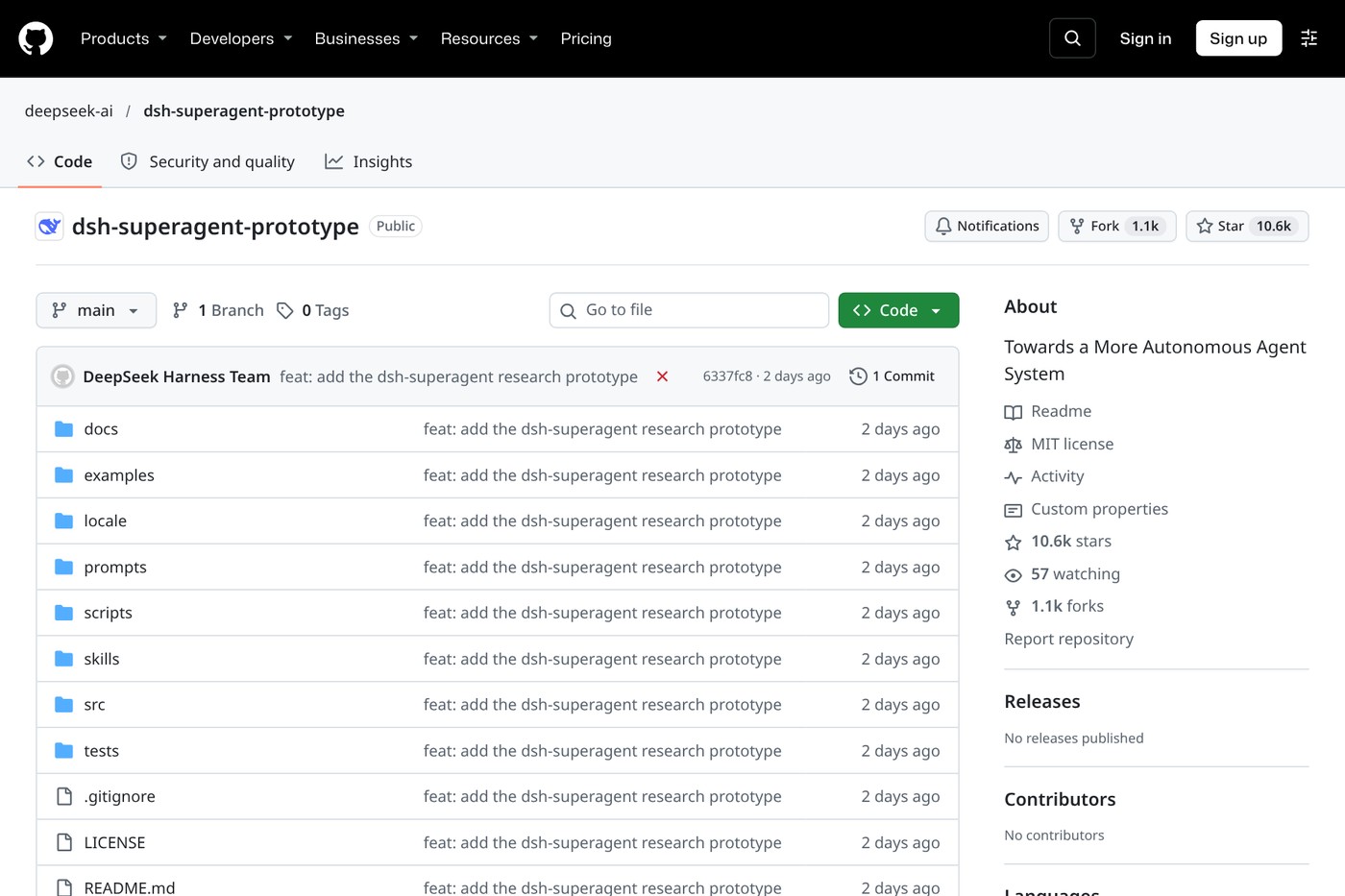 Screenshot: GitHub
DeepSeek is careful about what it is shipping. The README calls the code a “research prototype for reference only, not an official DeepSeek product,” says much of the engineering was done by coding agents and warns that it may still contain bugs. The public version is not identical to the one DeepSeek runs internally, and some ideas in the essay are not implemented in it.
The essay, written by Yujia Qiao, who built the system with the Harness team, explains the thinking. Today’s coding agents treat one chat session as the basic unit of work, and in the team’s experience a person can keep track of only three to five active sessions at once. That means a single task is limited by how good the model is, but juggling many tasks is limited by human attention.
 Screenshot: @DeepSeekHarness on X
DeepSeek’s answer is a two-level design. A long-lived Router layer handles every conversation with people and hands out tasks, but does no coding itself. Separate Worker sessions, each with its own isolated context and a full set of tools, do the actual work and report back to the Router, which writes all the replies. The agent reacts to events such as chat messages, code review comments and test results rather than waiting for typed prompts, and it uses simple code rules to filter out noise before it calls a model at all.
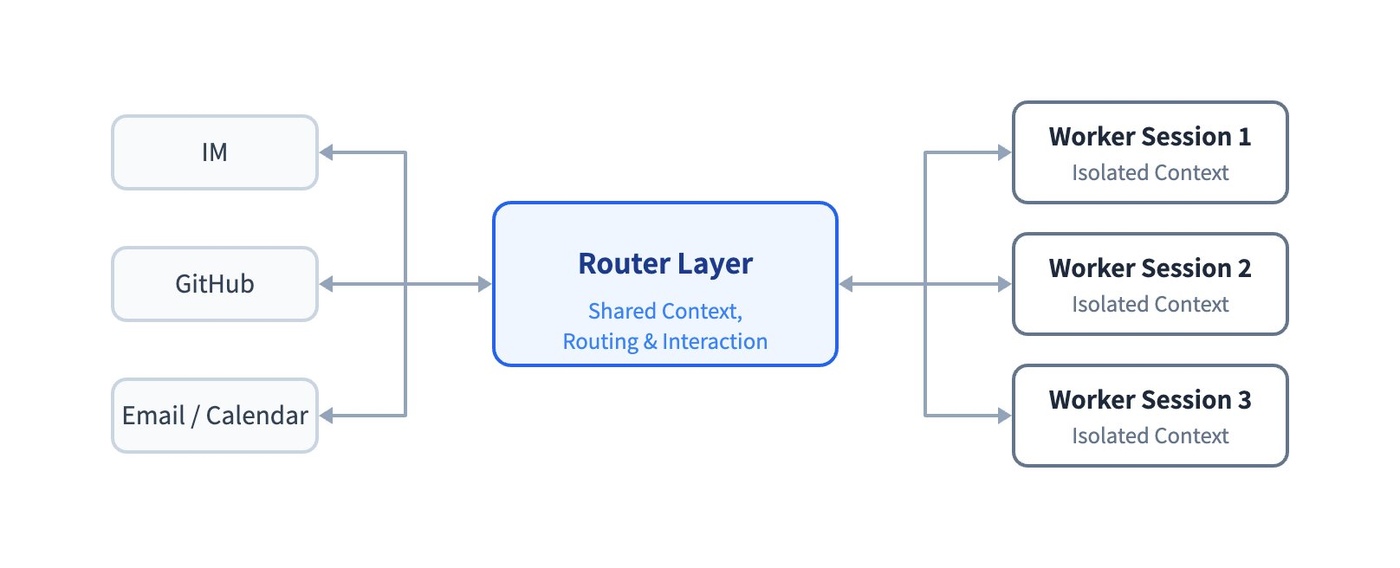 Image: DeepSeek
The team says its internal version already works this way. In one example in the essay, the agent watched a public group chat and, without being mentioned, found the root cause of a reported problem and opened a pull request to fix it. DeepSeek said the system helps every day with reproducing and fixing issues, responding to code reviews and developing DeepSeek Harness itself. One house rule for chat channels is a cap of 100 words per reply.
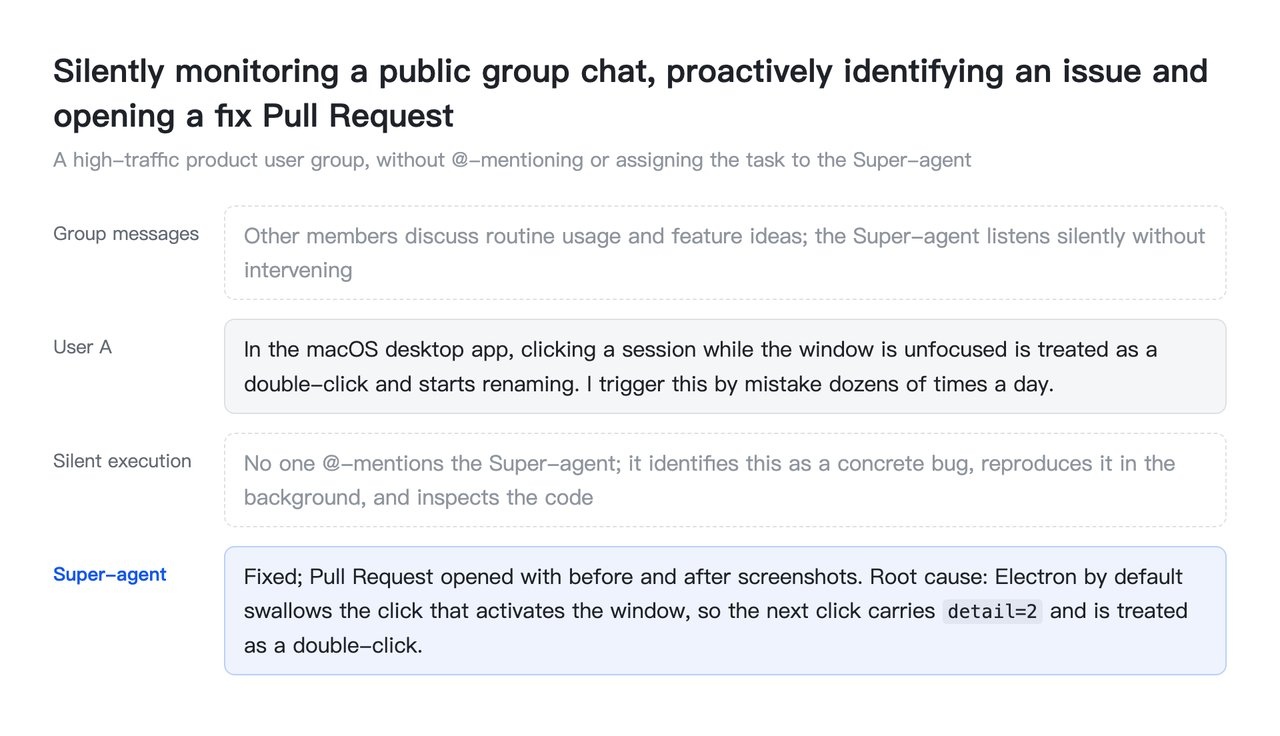 Image: DeepSeek
DeepSeek also published early test results, which it described as indicative only. In a simulated stream of about 300 group chat and build messages that contained about 20 work requests, the two-level design finished tasks in 12.4 minutes at the median, compared with 20.4 minutes for a single session that could call subagents. It used more tokens to get there: 23.2 million cached tokens per run, against 6.1 million.
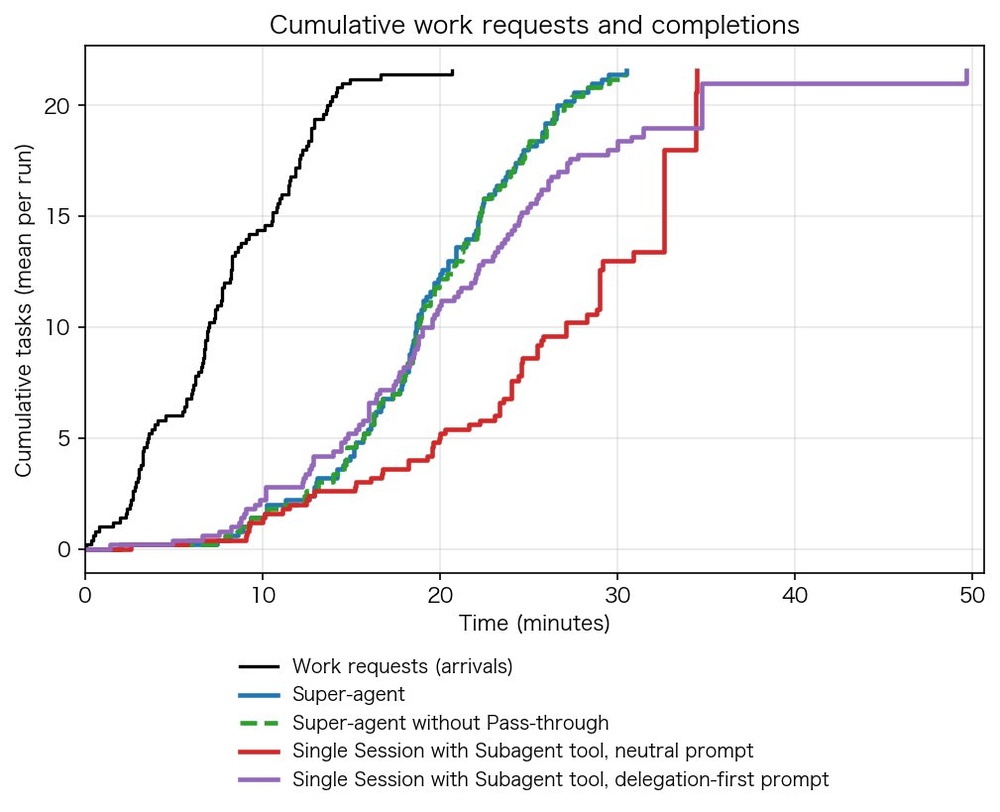 Image: DeepSeek
The essay is frank about the risks. Because the agent runs in the cloud and connects to developers’ own machines, DeepSeek wrote that a server break-in or a prompt injection attack could let an attacker take over every device linked to it. It said the agent needs a way to use passwords and keys without ever seeing them before the design can be used more widely.
Developers are paying attention. The repository had about 10,600 stars and 1,100 forks on GitHub by Monday morning, and the X post had been viewed more than 1.9 million times. Setting it up is not trivial. The guide asks for Node.js, pnpm, git, Python, tmux and the GitHub CLI, a dedicated GitHub account for the agent and a model provider configured for DeepSeek Harness, and it does not support GitHub Enterprise Server.
The release lands in the same territory as Anthropic’s Claude Code and OpenAI’s Codex, which are moving from chat windows toward agents that work in the background. DeepSeek’s essay even points to an Anthropic engineering post, “Decoupling the brain from the hands,” as taking a similar approach. For now the new release is a reference design rather than a product, built around a modest rule from the README: “take as little human attention as possible, and give as much value as possible.”