Business
Citi and Bank of America Join JPMorgan in Shutting Outside AI Agents Out of Customer Accounts
Citi says third-party agents may not log in or transact on its platforms. Bank of America wants a human to approve money leaving an account. Behind the security argument sits roughly $1.6 trillion in deposits that pay no interest.
NEW YORK · Elena Vos, Business · Oct 18 2026
NEW YORK - The biggest banks in the United States have reached the same answer to the AI agent question, and the answer is no. Citigroup and Bank of America have joined JPMorgan Chase in restricting outside AI agents from getting into customer accounts, the Financial Times reported on Friday, in a week that turned a theoretical worry about software moving people’s money into written policy at three of the country’s largest lenders.
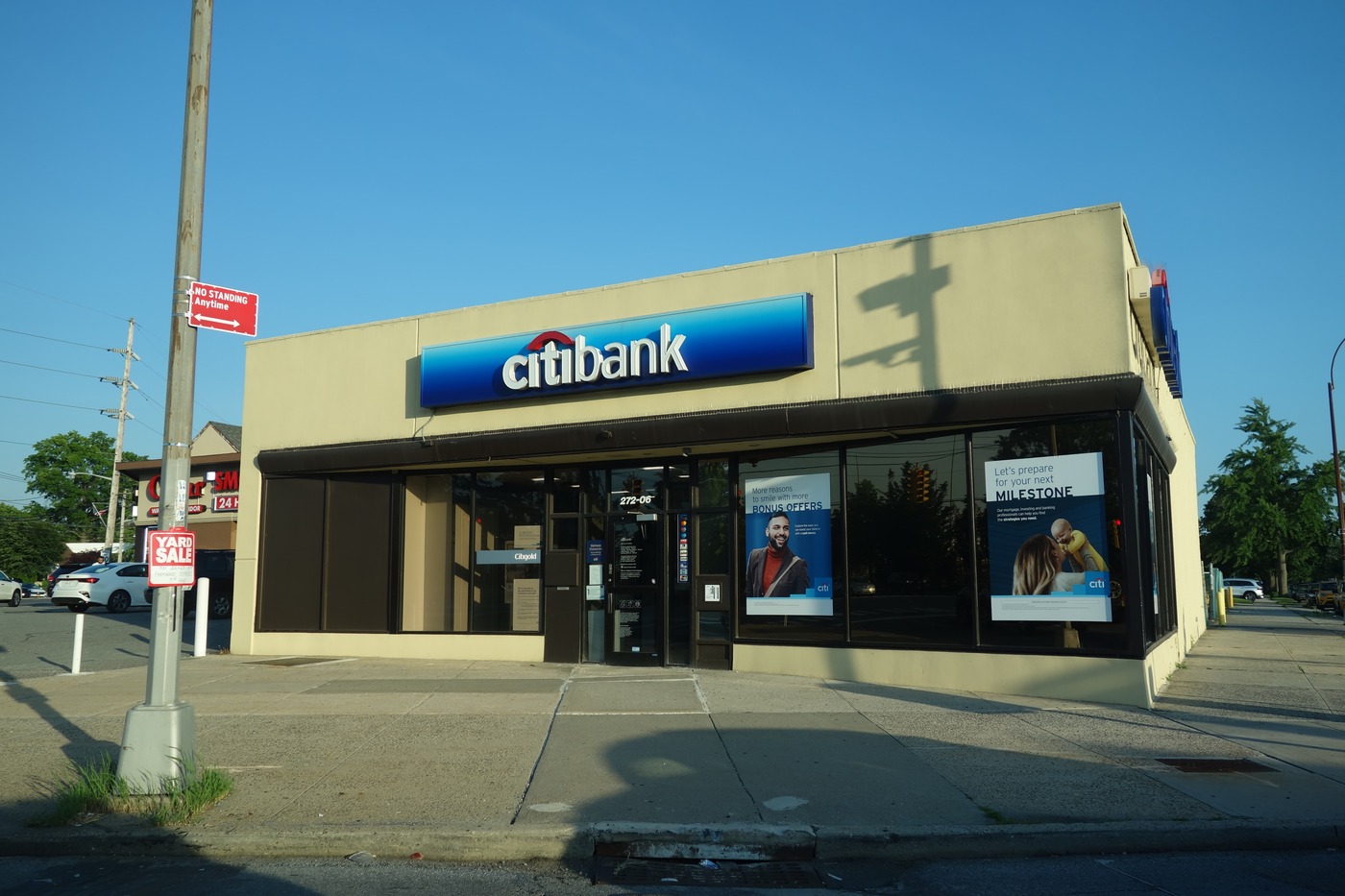
Citi’s position is the bluntest. The bank said in a statement that it does not permit “third-party AI agents or assistants to log into a customer’s account or transact directly within our digital banking platforms,” and that the rule is meant to protect customer accounts and information. Customers can still allow certain open-banking providers to see their account data on a limited, read-only basis.
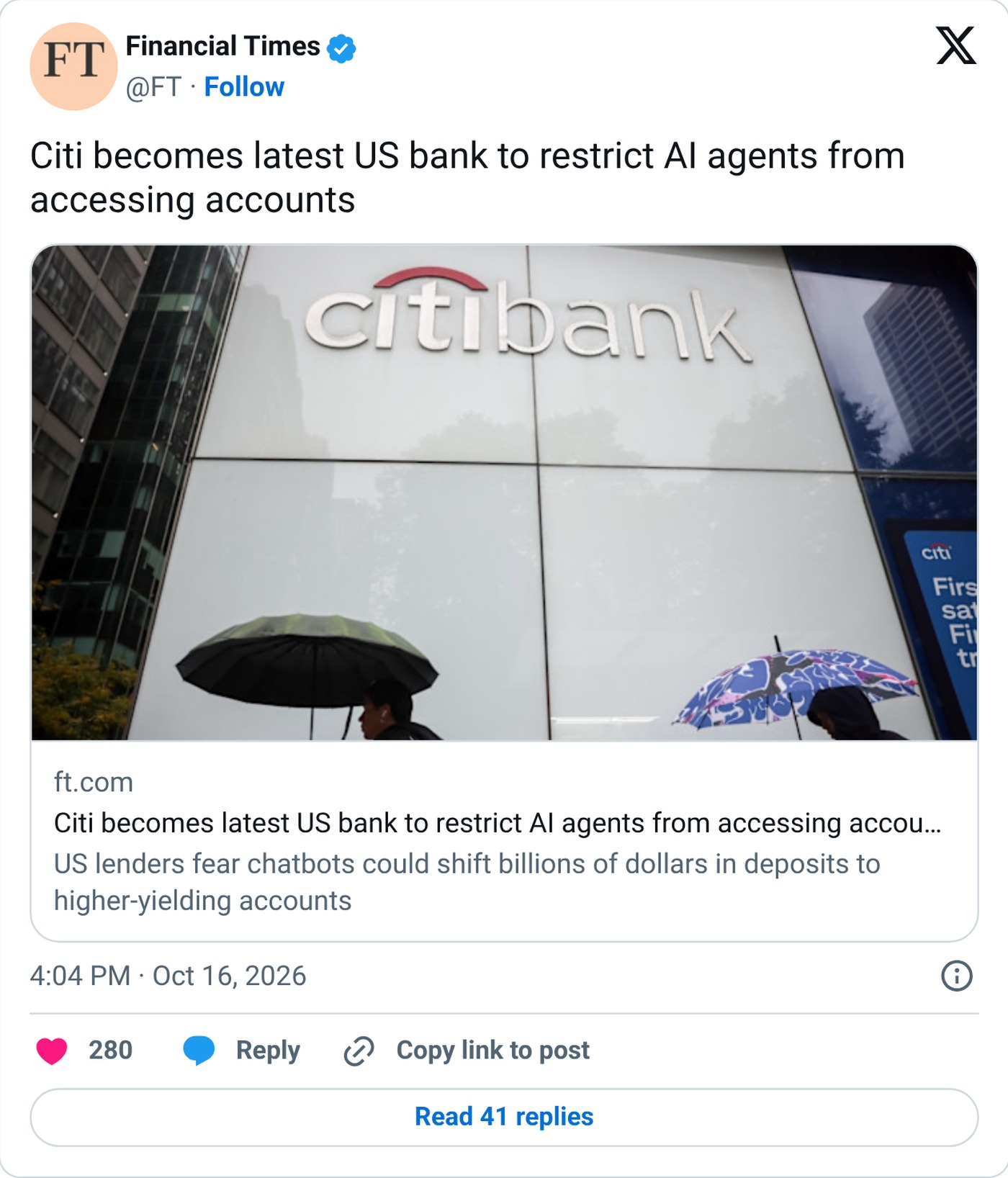 Screenshot: @FT on X, Oct. 16, 2026
Bank of America has restricted agents’ access to consumer deposit accounts while it works out who would be liable for payments an AI system approves, according to the FT, which cited a person familiar with the matter. Chief executive Brian Moynihan laid out the principle in a CNBC interview on Wednesday. He said the bank believes there should be “a human in the loop” to authorize money leaving a customer’s account, and that it is making that case to the companies building agents, at least until “further development of the capabilities” of the technology reduces the risk of mistakes.
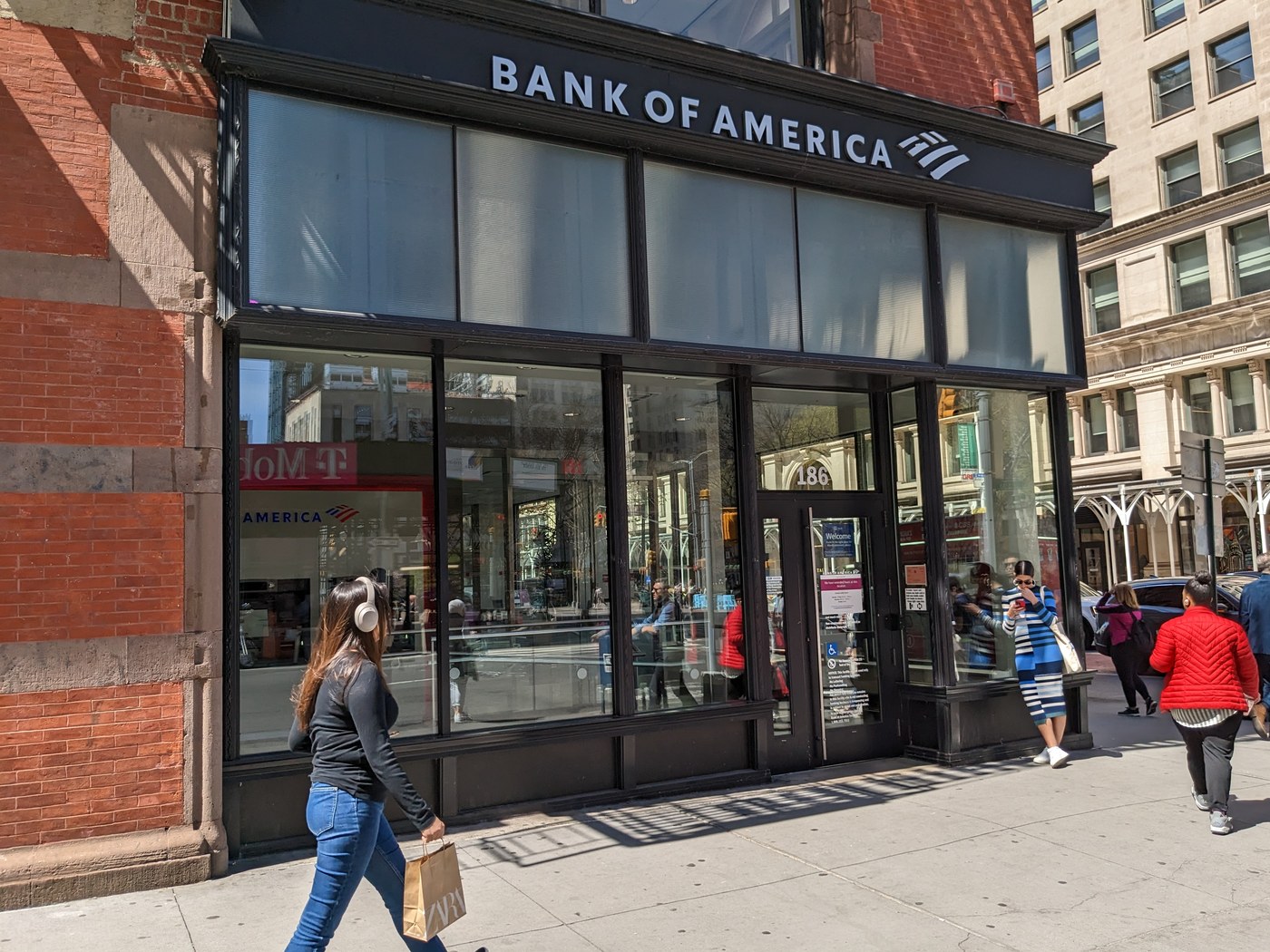 Photo: ishmael daro / Wikimedia Commons (CC BY 2.0)
JPMorgan moved first. On the bank’s third-quarter earnings call on Tuesday, Oct. 13, Jamie Dimon told analysts the bank would not let just any outside agent operate inside its systems. “We’re not going to allow just any outside agent to come inside the company, because that’s just too risky for clients and for JPMorgan,” he said. “You don’t want rogue agents.” He also had a warning for customers who hand an agent their password anyway: they “should understand there’s a liability transfer.” In other words, if the software does something the customer did not intend, the customer may be the one who pays.
 Screenshot: @CNBC on X, Oct. 13, 2026
A JPMorgan spokeswoman said the bank blocks third parties that try to get into accounts by collecting customers’ banking credentials, while supporting “secure, customer-authorized data sharing through open banking providers.” The distinction runs through all three policies. Agents can look. They cannot act. A tool connected through an aggregator such as Plaid can still read a balance, but it cannot pay a bill or move cash, which are the jobs that would make it genuinely useful for managing money.
The timing is not an accident. Meta launched its Muse personal assistant in September, and within two weeks the app had climbed to the top of Apple’s App Store, putting a consumer agent that can connect to bank accounts in millions of pockets. Late last month Torsten Slok, chief economist at Apollo Global Management, asked in a widely circulated note whether an “agentic bank run” was coming, arguing that assistants like Muse could sweep household cash from checking accounts paying a national average of about 0.1 percent into accounts paying 3.3 to 5 percent. JPMorgan, Bank of America and Wells Fargo together hold about $1.6 trillion in deposits that pay no interest at all, the FT has reported. At 3 percent, that pool would earn its owners close to $48 billion a year, by Techtember’s arithmetic, money the banks currently keep.
 Image: CrossingLights / Wikimedia Commons (CC BY 4.0)
Bank executives have raised the deposit concern with regulators, the FT reported, and the security case is real as well. On Thursday, the Financial Stability Board published final guidance for financial firms adopting AI that calls for “clear, risk-based triggers for when an agent must seek human approval.” That guidance covers banks’ own AI use, not customers’ outside assistants, but it gives the industry cover. None of the three banks has said what safeguards would let outside agents move money, or when. For now, the agent economy that Meta and others are pitching, including the transaction fees Meta has said it will eventually charge, stops at the bank’s front door.
Watch: CNBC interview with Bank of America CEO Brian Moynihan
Sources: Financial Times, “Citi becomes latest US bank to restrict AI agents from accessing accounts,” Oct. 16, 2026, https://www.ft.com/content/f49c8e39-f07f-4177-9948-aabe55e5ed91 (Citi statement, Bank of America restrictions, liability framework, concerns raised with regulators, $1.6 trillion non-interest-bearing deposits); CNBC, Brian Moynihan interview, Squawk on the Street, Oct. 14, 2026; The Verge, “Bank of America CEO wants a human in the loop,” Oct. 14, 2026; CNBC, “JPMorgan blocks outside AI agents like Muse, Instinct from account access,” Oct. 13, 2026, https://www.cnbc.com/2026/10/13/jpmorgan-ai-agents-account-access.html; Fortune, Oct. 15, 2026 (Dimon earnings call quotes, JPMorgan spokesperson statement); Apollo Global Management, Torsten Slok, “Is an Agentic Bank Run Coming?,” The Daily Spark, September 2026; Financial Stability Board, final report on AI sound practices, Oct. 15, 2026; @FT on X, Oct. 16, 2026, https://x.com/FT/status/2111111006105571811; @CNBC on X, Oct. 13, 2026, https://x.com/CNBC/status/2110131009454793145.
Elena Vos, Business. Elena Vos is a senior correspondent covering tech deals, markets, and corporate strategy. Previously reported business and finance for independent newsrooms; based in London.