Gadgets
Boston Dynamics Bolts Scooter Wheels Onto Atlas and Lets the Humanoid Teach Itself to Roll
The wheeled Atlas is a research testbed rather than a product, built to run the robot's motors at their limits and test how well a learned controller copes.
Waltham, Mass. · Noah Park, Gadgets · Nov 10 2026
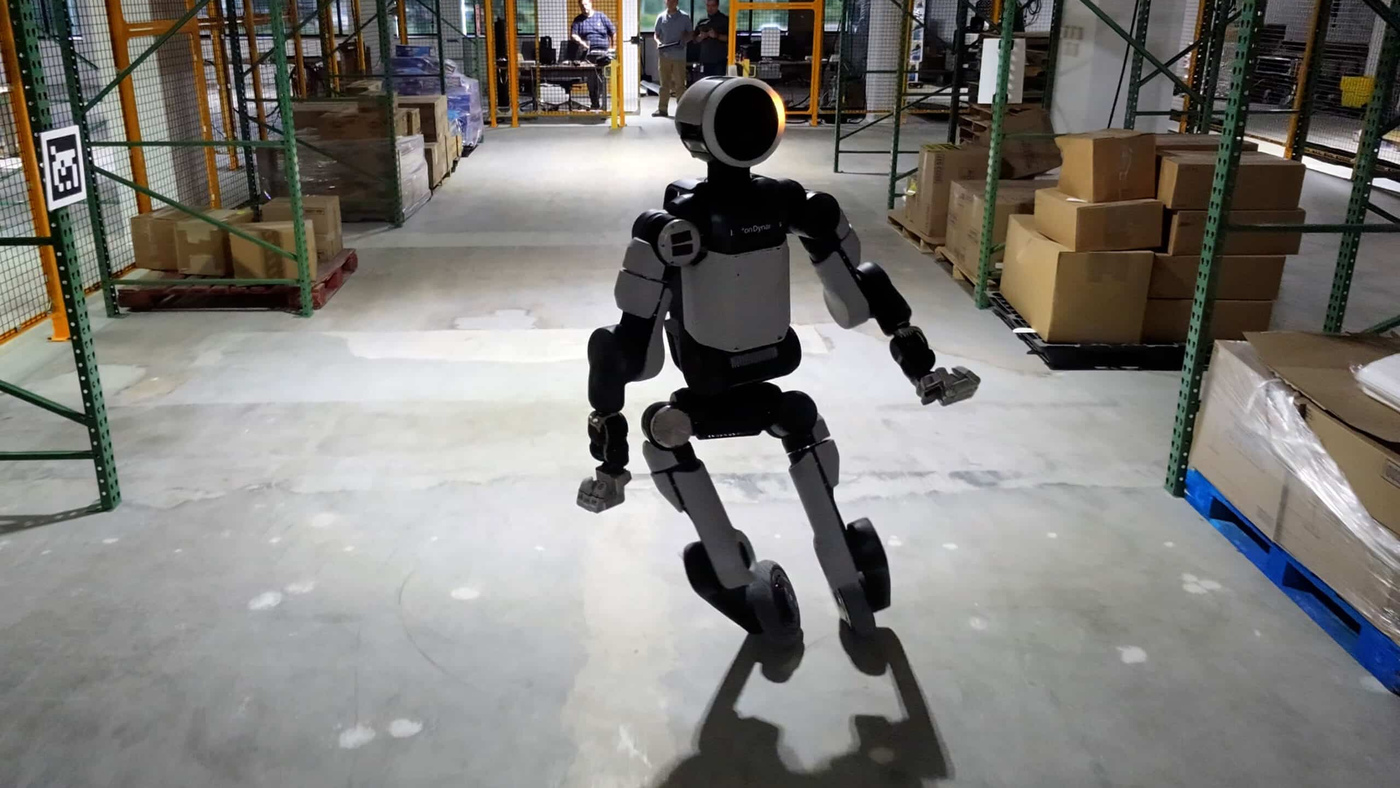
WALTHAM, Mass. - Boston Dynamics has swapped the feet on its Atlas humanoid for wheels, and the robot largely worked out how to use them by itself. In a blog post and video published Monday, Xiaoyu (Andy) Wu, a controls engineer on the Atlas team, showed the wheeled robot rolling through a warehouse, dashing sideways, drifting and landing a 360-degree jump.
The company was plain that it is not selling a wheeled robot. “A wheeled Atlas isn’t a product. It’s a research testbed,” the post says. The goal was to make Atlas’s motors deliver high torque and high speed continuously while carrying the robot’s weight. On wheels, every launch, turn and stop pushes the motors across their full torque-speed range.
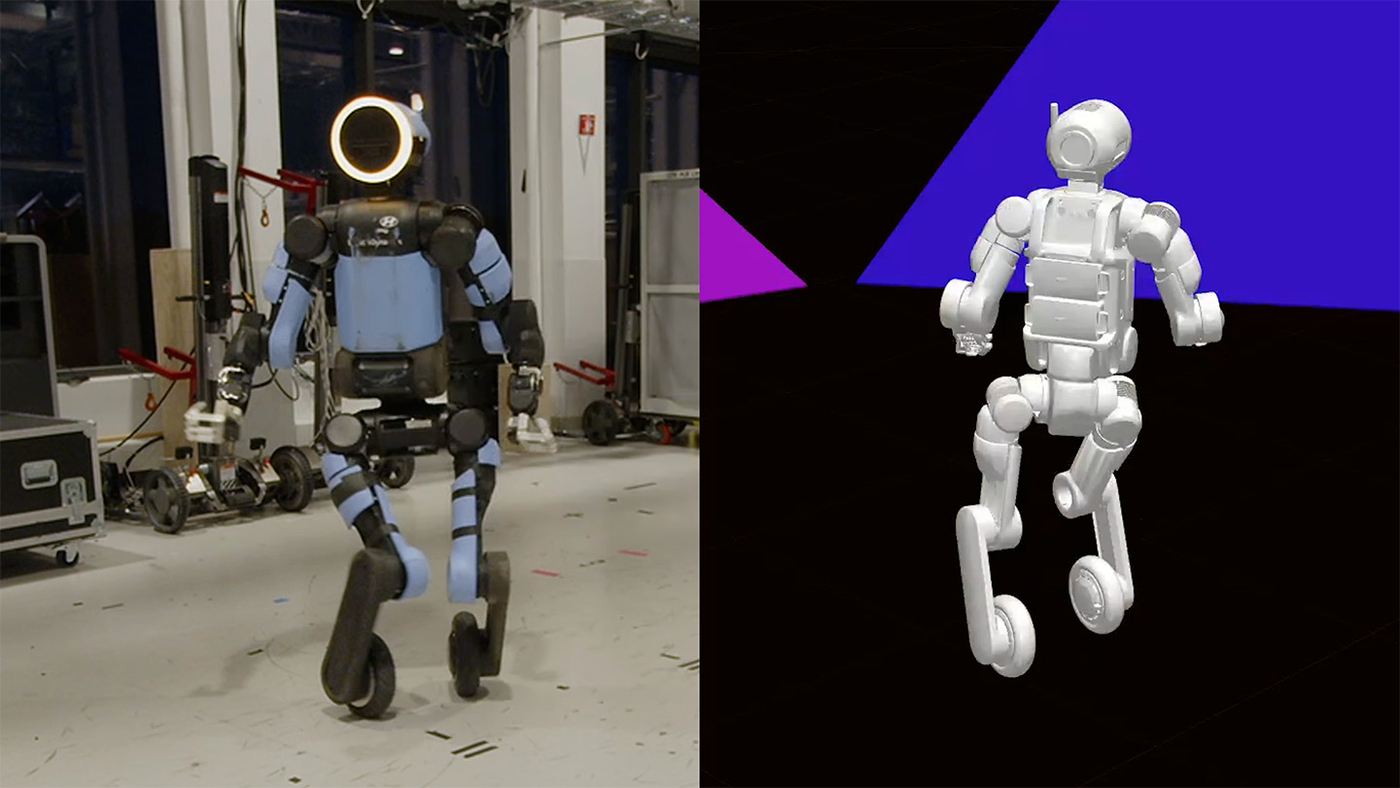 Image: Boston Dynamics
The hardware change was small. A single custom adapter mounts an off-the-shelf scooter rim onto Atlas’s existing ankle actuator, and Boston Dynamics says that adapter is the only new part in the build. Because Atlas was designed for high-volume production and easy servicing, Wu wrote, the retrofit “was about as involved as swapping a wheel on a bicycle.” In software, each wheel is modeled as an ankle that can spin continuously.
The control side relied on reinforcement learning, in which a policy is trained over millions of simulated runs before it ever drives the real robot. Rather than build a new controller, the team adapted the whole-body framework it already uses, changing the reward composition, the range of commands the policy trains on and how the robot holds its posture. Smooth rolling emerged from that training, the company says. The simulations ran on MuJoCo, the open-source physics engine from Google DeepMind.
*Video: Boston Dynamics on YouTube*Much of the work, Wu wrote, went into making the simulated motors behave like the real ones, because a policy trained against idealized motors can learn moves the hardware cannot perform. Some moves came from a library of human motion capture. Wu said he looked for clips with a lot of foot sliding, and in the side dash the policy learned to steer the wheels and roll where a person would slide their feet. The 360-degree jump follows a recording of a person and worked on the first try, with the lower body rolling into place during the windup.
 Screenshot: @BostonDynamics on X
Wheels are familiar ground for the company. The Verge noted that Boston Dynamics showed a two-wheeled balancing robot called Handle nearly a decade ago.
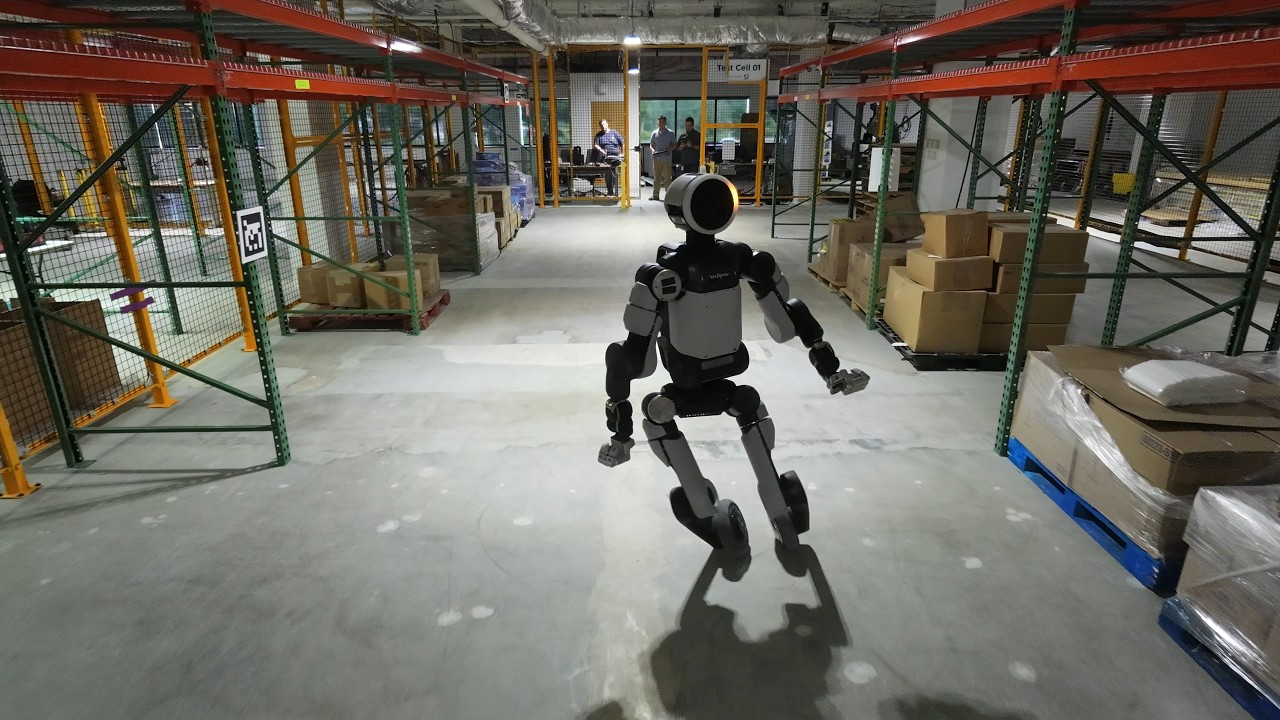 Image: Boston Dynamics
Boston Dynamics says the lessons are already being folded back into the standard, legged Atlas. In the video, Wu said his next project looks at how the policy responds when actuators fail.