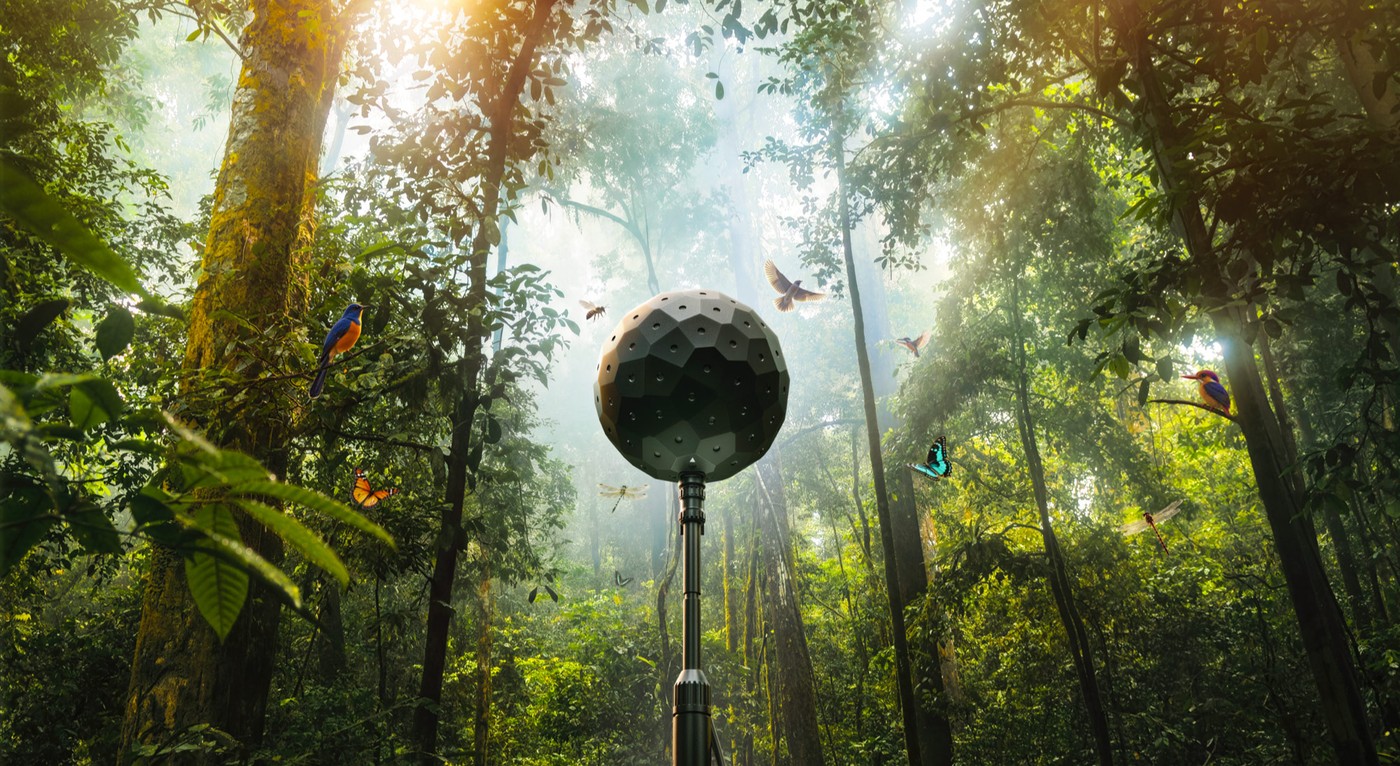
Gadgets
Blackmagic's $1,695 Ambisonic Microphone Packs 108 Mics Into a Ball That Records Spatial Audio Over One USB-C Cable
Built with array geometry and encoding filters licensed from Apple, the palm-sized microphone turns its 108 MEMS capsules into seventh-order ambisonics on board and records to an iPhone, a computer or Blackmagic's immersive cinema camera. It ships in December.
Fremont, Calif. · Noah Park, Gadgets · Nov 12 2026
FREMONT, Calif. - Blackmagic Design, the maker of cinema cameras and the DaVinci Resolve editing software, on Wednesday announced the Blackmagic Ambisonic Microphone, a faceted metal ball covered in 108 tiny digital microphones that records spatial audio over a single USB-C cable. It will be available in December for $1,695, excluding local duties and taxes, the company said in its announcement.
Spatial audio captures sound from every direction, so that a listener wearing headphones or a headset can hear where each sound comes from. Blackmagic calls the new model the world’s first seventh-order ambisonic microphone. The order describes how much directional detail a recording holds. A first-order ambisonic recording uses four channels. The Blackmagic microphone outputs 64 channels of 32-bit audio, according to its product page.
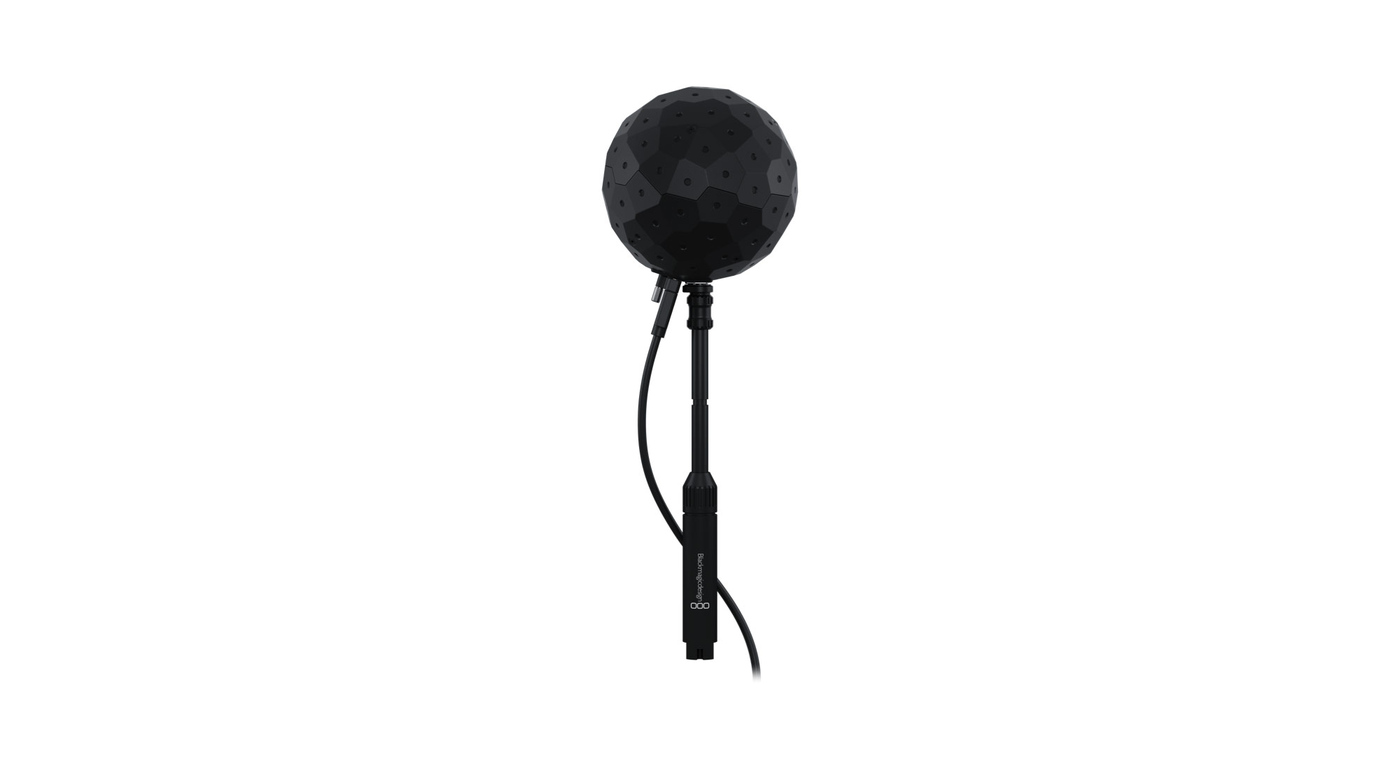
Image: Blackmagic Design
The hardware grew out of Blackmagic’s work with Apple. The two companies collaborated on the Blackmagic URSA Cine Immersive, a camera with dual 8K sensors built to shoot Apple Immersive Video for Apple Vision Pro. Apple licensed its microphone array geometry and its ambisonic encoding filters for the new microphone, and Blackmagic handled the engineering and design.
“This microphone started when we were collaborating with Apple on the Blackmagic URSA Cine Immersive camera. I heard a high resolution spatial audio capture for the first time and it was like hearing an acoustic reality, I was totally blown away,” Grant Petty, Blackmagic’s chief executive, said in the announcement. “Apple licensed their array geometry and the ambisonic encoding filters, we did the engineering and design, and the result is an ambisonic microphone where you just plug in one cable and capture true spatial audio.”
The processing happens inside the microphone. A built-in processor runs Apple’s encoding filters and converts the signals from all 108 capsules into seventh-order ambisonics in real time, so no breakout box, encoding software or separate computer is needed. The microphone draws power and sends audio over the same USB-C connection, and because it is USB class compliant, it needs no drivers or plug-ins.
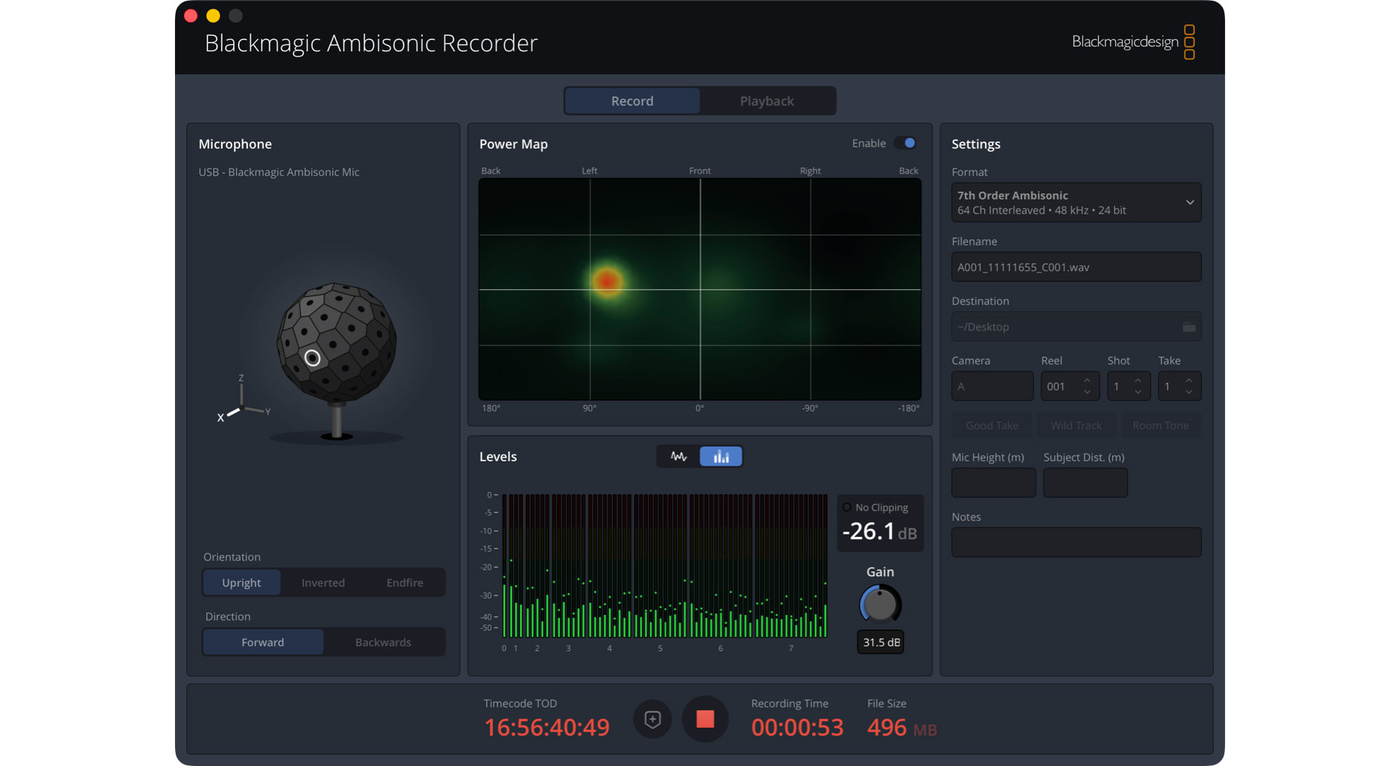
Image: Blackmagic Design
There are three main ways to use it. Mounted on top of the URSA Cine Immersive, the microphone records spatial audio directly into the camera’s immersive files, in sync with the picture. Connected to a computer, it can record and mix live in Blackmagic’s Fairlight Live software. It can also record straight to an iPhone through the Blackmagic Camera app. For broadcasters, Blackmagic says it will offer a converter from USB to SMPTE-2110, the standard used to move audio and video over IP networks.
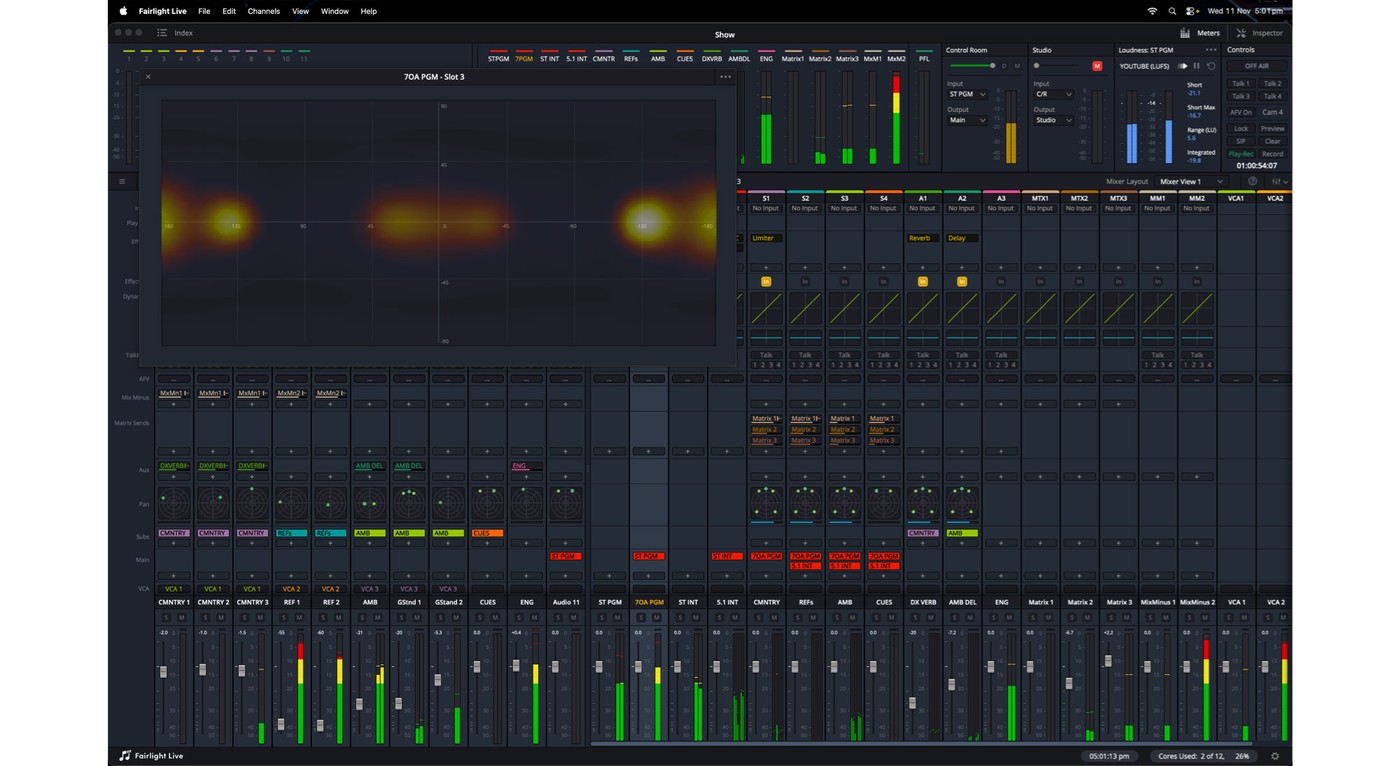
Image: Blackmagic Design
The $1,695 figure in the announcement excludes duties. Blackmagic’s U.S. store, whose prices include duties but not sales tax or shipping, lists the microphone at $1,909 with its mount. A kit that adds a windshield and a locking USB-C cable is listed at $2,405. The camera it was designed alongside, the URSA Cine Immersive, sells for $30,375.
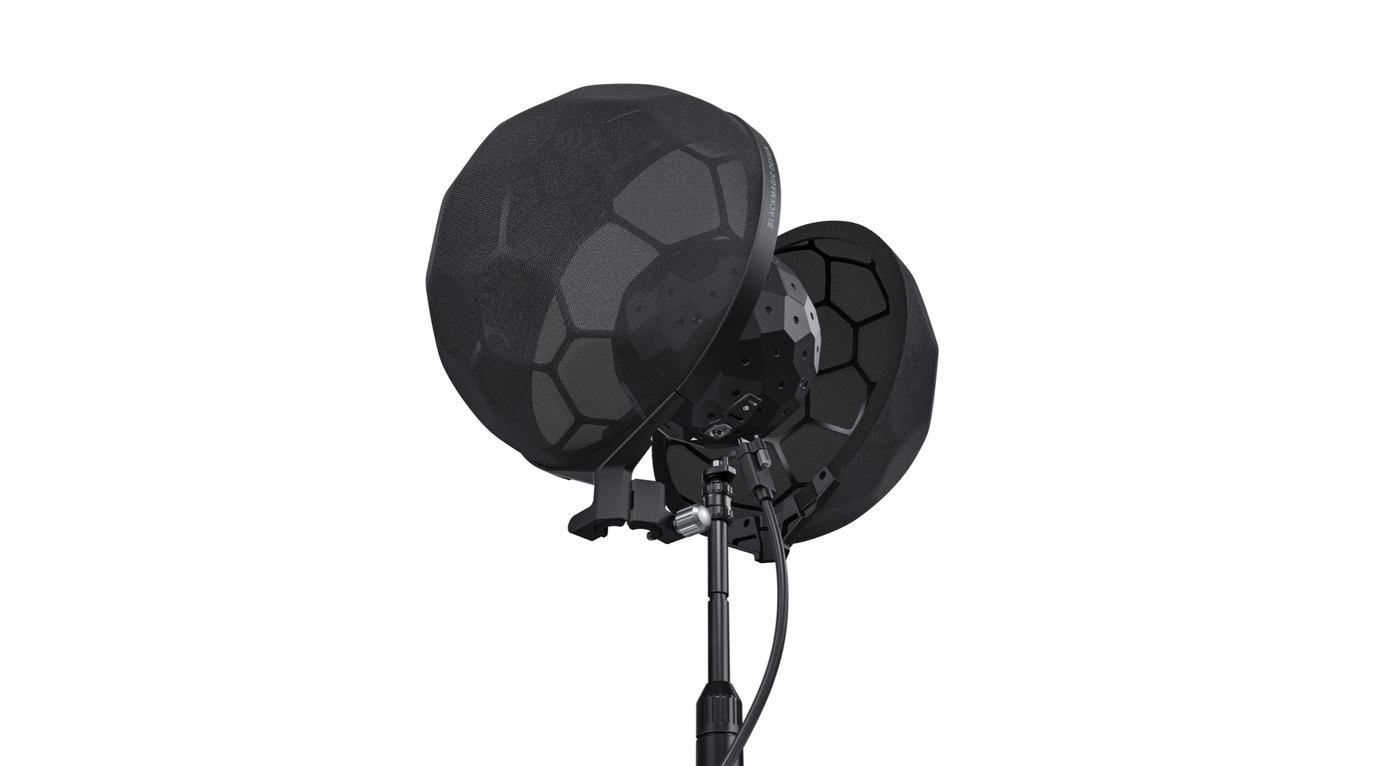
Image: Blackmagic Design
Video: Blackmagic Design on YouTube
Blackmagic introduced the microphone on X on Wednesday.
Screenshot: @Blackmagic_News on X