Business
Amazon's Jassy Says AWS Is Largely Sold Out Through 2027, Even With $220 Billion in Spending
The Amazon chief told an Andreessen Horowitz podcast that a good chunk of 2028 is spoken for too, as AI labs and big companies outrun the company's data center buildout.
Seattle · Elena Vos, Business · Oct 25 2026
SEATTLE - Amazon is spending about $220 billion this year on data centers, chips and servers, and its chief executive says it still cannot build fast enough. Andy Jassy said on Friday that the cloud computing capacity of Amazon Web Services is largely sold out through 2027, with sizable commitments reaching into 2028, Reuters reported.
“2027 is largely sold out,” Jassy said in a video podcast with Ben Horowitz, the Andreessen Horowitz co-founder, and Erik Torenberg, a general partner at the firm. “We always leave a certain amount for on demand and our inference service Bedrock, or EC2, but largely sold out all the big chunks. A good chunk of 2028 is sold out.” Capacity for 2026 is already gone, he said, and Amazon “could invest a lot more and it wouldn’t be a bad use of capital.”
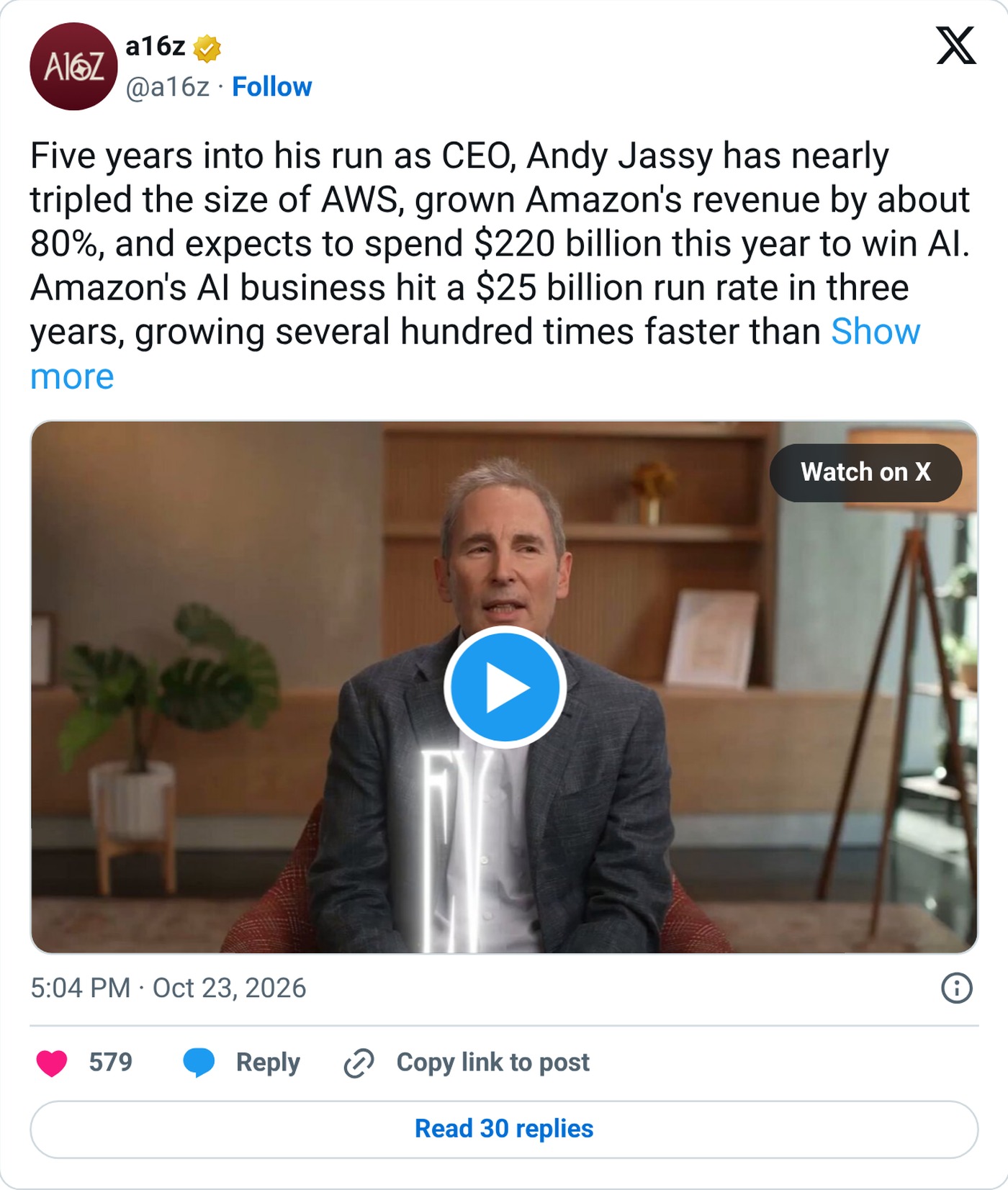
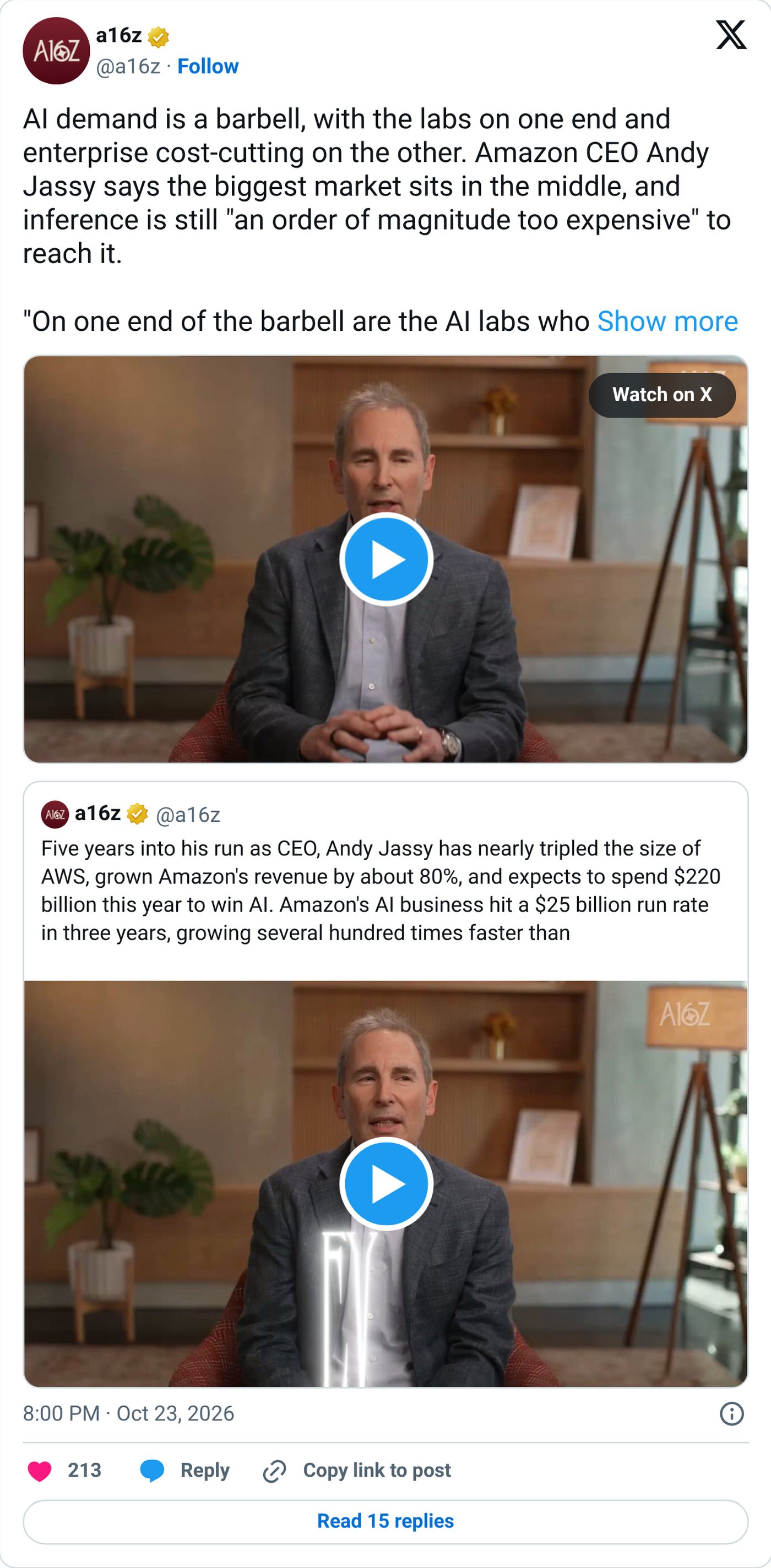
The numbers behind that demand are large even by Amazon’s standards. Jassy said AWS was about a $60 million annual run rate business three years after it started. “In the first three years of this generative AI wave, our AI business in AWS is over $25 billion in run rate,” he said, according to clips the firm posted on X. “So it’s several hundred times faster.” He recalled a leadership breakfast 15 years ago when executives could not believe a telecom company had spent $50 billion on capital expenditure in a year. “Even spending $220 billion in CapEx this year, we’re leaving a meaningful amount of demand on the table,” he said.
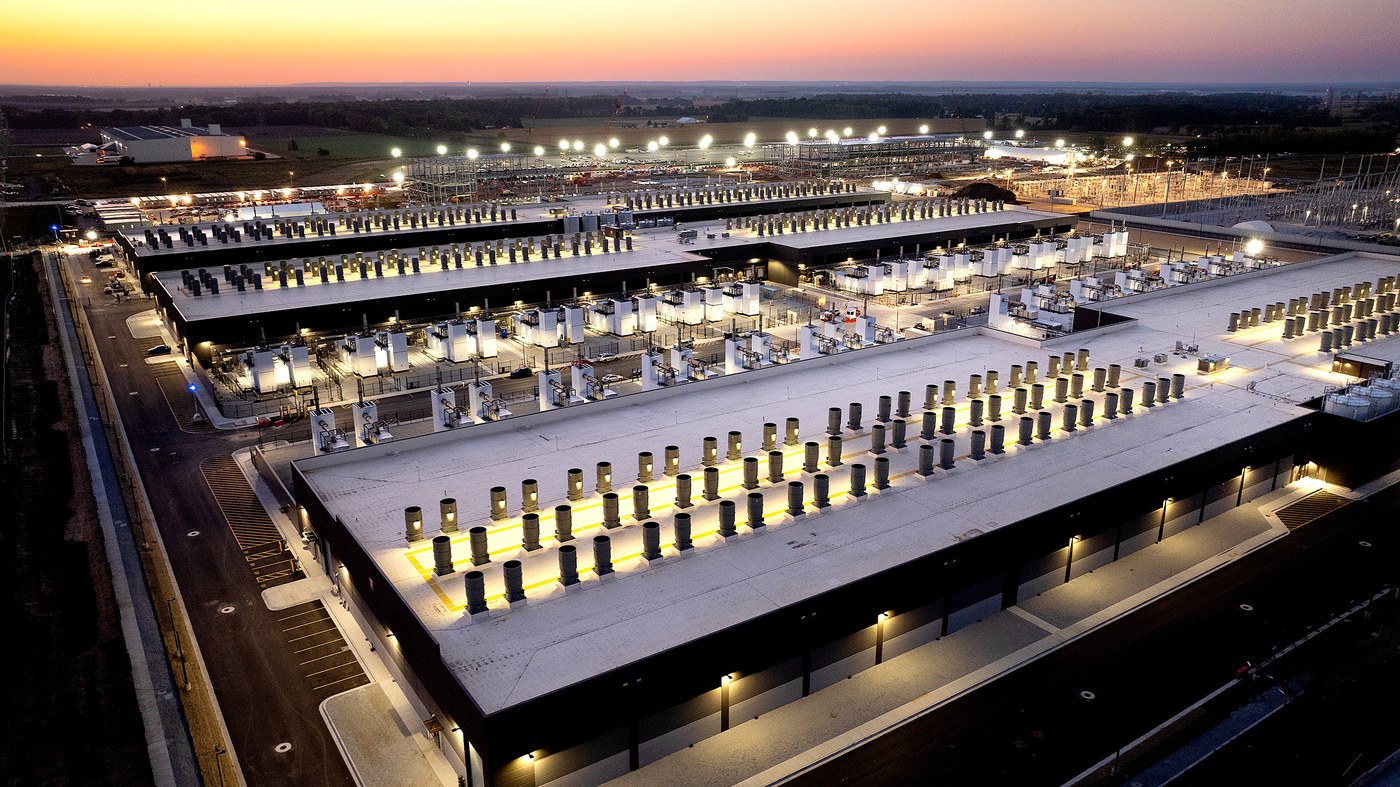 Image: Amazon
Jassy described demand as a barbell. On one end are the AI labs, “consuming gobs and gobs of compute, unlike anything I’ve seen,” along with a few runaway apps such as ChatGPT and Claude Code. On the other are companies using AI to automate customer service, fraud checks and back-office work. The biggest market, he said, sits in the middle: the everyday production software that companies already run, most of which does not yet use AI in any pervasive way. To unlock it, he argued, inference has to get much cheaper. “The cost of inference has come down quite a bit in the last few years, but it’s still an order of magnitude too expensive, in my opinion, for it to be used as pervasively as possible.”
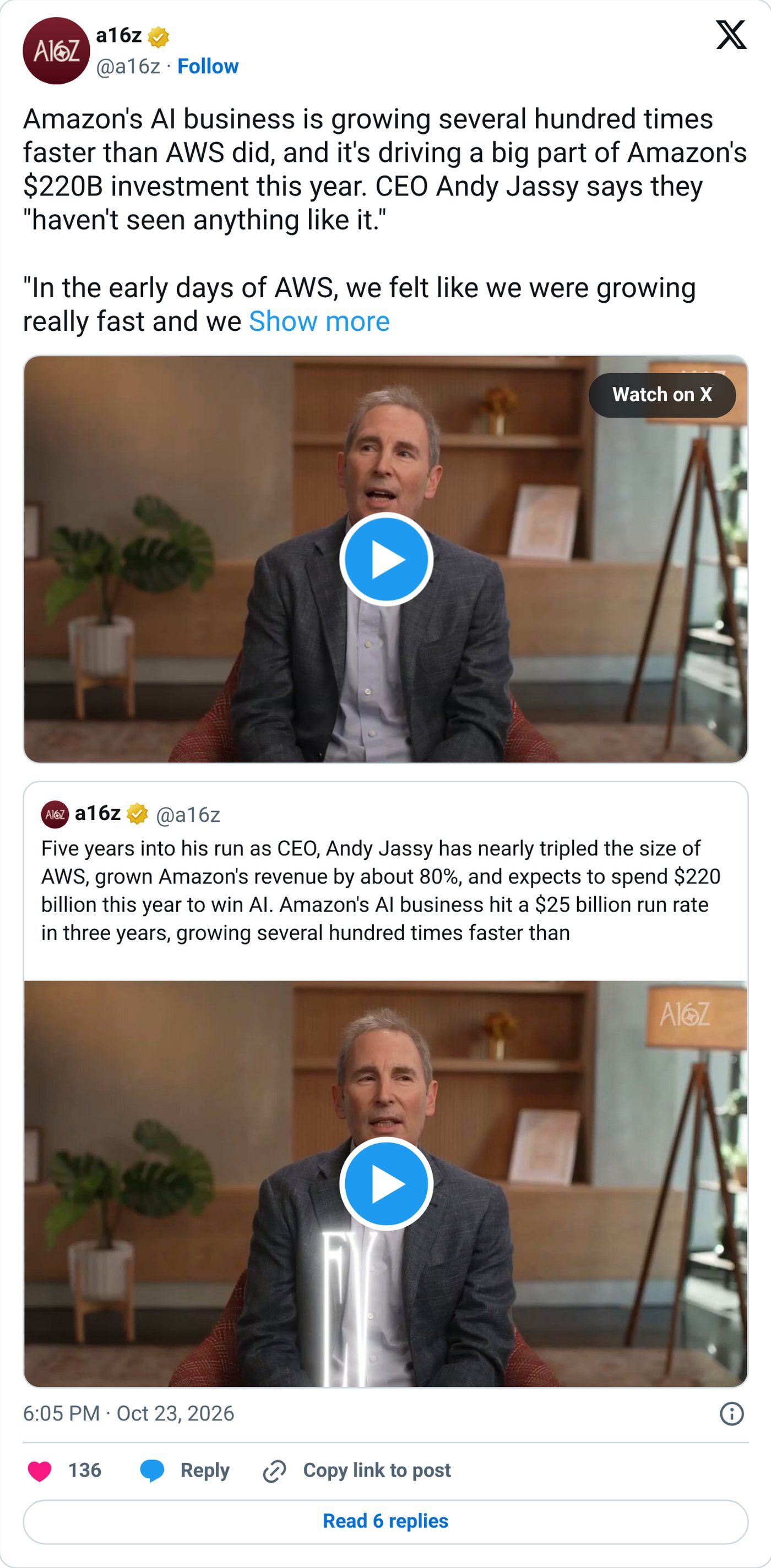
The hourlong conversation, posted to YouTube by the firm, also covers Amazon’s Annapurna chip team, its Graviton processors and Trainium AI chips, as well as Amazon’s stakes in Anthropic and OpenAI and why data centers have become a political fight.
Video: a16z / YouTube
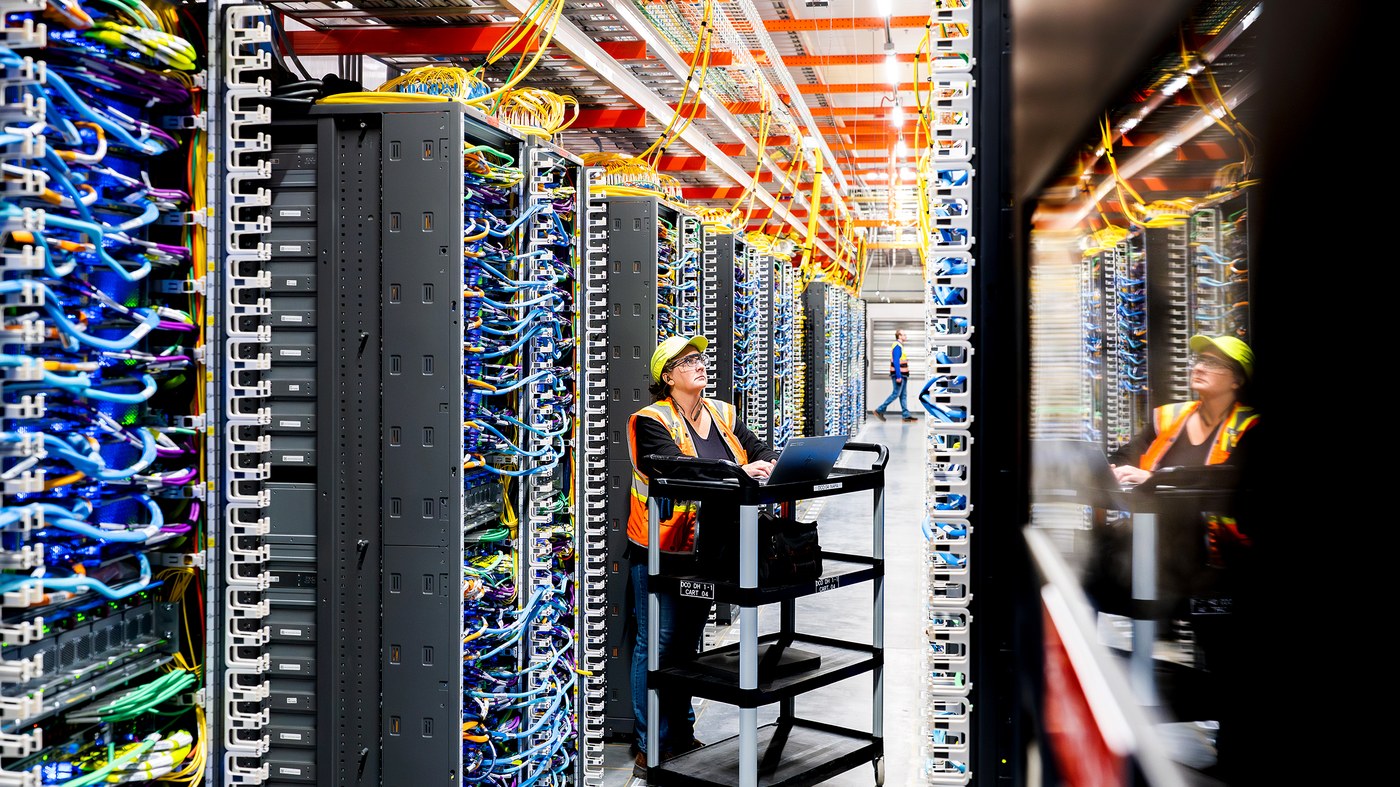 Image: Amazon
The squeeze does not stop at the data center door. On the same day, Counterpoint Research said India’s smartphone shipments fell 20 percent from a year earlier in the third quarter to their lowest level in a decade, as record-high memory prices pushed up device costs, Reuters reported via CNBC-TV18.
Investors will get a fuller picture soon. Amazon is scheduled to report third-quarter results on Oct. 29, when AWS growth, capital spending and any update to the $220 billion plan will be the numbers to watch.