AI
Apple Launches a Health AI Study App With OpenEvidence, Seeking Up to 200,000 iPhone Users
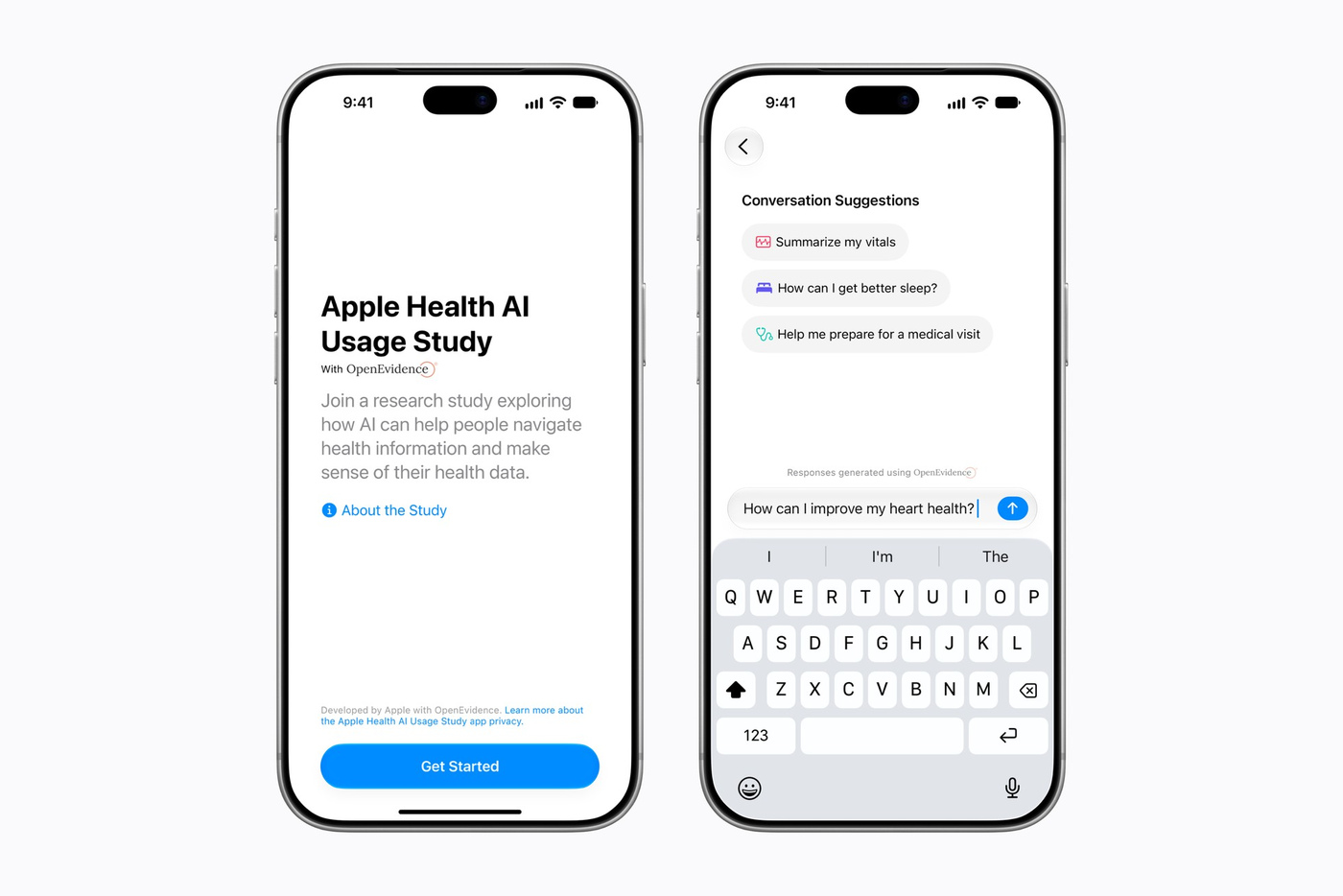
The Apple Health AI Usage Study lets adults in the United States ask everyday health questions, get answers backed by clinical citations and rate them. Apple says the study data will not be used to train AI models.
Cupertino, Calif. · Jordan Hale, AI · Nov 16 2026
CUPERTINO, Calif. - Apple has opened a large research study into how people use AI chatbots for health questions, releasing a dedicated iPhone app built with the clinical AI company OpenEvidence and inviting up to 200,000 adults in the United States to take part.
The Apple Health AI Usage Study, announced by Apple on Sunday, is meant to examine what makes people trust an AI health tool, how good its answers are, whether people understand them and what they do next. Apple said the findings would inform the design of health AI features “for Apple and the industry.”
“At Apple, we believe responsible innovation starts with scientific rigor and clinical grounding,” said Sumbul Desai, Apple’s vice president of Health and Fitness, who is a physician. “Health is deeply personal, and conducting a dedicated research study is the most thoughtful way to understand how people engage with, comprehend, and evaluate health AI in everyday life.”
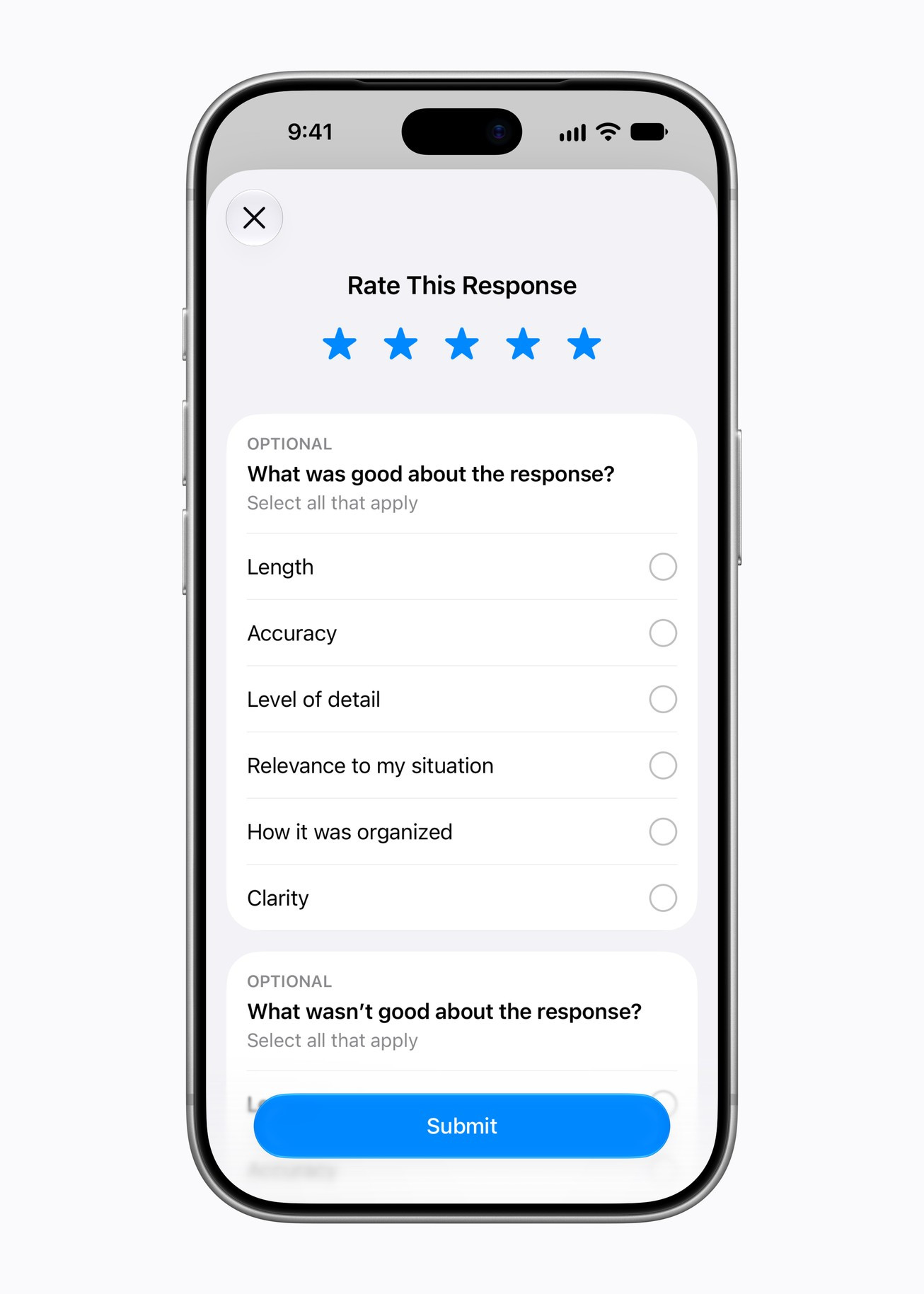
Image: Apple
Participants type everyday health questions into the app and get answers written in plain language, each linked to peer-reviewed clinical citations. The answers come from OpenEvidence, a platform widely used by doctors that draws on sources such as The New England Journal of Medicine, the Journal of the American Medical Association and Nature, Apple said. Participants then rate the responses. The app is text based and is not connected to Siri, The Verge reported.
Participants can choose to share HealthKit data, such as resting heart rate, activity, sleep or lab results, so Apple can study whether personal data makes the answers more relevant and easier to understand. The study will also look at whether AI can help people prepare for appointments with their own doctors, and the app includes safety guardrails meant to spot certain worrying questions and suggest that the participant follow up with a provider.
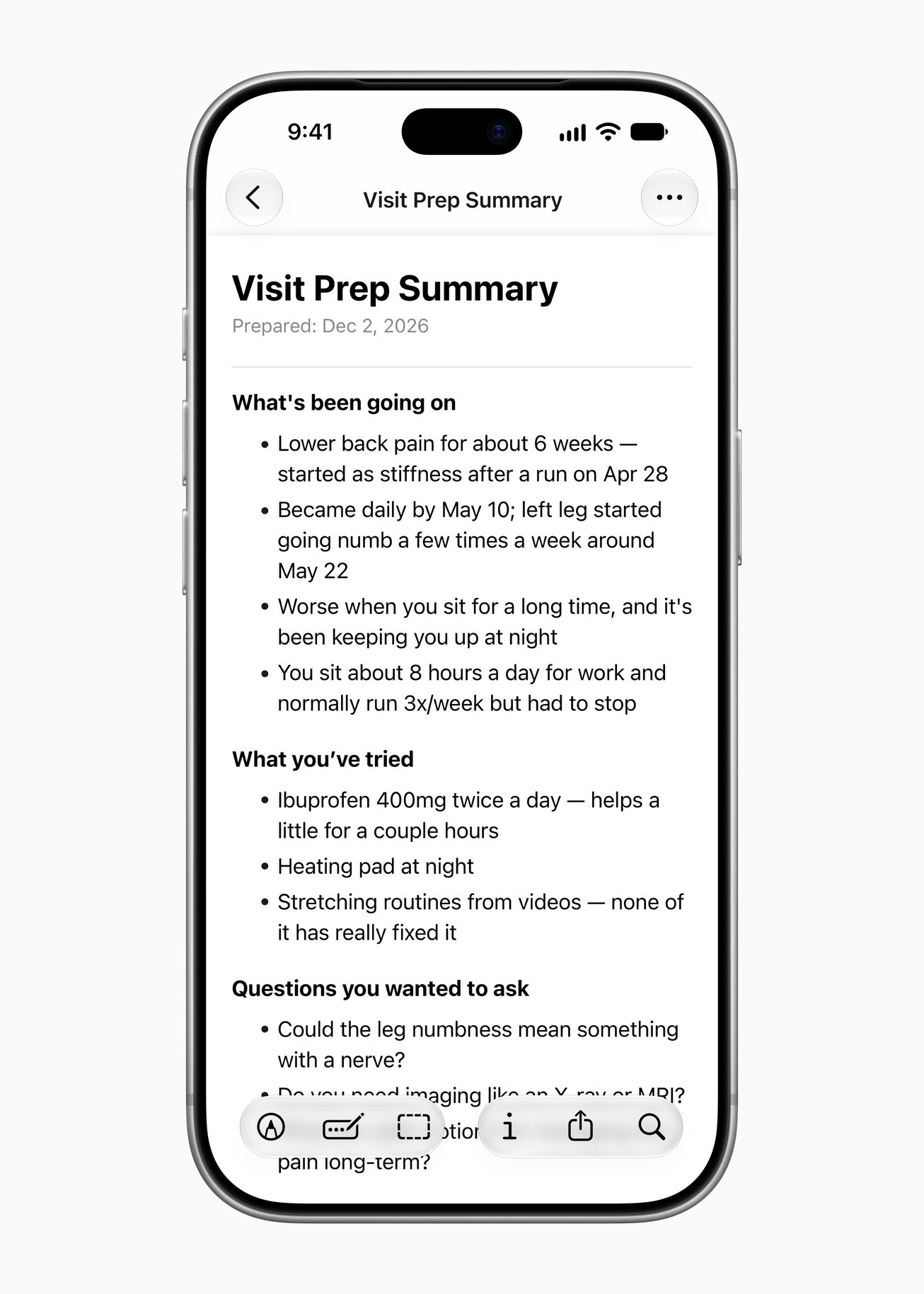
Image: Apple
Apple said the study was designed with privacy protections from the start, that participants decide whether to share any HealthKit metrics or survey answers, and that study data will not be used to train AI models. Data will be anonymized before it is sent to a secure third-party cloud provider, and OpenEvidence deletes questions and responses after 24 hours, TechCrunch reported, adding that the study is expected to run for more than 12 months and to include monthly surveys.
“Patients and clinicians are both turning to AI, but the tools they use are being built and tested in separate worlds,” said Robert M. Wachter, professor and chair of the Department of Medicine at the University of California, San Francisco, in Apple’s announcement. “Connecting these tools, and rigorously studying what works, is how we’ll get there,” he added.
The study is open to people 21 and older in the United States with an iPhone that supports Apple Intelligence, meaning an iPhone 15 Pro or later, running iOS 26 or later. The app is available to download now. Apple did not say whether the work will lead to AI answers inside its Health app or Siri, a question that hangs over the study as OpenAI and Anthropic push their own chatbots deeper into health care.